







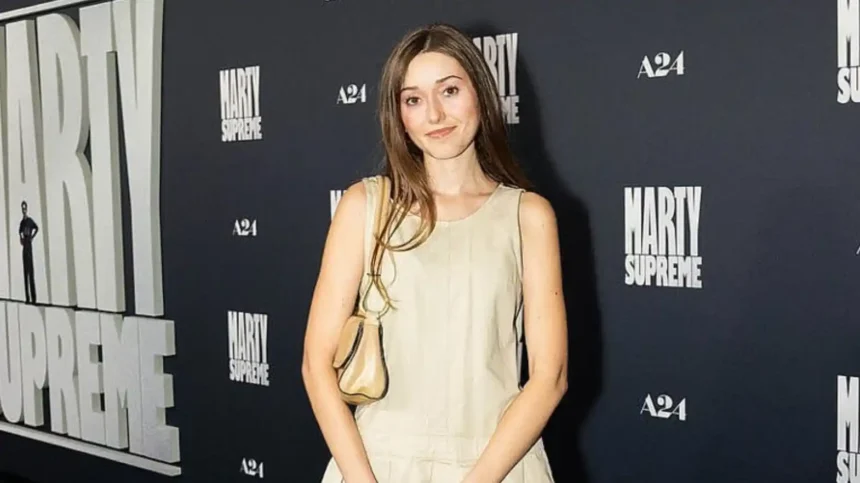
Screenwriter Hannah McMechan has shared a deeply personal revelation about her experience working on Netflix’s popular animated feature KPop Demon Hunters, revealing that she discovered her bisexual identity during the film’s development.
The writer recently reflected on how her personal journey unexpectedly paralleled the themes explored in the movie, particularly those involving identity, acceptance, and the fear of revealing one’s true self.
A Life-Changing Experience During Production
According to McMechan, she had no idea she was queer when she first became involved with the project.
Speaking about that period of her life, she explained:
See more of our coverage in your search results.
Add Hunterfly on Google“When I started the project, I had no idea that I was queer. Then we went into the pandemic, and everyone was soul-searching and realizing things about themselves.”
The pandemic period became a time of reflection and personal discovery for many people, and for McMechan, it ultimately led to a better understanding of her own identity.
She later came out as bisexual to her friends before sharing the news with her parents in 2023.
Finding a Connection With Rumi’s Story
As McMechan’s personal journey evolved, she found herself connecting more deeply with Rumi, one of the film’s central characters.
In KPop Demon Hunters, Rumi conceals the fact that she is half-demon because she fears rejection and judgment from others.
The writer said the character’s emotional struggles began to resonate with her own experiences.
See more of our coverage in your search results.
Add Hunterfly on Google“I was so afraid of telling anyone in my life, which ironically is very accurate to the movie.”
She added that feelings of fear and shame surrounding her identity mirrored some of the emotional themes explored in the story.
Growing Up in a Religious Environment
McMechan has spoken about growing up in Oakhurst, California, in a religious household where discussions around sexuality often carried feelings of fear and uncertainty.
She explained that accepting her identity was a gradual process that took time.
See more of our coverage in your search results.
Add Hunterfly on GoogleThe writer noted that her own emotional experiences eventually allowed her to see the film through a completely different lens.
A Story That Changed Meaning Over Time
One of the most significant aspects of the experience, according to McMechan, was how her interpretation of the film continued to evolve throughout production.
As the screenplay underwent revisions and new drafts were completed, she found herself relating to the story in increasingly personal ways.
“Every time we rewatched it or finished another draft, I was at such a different place in my life, where it took on a new meaning every single time.”
The evolving connection between her personal experiences and the narrative added an unexpected layer of emotional depth to her work on the project.
Personal Experiences Were Not Intentionally Written Into the Film
Despite the similarities between her journey and the themes explored in the movie, McMechan clarified that she did not consciously base the script on her own experiences.
She explained that during the writing process, she was still coming to terms with her identity and was not openly discussing it with colleagues or collaborators.
“I wasn’t even talking about this when we were writing.”
She added that while she never intentionally incorporated her personal experiences into the screenplay, elements of her emotional journey may have naturally influenced the storytelling.
“I’m sure it bled into the writing, even though I did not tell anyone.”
Acceptance Remains an Ongoing Journey
McMechan also acknowledged that coming out to her parents was one of the most challenging moments of her life.
While progress has been made, she described acceptance and understanding as a continuing process rather than a single event.
Her openness about these experiences has resonated with many viewers who have connected with the film’s broader themes of identity, self-acceptance, and belonging.
Why the Story Resonates With Audiences
The success of KPop Demon Hunters has been driven not only by its action, music, and animation but also by its exploration of universal themes.
At its core, the story examines what it means to hide parts of oneself out of fear and the courage required to embrace authenticity.
McMechan’s personal reflections provide additional insight into why those themes feel so emotionally genuine throughout the film.
As audiences continue to engage with the Netflix feature, her story highlights how creative projects can sometimes become unexpectedly intertwined with the personal journeys of the people who help bring them to life.