


Nigella Lawson is an inspired addition to The Great British Bake Off — but the show’s familiar formula doesn’t give her enough room to make a real difference.
The Great British Bake Off has returned for its 17th series, bringing with it the familiar tent, the familiar challenges and the familiar combination of baking disasters and emotional goodbyes.
There is, however, one major change this time around: Nigella Lawson has joined the judging panel, replacing Prue Leith.
It is an intriguing appointment. Nigella is one of Britain’s best-known food personalities, celebrated as much for her distinctive presentation style and sensual descriptions of food as for her cooking. The question is whether Bake Off can make meaningful use of those qualities.
See more of our coverage in your search results.
Add Hunterfly on GoogleBased on the opening episode, Nigella fits into the tent comfortably. The bigger issue is that the programme itself doesn’t seem particularly interested in changing to accommodate her.
Nigella Lawson Makes an Immediate Impression
Nigella wastes little time establishing her personality in the tent.
“I don’t have many skills,” she tells the bakers, “but eating is one of them.”
It is an appropriately self-deprecating introduction for a judge whose television persona has long been built around her enthusiasm for food.
The opening challenges give her plenty to taste, including a chocolate stout cake, a coffee and walnut cake and a more ambitious self-portrait made entirely from cake.
See more of our coverage in your search results.
Add Hunterfly on GoogleAs expected, not everything goes according to plan.
Contestant Molly initially celebrates her creation before discovering the cake has ended up on the floor. Her reaction quickly changes from triumph to despair as she admits, “I’m going to cry.”
Elsewhere, contestants manage to produce more successful creations, including an elaborate tiered cake featuring student Mo and his cat, Simba.
See more of our coverage in your search results.
Add Hunterfly on GoogleWhen asked what type of cat Simba is, Mo’s wonderfully understated response is simply: “I dunno. Ginger?”
These are precisely the small human moments that Bake Off has always been good at finding.
Alison Hammond and Noel Fielding Keep the Tent Familiar
Nigella isn’t the only familiar face returning to the programme.
Alison Hammond and Noel Fielding remain at the helm, continuing their partnership for a fourth series.
Their job remains largely unchanged: keep the atmosphere light, reassure contestants when everything goes wrong and provide comic relief between judging and baking.
That stability is part of Bake Off‘s appeal, but it also contributes to the sense that the series has become extremely comfortable with its own formula.
Does Nigella Work as a Bake Off Judge?
Nigella’s greatest strength may not be technical baking expertise.
Instead, she brings a warmth and an ability to connect with contestants that makes her presence immediately appealing.
When discussing a cake inspired by one baker’s drag persona, she observes that “a lot of us feel we have a person beyond the surface.”
That kind of empathetic commentary feels natural for Nigella.
She isn’t simply interested in whether something looks perfect. She seems interested in the person who made it and the story behind the creation.
By the end of the episode, she appears entirely at home in the tent, even joking about having “sugar poisoning.”
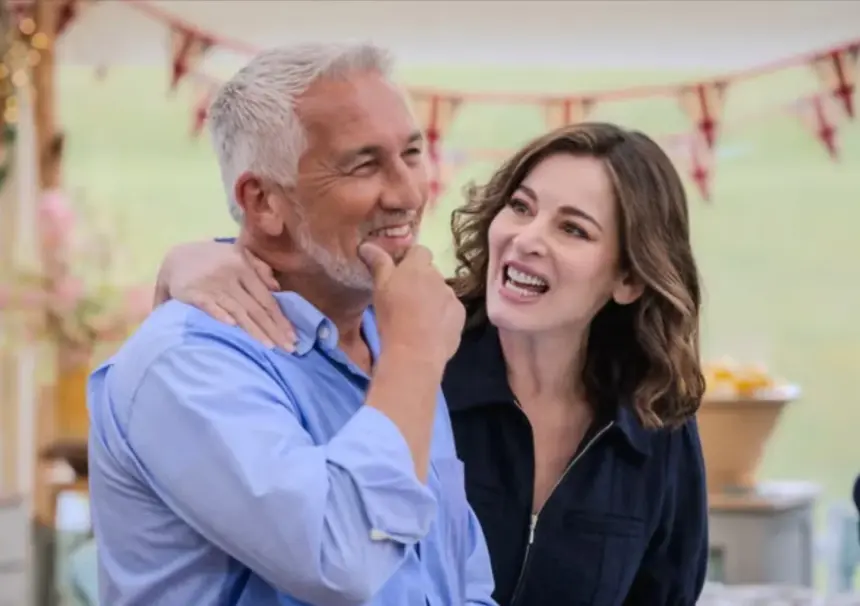
The chemistry with Paul Hollywood also settles quickly.
At one point, Nigella responds to Paul’s preference for neatness by saying, “I know you like neatness, but I like a bit of goo.”
The exchange is unmistakably in keeping with the innuendo that has long been part of Bake Off‘s comedic language.
Paul Hollywood Remains the Constant
With Nigella replacing Prue, Paul Hollywood is now the only judge who has remained throughout the programme’s long run.
His presence gives the judging panel continuity, while Nigella introduces a noticeably different personality.
The first episode suggests that the two can comfortably play off one another, with Nigella providing a more relaxed and indulgent counterpoint to Paul’s technical approach.
That dynamic could become one of the series’ strongest elements if given enough space.
The problem is that the rest of the format remains almost completely unchanged.
The Biggest Problem Is the Format
The opening episode follows the familiar Bake Off structure.
There is the Signature Challenge, allowing contestants to demonstrate their established baking abilities.
Then comes the Technical Challenge, designed to test skills under more controlled and unfamiliar conditions.
Finally, there is the Showstopper, where ambitious designs and elaborate creations determine who can impress the judges when the pressure is highest.
There is nothing inherently wrong with this structure. It has worked for years.
But after 16 years on television, the repetition is increasingly noticeable.
Cakes collapse. Decorations melt. Contestants run out of time. Someone inevitably struggles with an oven. A technically impressive creation receives praise. Another ambitious bake becomes a disaster.
The emotional beats remain remarkably predictable.
Nigella Could Have Been the Catalyst for a Bigger Refresh
The arrival of a new judge presented the programme with an opportunity.
The 2026 version of Bake Off is already considerably removed from the programme that launched in 2010. There have been different presenters, different judges and changes in the show’s broadcasting history.
Yet the fundamental competition structure remains almost untouched.
That makes Nigella’s arrival feel less like a reinvention and more like a new personality being inserted into an established machine.
Rather than adapting the format around her strengths, the programme largely asks Nigella to adapt herself to Bake Off.
That isn’t necessarily a disaster. In fact, it may be exactly what longtime viewers want.
But it does leave a sense of a missed opportunity.
The Show Still Has Plenty of Charm
Despite those criticisms, the opening episode isn’t without its pleasures.
The contestants remain the heart of the programme, and their reactions to success and failure continue to generate the warmth that has made Bake Off such a durable television institution.
Nigella also adds an appealing layer of glamour and personality.
Her ability to move effortlessly between food appreciation, empathy and playful innuendo makes her a natural television presence.
The concern isn’t that Nigella is a poor fit.
It’s almost the opposite: she is such an interesting addition that the programme could be doing more with her.
The Great British Bake Off 2026 Review: Verdict
Nigella Lawson’s arrival is undoubtedly the most interesting thing about the new series.
She is charismatic, sympathetic and perfectly capable of holding her own in the famously cozy Bake Off tent. Her exchanges with Paul Hollywood are promising, while her interactions with contestants show why she was such an appealing choice for the role.
But the first episode also highlights a larger problem: the format feels increasingly fixed in place.
After 16 years, Bake Off could benefit from more than a change of judge. A new challenge, a meaningful alteration to the competition structure or even a rethink of some of its repetitive segments could give the series a much-needed jolt.
Instead, Nigella has been dropped into essentially the same machine.
Hunterfly rating: 3/5
Nigella brings plenty of warmth, wit and star power, but the programme itself needs to rise to the occasion. The ingredients are still good; the recipe simply needs changing.