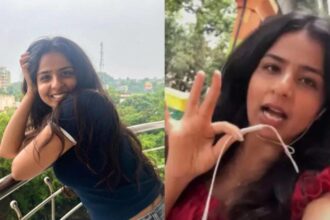







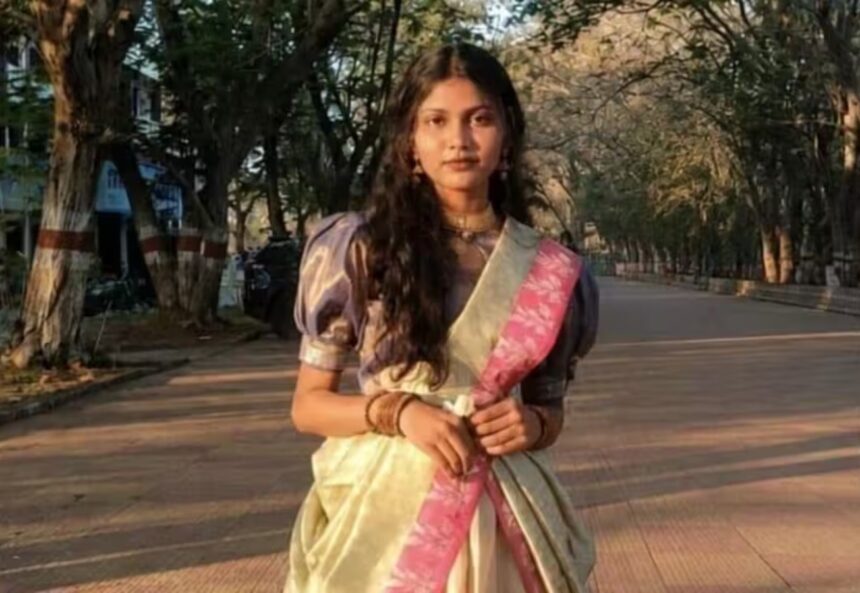
Arvinda Barsagade grew up in a region long associated with Maoist violence and limited opportunities. Today, at 20, the Gadchiroli native is a trained civil engineering professional working towards a future shaped by education, skills and employment.
For Arvinda Barsagade, childhood unfolded against the backdrop of a conflict that shaped the lives of generations in Maharashtra’s Gadchiroli district.
She was just four months old when her father left the family home and joined the Sironcha Dalam during a period when Maoist activity in the region was at a high point. Years later, the sound of gunfire and the fear associated with insurgency have given way to a very different ambition.
At the age of 20, Arvinda has completed a diploma in civil engineering and is now a trainee associated with LT Gondwana Skill Hub Pvt Ltd in Hedri, an initiative linked to the industrial development taking place in the region.
See more of our coverage in your search results.
Add Hunterfly on GoogleHer journey—from a childhood affected by insurgency to technical education and professional training—reflects the changing aspirations of some young people in Gadchiroli.
A childhood shaped by conflict
Arvinda’s father, Rajababu, who was also known as Kiran or Samayyaya, worked as a peon at the Narayanpur gram panchayat in the early 2000s.
According to the account of Arvinda’s family history, he later came under pressure after villagers complained to Maoist groups that he had collected excess house tax. Following public humiliation and mounting pressure, he was compelled to join the Sironcha Dalam in 2005.
The development had a lasting impact on the family.
Arvinda’s mother, Lata, briefly worked as a peon in Sironcha but later left the job after facing difficulties connected to her husband’s past. She then took up different odd jobs to support the family and raise Arvinda, who was her only child at the time.
See more of our coverage in your search results.
Add Hunterfly on GoogleFor the young girl, education gradually became the route towards a life outside the uncertainty and limitations surrounding her childhood.
Education becomes a turning point
Arvinda began her formal education in Bhogapur, where she enrolled in Class I.
A significant change came in 2010 when her father surrendered before the Gadchiroli police. Following his surrender, the family moved closer to the district police headquarters.
See more of our coverage in your search results.
Add Hunterfly on GoogleThe relocation brought Arvinda closer to educational facilities and allowed her to continue her studies in Gadchiroli town.
She completed Class 10 and later studied arts in Classes 11 and 12 during the Covid-19 pandemic.
At one stage, Arvinda considered pursuing a career in law. She was reportedly inspired by advocate and political activist Kavita Moharkar and initially wanted to follow a legal career.
Her plans, however, eventually moved in a different direction.
Arvinda decided to pursue technical education and enrolled at a government polytechnic in Gadchiroli. She completed her diploma in civil engineering in 2025.
The decision opened a path towards the construction and infrastructure sector, giving her a professional direction closely connected with the changing development landscape of her home district.
Support for education and digital learning
Arvinda’s educational journey was also supported by individuals working with the children of surrendered Maoist cadres.
Police officers involved in welfare and rehabilitation efforts became part of her wider support network.
Sub-inspector Narendra Piwal, associated with the Gadchiroli police welfare wing, took note of her request for a laptop to support her studies.
Arvinda later received a tablet from Maharashtra Chief Minister Devendra Fadnavis at a programme organised for surrendered Maoists.
For students from financially constrained backgrounds, access to digital devices can play a practical role in continuing education, particularly as online learning and digital study materials have become increasingly important.
Arvinda says the support she received helped her continue pursuing her education and professional goals.
A new chapter in Hedri
After completing her civil engineering diploma, Arvinda’s journey moved into the workplace.
With assistance from Kavita Moharkar, she was introduced to the human resources team associated with Lloyds. On December 1, 2025, she joined as a trainee at LT Gondwana Skill Hub in Hedri.
She had previously worked as a supervisor and is now continuing to gain professional experience through technical and workplace training.
The initiative is connected to the broader industrial expansion involving Lloyds Metals and Energy in the Hedri and Konsari areas.
The developments are part of a wider economic shift in parts of Gadchiroli, where investment and industrial activity are increasingly being discussed alongside security and infrastructure improvements.
For young people in the district, the availability of local training and employment opportunities could potentially reduce the need to migrate to major cities in search of work.
Gadchiroli’s changing development story
For decades, Gadchiroli has faced major developmental challenges alongside the impact of Maoist violence.
The difficult security environment affected access to remote areas and created obstacles for infrastructure projects, government services and private investment.
However, as security conditions changed in several parts of the region, the conversation around Gadchiroli also began to include industrial development, employment and skill training.
Arvinda believes the transformation has created opportunities that were difficult to imagine earlier.
“The end of Maoist violence paved the way for development. Earlier, fear kept investors, ministers and officials away from interiors of the district. As the rebel threat waned, companies such as Lloyds arrived. Young people no longer have to leave Gadchiroli for work; jobs are coming to them,” she said.
Her comments reflect a broader hope that economic activity and local employment could provide young people with alternatives and strengthen long-term development.
From migration for work to local opportunities
For many young people in rural and remote districts, education does not automatically lead to employment close to home.
Technical graduates frequently move to major cities or industrial centres in search of jobs.
The emergence of skill hubs, construction projects and industrial facilities in Gadchiroli could create new opportunities for local workers, particularly those with technical qualifications.
For Arvinda, entering the civil engineering and construction sector in her home district has personal significance.
She represents a generation that has experienced both the consequences of prolonged conflict and the possibility of professional opportunities emerging closer to home.
Her career path also illustrates the importance of connecting education with employment.
A diploma or technical qualification can provide skills, but access to training, mentorship and workplace experience can help students transition from classrooms to professional environments.
A goal to continue studying
Arvinda’s journey is still at an early stage.
She now plans to continue her education and pursue a Bachelor of Technology degree.
Her long-term ambition goes beyond securing a stable career. Once established professionally, she wants to contribute to the development of young people in her district.
One of her goals is to help create skill-training opportunities for local youth.
The idea is rooted in her own experience. Having benefited from education, institutional support and access to professional training, Arvinda hopes that more young people from difficult backgrounds can receive similar opportunities.
Rehabilitation and the next generation
The story also highlights the long-term importance of rehabilitation efforts involving former Maoists and their families.
The effects of conflict can extend beyond an individual who participated in an insurgency. Children and family members may also face educational, financial and social barriers.
Effective rehabilitation policies therefore involve more than a single act of surrender. Long-term support, education, skills and access to employment can play an important role in helping families build stable futures.
Gadchiroli Superintendent of Police M. Ramesh has been involved in efforts to implement rehabilitation policies for former Maoists.
Referring to Arvinda’s journey, he said that Gadchiroli was changing into a place where a child affected by the region’s conflict could now think about education, employment and family life.
His remarks point to the significance of individual stories within broader discussions about peace and development.
More than a personal success story
Arvinda Barsagade’s journey should not be viewed simply as a story of individual determination.
It also highlights the role that education, family support, rehabilitation programmes, access to technology and professional opportunities can play in changing life outcomes.
From beginning school in Bhogapur to earning a diploma in civil engineering and starting professional training in Hedri, her path has been shaped by several turning points.
Her father’s surrender in 2010 changed the family’s circumstances. Her mother’s determination helped sustain the household. Educational opportunities provided a new direction. Support from welfare and rehabilitation networks helped her continue her studies.
Today, she is looking ahead to further education and a career in the engineering sector.
Building the future she once imagined
At 20, Arvinda Barsagade is only beginning her professional journey.
Her ambition to pursue a BTech and eventually support skill development for young people reflects a desire to create opportunities beyond her own career.
For Gadchiroli, a district with a long and complicated history, her story represents one example of how education and employment can shape the aspirations of a new generation.
The transformation of a region cannot be measured by a single industrial project or individual success story. Sustainable progress depends on access to education, infrastructure, security, healthcare and meaningful employment.
But for Arvinda, the difference between her childhood and her present is already clear.
A girl who began life amid the consequences of a conflict now works towards a future defined by engineering, professional training and further education.
Her next goal is a BTech degree. Beyond that, she hopes to help other young people gain the skills and opportunities that can allow them to build their own futures—without having to leave their homes behind.