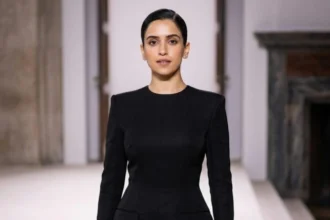





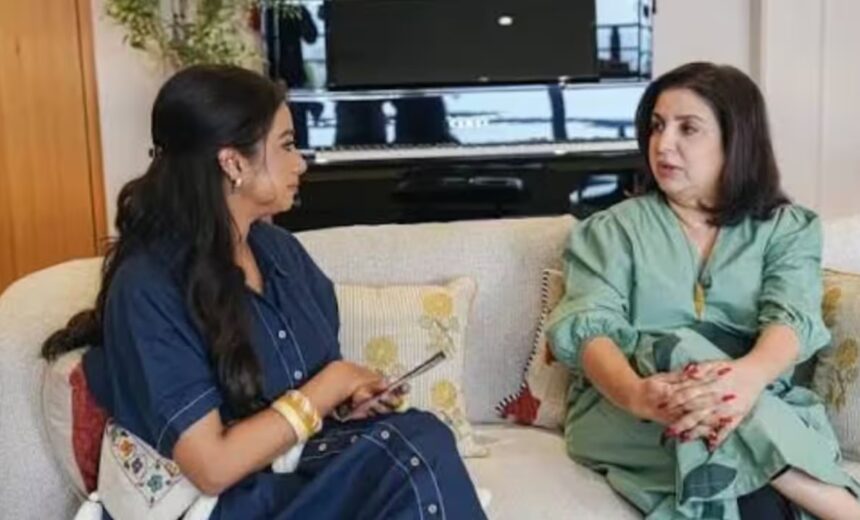
Farah Khan has recalled facing objections from film industry insiders over her decision to work with Shreya Ghoshal on Main Hoon Na. The filmmaker revealed that music composer Anu Malik supported the young singer, whose voice went on to become an important part of the film’s popular soundtrack.
Filmmaker and choreographer Farah Khan has opened up about the resistance she reportedly faced while selecting playback singer Shreya Ghoshal for her 2004 directorial debut, Main Hoon Na. According to Farah, several people from the film industry contacted her and questioned whether the relatively new singer was suitable for a major commercial Bollywood production.
Despite the objections, Farah remained interested in bringing a fresh voice to the film’s music. Composer Anu Malik also supported Shreya’s selection, praising her singing abilities and encouraging Farah to work with her.
The filmmaker’s recollection offers a glimpse into the decisions behind one of the most recognisable Hindi film soundtracks of the early 2000s.
Farah Khan Recalls Industry Objections to Shreya Ghoshal’s Selection
According to Farah Khan, some industry insiders were unconvinced about choosing Shreya Ghoshal for Main Hoon Na because of her age and limited experience in mainstream Hindi cinema.
Shreya had already attracted attention for her playback singing in Sanjay Leela Bhansali’s Devdas, released in 2002. However, the musical style of that film was different from the contemporary commercial sound Farah wanted for her directorial debut.
Farah recalled receiving telephone calls from people who advised her against selecting the young singer.
The objections reportedly centred on whether Shreya, whose early work prominently featured classical influences, could adapt to the musical requirements of Main Hoon Na.
Farah did not identify the individuals who expressed those reservations.
Rather than changing her plans because of the criticism, she continued exploring how Shreya’s voice could contribute to the soundtrack.
Anu Malik Encouraged Farah Khan to Choose Shreya Ghoshal
Music composer Anu Malik played an important role in supporting Shreya Ghoshal’s involvement in the film.
According to Farah’s recollection, Malik strongly recommended the singer and described her as “too good.”
His endorsement reinforced Farah’s confidence in Shreya’s abilities at a time when others reportedly questioned the decision.
Farah wanted the film’s music to feature a distinctive vocal quality rather than depend entirely on established playback singers.
The filmmaker was particularly impressed by Shreya’s singing contribution associated with Amrita Rao’s character in the film’s title track.
That performance reportedly encouraged Farah to offer Shreya an additional song picturised on Sushmita Sen.
The decision helped broaden Shreya’s involvement in the soundtrack and demonstrated the filmmakers’ confidence in her versatility.
How Shreya Ghoshal Became Part of Main Hoon Na’s Popular Soundtrack
Released in 2004, Main Hoon Na marked Farah Khan’s debut as a film director.
The film featured Shah Rukh Khan, Sushmita Sen, Suniel Shetty, Zayed Khan and Amrita Rao in prominent roles.
Its soundtrack, composed by Anu Malik with lyrics by Javed Akhtar, became one of the film’s defining elements.
Shreya Ghoshal contributed to the musical identity of Main Hoon Na, including the romantic track Tumhe Jo Maine Dekha, which featured her alongside Abhijeet Bhattacharya.
Her work on the soundtrack demonstrated that her voice could complement contemporary romantic music as well as the classical-influenced compositions associated with her earlier career.
Farah’s account highlights the creative decision-making involved in selecting singers whose voices suit particular characters and situations.
Shreya Ghoshal Had Already Made Her Bollywood Breakthrough With Devdas
Although Main Hoon Na helped introduce Shreya Ghoshal’s voice to more listeners, it was not her first major breakthrough in Hindi cinema.
The singer made her Hindi film playback debut with Devdas, starring Shah Rukh Khan, Aishwarya Rai and Madhuri Dixit.
Her contributions to the film included songs such as Bairi Piya and Dola Re Dola.
Shreya received significant recognition for her work in Devdas, including the National Film Award for Best Female Playback Singer for Bairi Piya.
The award established her as a promising young playback singer before Main Hoon Na reached cinemas.
However, Farah’s recollection suggests that critical recognition did not automatically remove doubts about whether a singer could adapt to different commercial styles.
Her experience illustrates how artists can face questions about versatility even after receiving recognition early in their careers.
Why Farah Khan Wanted a Fresh Voice for Main Hoon Na
Playback singing is an essential part of mainstream Indian cinema, with vocal performances helping establish the emotional tone of romantic, dramatic and celebratory sequences.
Choosing a singer involves considerations beyond vocal ability alone.
Filmmakers and composers may look for a particular vocal texture, expressive style or tonal quality that suits an actor’s screen presence.
For Main Hoon Na, Farah Khan reportedly wanted Shreya’s voice to bring a fresh quality to the soundtrack.
The filmmaker’s decision also reflected her willingness to work with a relatively new performer despite reservations expressed by others.
Anu Malik’s support helped ensure that Shreya received an opportunity to demonstrate her range in a different musical setting.
The collaboration became another notable credit in the singer’s early Bollywood career.
From Devdas to Main Hoon Na: Shreya Ghoshal’s Rise in Playback Singing
Shreya Ghoshal’s career began gaining national attention after she participated in the television singing competition Sa Re Ga Ma.
Her work in Devdas brought her widespread recognition, and subsequent Hindi film projects helped establish her place in the playback singing industry.
Over the following years, she recorded songs in several Indian languages, including Hindi, Bengali, Tamil, Telugu, Malayalam and Kannada.
Her vocal versatility allowed her to work across romantic ballads, classical-influenced compositions, contemporary film music and other styles.
She went on to become one of India’s most recognised playback singers, earning multiple National Film Awards and other industry honours.
Main Hoon Na was one of the projects that contributed to her expanding portfolio during the early years of her career.
Rather than representing the beginning of her success, the film demonstrated her ability to move between different styles of Hindi film music.
Farah Khan’s Recollection Highlights the Value of Creative Conviction
Farah Khan’s account of choosing Shreya Ghoshal for Main Hoon Na provides an example of how creative decisions can face resistance before their results become widely appreciated.
The filmmaker reportedly encountered doubts about the singer’s suitability but chose to evaluate her work and listen to the recommendation of composer Anu Malik.
Shreya’s subsequent career demonstrated her ability to perform across a wide range of musical styles.
The recollection also highlights the importance of giving emerging artists opportunities to move beyond the type of work that initially brought them recognition.
For Shreya Ghoshal, Main Hoon Na became another important step in a career that began with Devdas and developed into decades of successful playback singing.