





A Sequel That Chooses Noise Over Nuance
Dhurandhar: The Revenge, directed by Aditya Dhar, attempts to scale up everything that worked in its predecessor—action, intensity, and emotional stakes. However, in trying to go bigger, it ends up becoming louder and far more exhausting.
What begins as a high-stakes revenge saga soon turns into a sensory overload that prioritizes spectacle over storytelling.
Ranveer Singh Holds It Together
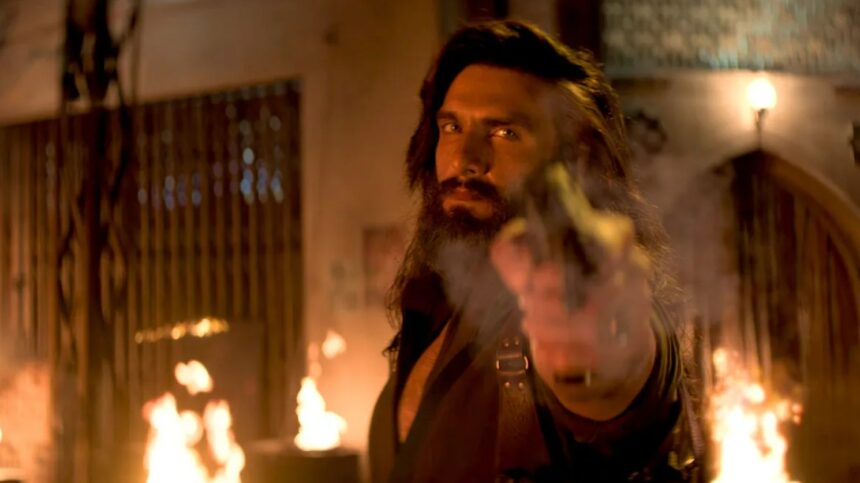
At the center of the chaos is Ranveer Singh, who delivers a committed and layered performance.
As Jaskirat Singh Rangi, living under the identity of Hamza Ali Mazari, Ranveer navigates vulnerability, rage, and cold calculation with impressive control. His performance becomes the film’s strongest pillar, carrying much of its nearly four-hour runtime.
See more of our coverage in your search results.
Add Hunterfly on GoogleA Story That Loses Its Grip
Picking up from the events of the first film, the narrative follows an undercover agent rising through Karachi’s underworld while battling terror networks and political conspiracies.
While the premise is engaging on paper, the execution falters. The film stretches its material excessively, mistaking length for depth. What could have been a tight thriller instead feels like an extended series filled with indulgent sequences.
The pacing suffers, and the emotional impact gets diluted amid repetitive violence and over-explanation.
Excessive Violence and Sensory Overload
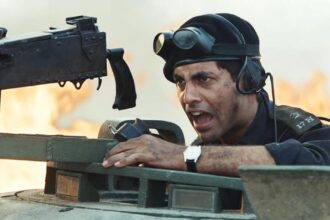
Director Aditya Dhar leans heavily into brutality, crafting a world where violence dominates every frame.
The action sequences are relentless, often pushing the audience toward desensitization rather than engagement. Without the strong background score, many scenes risk feeling repetitive, reducing to variations of stylized brutality.
See more of our coverage in your search results.
Add Hunterfly on GoogleThis constant escalation leaves little room for quieter, more reflective moments.

Ideology Over Storytelling
A significant portion of the film is driven by political undertones.
The narrative frequently aligns itself with a particular worldview, using the story as a vehicle for commentary. While cinema often reflects socio-political realities, here the messaging feels overt and, at times, intrusive.
See more of our coverage in your search results.
Add Hunterfly on GoogleThis approach oversimplifies complex geopolitical issues into binary conflicts, reducing narrative depth.
Supporting Cast and Performances
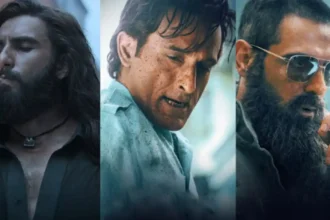
Arjun Rampal delivers a steady performance but lacks the commanding presence seen in the previous installment’s antagonist.
Sanjay Dutt brings his trademark swagger, adding some weight to the narrative, while R. Madhavan contributes effectively in a crucial role.
Among others, Sara Arjun stands out in emotionally charged moments, offering a contrast to the film’s otherwise aggressive tone.

Technical Aspects and Music
The film’s scale is evident in its production design and action choreography, but the execution often feels excessive.
The background score plays a major role in maintaining intensity, though it occasionally overpowers the scenes. The use of repurposed songs adds brief moments of nostalgia but feels inconsistent within the narrative flow.
An Overlong Experience
With a runtime nearing four hours, the film demands patience.
Instead of maintaining tension, the extended duration leads to fatigue. Several sequences could have been trimmed to create a sharper and more engaging narrative.
Final Verdict
Dhurandhar: The Revenge is a film that thrives on scale and performance but struggles with restraint and storytelling clarity.
Ranveer Singh’s powerful act keeps it watchable, but the excessive length, relentless violence, and heavy-handed messaging make it an exhausting experience.
In trying to amplify everything, the film ultimately loses balance.
Rating
2.5 / 5
Disclaimer
This review is based on critical analysis of the film’s narrative, performances, and technical execution. Audience opinions may vary.