








A Story That Goes Beyond Revenge
Dhurandhar: The Revenge may appear to be a high-octane action thriller on the surface, but beneath its spectacle lies a narrative shaped by memory, displacement, and unresolved conflict.
Directed by Aditya Dhar, the film extends its story beyond espionage and revenge, touching upon themes that echo real historical tensions—particularly those linked to Kashmir.
The Personal Becomes Political
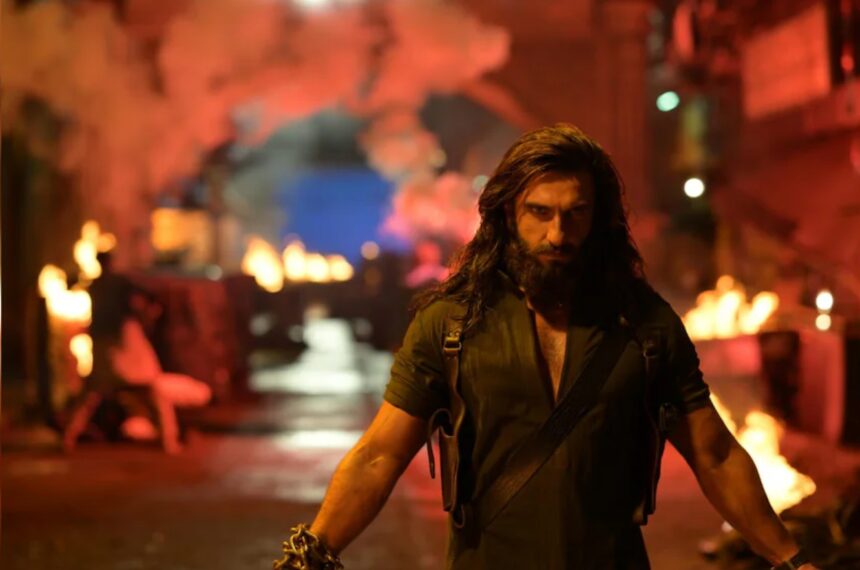
At the center of the film is Jaskirat Singh Rangi, played by Ranveer Singh, whose transformation into Hamza Ali Mazari is not just a plot device but a symbolic journey.
His loss, displacement, and eventual radical path mirror the emotional rupture experienced by communities uprooted from their homeland. The narrative subtly draws parallels to the experiences of Kashmiri Pandits, where identity and belonging remain deeply contested.
See more of our coverage in your search results.
Add Hunterfly on GoogleThe idea of losing one’s home—and becoming a stranger to it—forms the emotional backbone of the story.
Kashmir as a Metaphor
Rather than addressing the Kashmir issue directly, the film uses metaphor and backstory to evoke it.
A local conflict over land evolves into a larger commentary on territory, ownership, and historical grievance. This layered storytelling allows the film to connect personal tragedy with geopolitical tension.
The homeland, in this context, becomes less of a physical space and more of a memory—distant, altered, and difficult to reclaim.
A Narrative of Continuous Conflict
The film presents an ongoing struggle between India and forces operating across borders, framing it as a prolonged and evolving conflict rather than a resolved chapter.
See more of our coverage in your search results.
Add Hunterfly on GoogleImportantly, it distinguishes between a nation and the elements within it that drive violence, focusing on terrorism and ideological battles rather than broad generalizations.
This framing aligns the story with a larger narrative of national security and long-term strategic tension.
Ideology and Cinematic Interpretation
Dhurandhar 2 also reflects contemporary political thinking, integrating themes of security, surveillance, and decisive action.
See more of our coverage in your search results.
Add Hunterfly on GoogleCharacters like Ajay Sanyal, played by R. Madhavan, represent a doctrine of vigilance and patience, which the film interprets through action-heavy storytelling.
While some viewers may see this as an endorsement of a particular viewpoint, others may interpret it as a cinematic exploration of statecraft and response strategies in a complex geopolitical landscape.
The Role of Antagonists
Performances by Arjun Rampal and others add layers to the conflict, presenting antagonists who embody ideological extremism and hostility.
These characters are designed not just as villains but as representations of the larger threat narrative the film seeks to portray.
Between Reality and Fantasy
Despite its grounding in real-world references, Dhurandhar 2 ultimately operates as a cinematic fantasy.
It constructs a version of reality where justice is swift, enemies are clearly defined, and outcomes align with emotional expectations. This approach offers a sense of catharsis, particularly for audiences seeking resolution to complex issues that remain unresolved in real life.
Violence and Its Limits
The film’s reliance on intense action and graphic sequences reinforces its themes but also raises questions about excess.
While the violence underscores the stakes, it sometimes overshadows the emotional depth, leaving limited space for reflection on the human cost of conflict.
Moments of tenderness exist, but they are brief and often eclipsed by the scale of aggression.
A Reflection of Collective Memory
At its core, Dhurandhar 2 is not just about revenge—it is about memory, identity, and unresolved grief.
It echoes the lingering impact of historical divisions, including those dating back to Partition, and the continuing tension between neighboring nations.
The film suggests that some conflicts are not easily resolved, existing instead as enduring narratives passed across generations.
Final Take
Dhurandhar 2 blends action with layered themes, using cinema as a medium to explore complex questions of identity, conflict, and belonging.
While it may not provide definitive answers, it succeeds in sparking conversation—about history, politics, and the emotional weight of unresolved pasts.
Disclaimer
This is an opinion-based analysis intended for informational and editorial purposes. Interpretations may vary among viewers.