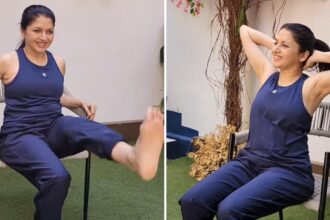






Actor and fitness enthusiast Chhavi Mittal has resumed light strength training after undergoing laparoscopic myomectomy, saying she is being cautious while rebuilding her fitness. Doctors, however, stress that recovery after abdominal surgery must be guided by the treating surgeon rather than fitness levels alone.
Actor Chhavi Mittal has shared an update on her recovery after undergoing laparoscopic myomectomy, revealing that she has returned to the gym while significantly reducing the intensity of her workouts.
The 46-year-old actor said she underwent the procedure on August 25 and had four abdominal incisions along with several internal stitches. While she described her recovery as progressing well, she also acknowledged that she continues to have restrictions and is deliberately taking a slower approach to exercise.
For someone accustomed to regular strength training, stepping back from weights can be challenging. Mittal said her focus currently is on gradually rebuilding strength rather than immediately returning to her previous training capacity.
See more of our coverage in your search results.
Add Hunterfly on GoogleChhavi Mittal starts exercising cautiously after surgery
In a social media update, Mittal said she had resumed gym sessions around three weeks after her surgery. She explained that she was lifting only about a quarter of the weight she would normally handle and was avoiding compound movements such as conventional deadlifts and squats.
Her reason for modifying her routine was the need to minimise core involvement during the early stages of recovery.
She also said walking played an important role before she returned to the gym. According to Mittal, she began taking walks on the fourth day after surgery and gradually increased her activity over the following weeks.
Her experience highlights an important distinction in post-surgical recovery: being able to move comfortably does not necessarily mean that the body is ready for strenuous exercise.
Why internal healing matters after a myomectomy
Dr Gandhali Deourukhkar, consultant gynaecologist and obstetrician at Wockhardt Hospitals Mumbai Central, explained that minimally invasive surgery can sometimes give a misleading impression of how quickly the body has recovered.
See more of our coverage in your search results.
Add Hunterfly on GoogleAlthough laparoscopic procedures involve relatively small external incisions, deeper tissues can require considerably more time to heal.
In a myomectomy, fibroids are removed from the uterus and the uterine tissue is repaired. As a result, internal healing continues even after the visible abdominal wounds begin to settle.
Dr Deourukhkar cautioned that feeling energetic after surgery should not automatically be interpreted as being ready for strenuous exercise. The appropriate timeline depends on the procedure, the individual’s recovery and the treating surgeon’s assessment.
See more of our coverage in your search results.
Add Hunterfly on GoogleWhy heavy lifting can be problematic during recovery
Strength training, particularly exercises involving substantial loads, can increase pressure within the abdomen and place significant demands on the abdominal musculature.
According to Dr Deourukhkar, this is one reason patients recovering from abdominal procedures need to be cautious about returning to weight training.
Importantly, the absence of pain does not necessarily mean that deeper tissues have completely healed. Someone may feel relatively well while internal recovery is still underway.
For this reason, returning to weights should be gradual and undertaken only after the treating gynaecologist or surgeon has determined that healing is adequate.
Does recovery mean complete bed rest?
Not necessarily.
Dr Deourukhkar said that, in uncomplicated recoveries, gentle movement and walking are generally encouraged rather than prolonged inactivity. Gradual movement can help maintain circulation, reduce stiffness and slowly rebuild stamina.
The key is to distinguish gentle activity from strenuous exercise.
Walking and routine daily movement can typically be increased progressively according to medical advice, while heavy lifting, intense abdominal exercises and high-impact activities may need to be postponed until the appropriate stage of recovery.
Mittal’s account of gradually increasing her walks before returning to the gym reflects this broader principle, although an individual’s recovery plan should always be personalised.
Fitness levels should not determine the recovery timeline
Dr Kusum Lata, senior consultant obstetrician, gynaecologist and advanced laparoscopic surgeon at Motherhood Hospitals, Gurgaon, noted that taking a break from exercise can be particularly difficult for people accustomed to strength training.
However, she stressed that exercises such as heavy lifting, squats and deadlifts can place considerable pressure on the abdominal region and should generally be avoided until the treating surgeon provides clearance.
The goal, she explained, should not be to return to a previous weight or workout intensity as quickly as possible. Giving healing tissues sufficient time to recover is more important than maintaining a particular fitness schedule.
Warning signs that should not be ignored
During post-surgical recovery, certain symptoms warrant medical attention rather than being treated as normal consequences of exercising.
Dr Deourukhkar highlighted symptoms including:
- Increasing abdominal pain
- Heavy bleeding
- Fever
- Worsening swelling
- Unusual discharge
- Significant weakness
Anyone experiencing concerning or worsening symptoms should contact their treating doctor.
The takeaway from Chhavi Mittal’s recovery
Chhavi Mittal’s return to exercise illustrates the challenge of balancing physical activity with the need for adequate recovery after abdominal surgery.
Her decision to begin with walking, reduce the weights substantially and avoid exercises requiring significant core engagement reflects her own approach to recovery. It should not, however, be treated as a standard timeline for everyone undergoing a myomectomy.
Post-operative recovery varies from person to person. The type of surgery, the extent of internal healing, complications, overall health and individual medical advice can all affect when different forms of exercise are appropriate.
For people who regularly lift weights, the safest approach is to view recovery as a gradual rebuilding process rather than a race back to previous performance levels. A temporary reduction in training intensity is ultimately less important than allowing surgical tissues to heal properly.
Health disclaimer: This article is for general informational purposes and is not a substitute for medical advice. Anyone recovering from surgery should follow the instructions of their treating surgeon or healthcare professional before resuming exercise, particularly strength training or high-intensity activity.