




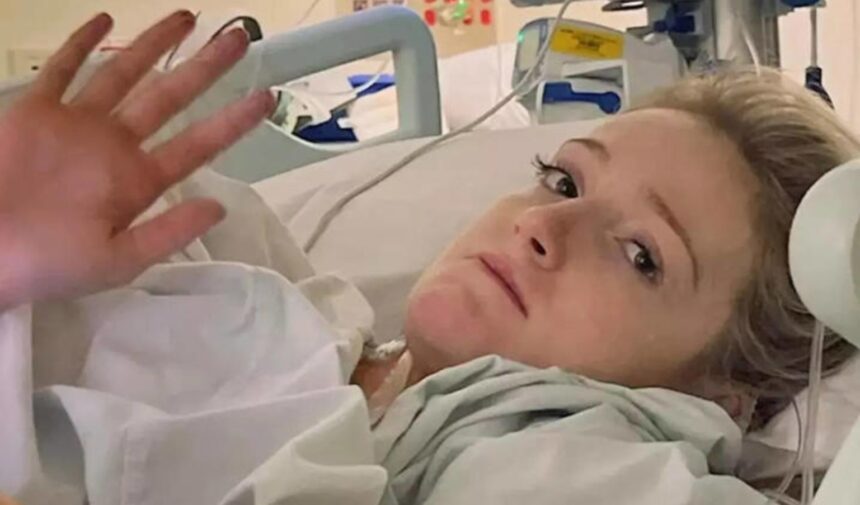
For 25-year-old Annaliese Holland, life has been a relentless struggle against a body that refused to cooperate. From childhood spent in hospital beds to her early twenties tethered to feeding tubes and IV lines, Annaliese’s existence was marked by chronic pain, multi-organ failure, and a rare autoimmune condition. After years of suffering, she chose to end her life through voluntary assisted dying (VAD) — reclaiming control over the one aspect of her life her disease had not taken: her autonomy.
A Rare Disease and a Lifetime of Suffering
Growing up in Adelaide, Annaliese endured years of unexplained and debilitating symptoms. Persistent vomiting, a digestive system that refused to function, and general organ failure left doctors struggling to diagnose her condition. It was only at age 18, when she transitioned into adult care, that she was diagnosed with autoimmune autonomic ganglionopathy (AAG) — a rare disorder where the immune system attacks nerves that control involuntary functions such as digestion, blood pressure, and heart rate.
As her condition progressed, Annaliese became dependent on total parenteral nutrition, relying entirely on IV lines for survival. This brought constant risks of infection, while medications used to manage her symptoms caused severe complications, including:
- Severe osteoporosis at a young age
- Four spinal fractures and a cracked sternum
- High pressure on her heart and lungs
“My body became unpredictable, fragile, and every day was a battlefield,” she explained. “There are beautiful moments, but they are exhausting. I live in chronic, debilitating pain every single day.”
See more of our coverage in your search results.
Add Hunterfly on GoogleWatching Life Pass By
While her peers celebrated milestones like marriages, engagements, and childbirths, Annaliese remained confined to hospital rooms. “No man wants to date someone dying,” she admitted. By age 22, doctors confirmed her worst fears: her condition was terminal, and multi-organ failure had begun.
Facing a life where pain would never cease, Annaliese decided to reclaim control through voluntary assisted dying, a process requiring rigorous medical assessments and psychological evaluations before approval.
A Choice Made With Clarity
When her application was approved after three weeks of review, Annaliese experienced relief. “It sounds strange to be happy about it, but I finally felt a little peace,” she said. “Choosing VAD is not surrender. It is knowing I have fought long and hard, and I cannot keep suffering like this.”
Her decision was heart-wrenching for her family. Her father, Patrick, initially pleaded with her to continue fighting but ultimately understood her choice after witnessing the intensity of her medical struggles.
“Dad, please let me go. I will not hate you. I just cannot do this anymore,” she told him. His response: “You have had enough. I totally understand.”
See more of our coverage in your search results.
Add Hunterfly on GoogleChoosing Dignity and Control
For Annaliese, this decision was not about ending her life, but about ending pain, fear, and the dread of waking each day in a failing body.
“I feel fortunate to have this choice,” she said. “It is one of the bravest things you can do, to say you’ve had enough. I have fought bloody hard.”
By choosing VAD, Annaliese reclaimed the only part of her life her disease could not control: her final say.
See more of our coverage in your search results.
Add Hunterfly on GoogleThis story highlights the challenges of living with rare and debilitating conditions, as well as the complex ethical and medical discussions surrounding voluntary assisted dying.