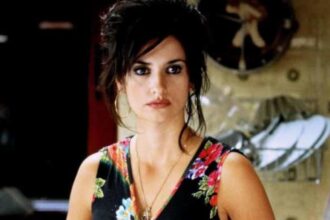









Angelina Jolie has once again spoken candidly about her preventive double mastectomy, sharing that she has grown to love her scars as symbols of strength and choice.
In a recent interview with French outlet France Inter, the 50-year-old Oscar-winning actor reflected on the decision she made more than a decade ago after learning she carries the BRCA1 gene mutation — a hereditary variant that significantly increases breast cancer risk.
“I Love My Scars”
Jolie revealed that she does not aspire to an image of perfection untouched by life’s marks.
“I’m not drawn to some perfect idea of a life that has no scars. I see my scars as a choice I made to do what I could to stay here as long as I could with my children,” she said.
See more of our coverage in your search results.
Add Hunterfly on GoogleFor the actor, the scars represent both resilience and gratitude — a reminder that she had the option to take proactive steps for her health.
In 2013, Jolie publicly disclosed through an op-ed in The New York Times that she had undergone a preventive double mastectomy after genetic testing confirmed she carried the BRCA1 mutation. At the time, doctors estimated her lifetime risk of developing breast cancer to be significantly elevated.
The decision followed the loss of her mother at 56 to cancer, along with her aunt and grandmother. Jolie later underwent additional follow-up procedures.
She has six children — Maddox, Pax, Zahara, Shiloh, Knox and Vivienne — whom she shares with former husband Brad Pitt. She has previously said that her motivation stemmed from wanting to be present in their lives for as long as possible.
“I’m grateful that I had the opportunity to have the choice to do something proactive about my health,” she added.
See more of our coverage in your search results.
Add Hunterfly on GoogleWhat Is The BRCA1 Gene And Why Does It Matter?
BRCA1 (Breast Cancer gene 1) is a gene responsible for producing proteins that help repair damaged DNA. When functioning normally, it plays a key role in preventing cells from growing uncontrollably.
However, inherited mutations in the BRCA1 gene impair this repair mechanism, significantly increasing the lifetime risk of breast and ovarian cancers.
Individuals with BRCA1 mutations may consider enhanced screening, medication, or preventive (prophylactic) surgery based on medical advice, family history, and personal risk factors.
See more of our coverage in your search results.
Add Hunterfly on GoogleWhat Is Preventive Breast Cancer Surgery?
Preventive breast surgery — medically termed a prophylactic mastectomy — involves removing one or both breasts to reduce the risk of developing breast cancer. It is typically recommended for individuals with very high genetic risk, such as BRCA1 or BRCA2 mutation carriers.
The procedure can reduce breast cancer risk substantially, though it does not eliminate it entirely. Decisions regarding such surgery are highly personal and made after consultation with genetic counsellors and oncology specialists.
FAQs On Preventive Breast Surgery And Scarring
1. Will preventive breast surgery leave scars?
Yes. Any surgery involving incisions results in some degree of scarring. The extent and visibility depend on the surgical technique and individual healing patterns.
2. Where are mastectomy scars typically located?
Scar placement varies. Incisions may be made around the areola, along the breast fold, or across the breast surface. Surgeons often aim to position scars in less visible areas when possible.
3. Does the type of mastectomy affect scarring?
Yes. Skin-sparing and nipple-sparing mastectomies produce different scar patterns compared to traditional mastectomy procedures. The appropriate approach depends on anatomy, reconstruction plans, and cancer risk profile.
4. How long do scars take to heal?
Initial healing generally occurs within several weeks. However, scar maturation — including fading and softening — can take up to a year or longer.
Looking Ahead
Angelina Jolie will next appear in Couture, set against the backdrop of Paris Fashion Week, where she plays a filmmaker diagnosed with breast cancer. The film features dialogue in both French and English.
More than a decade after her preventive surgery, Jolie continues to frame her scars not as imperfections, but as evidence of informed decision-making and resilience.