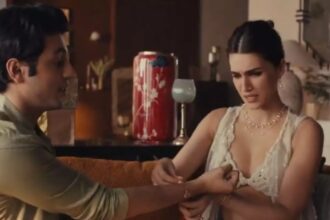






The Bombay High Court has reportedly ordered the removal of objectionable material involving Ananya Panday after the actress raised concerns about the misuse of her photographs, identity and AI-generated representations without consent.
Bollywood actress Ananya Panday has received interim legal relief from the Bombay High Court in a case concerning the alleged unauthorised use of her identity and personal images. The development comes amid growing concern in the entertainment industry over artificial intelligence, digital impersonation and the commercial exploitation of celebrities’ identities.
According to a report by hf, the court directed the removal of objectionable content that appeared to infringe Panday’s privacy and personality rights.
The actress had approached the judiciary after allegedly discovering that businesses and other entities were using her photographs and AI-generated representations to promote products and services without obtaining her permission.
The reported order adds to a series of legal proceedings involving Indian entertainers who have sought protection against identity misuse, misleading endorsements and digitally manipulated material.
Why Ananya Panday Approached the Bombay High Court
Panday’s legal action reportedly centred on the unauthorised commercial use of her image and identity.
The actress alleged that certain businesses had used her photographs and created AI-generated images and videos without her consent. Such material can create a misleading impression that a celebrity is associated with, endorses or supports a particular product.
The dispute highlights an increasingly important distinction in digital advertising: a celebrity’s public visibility does not automatically grant third parties permission to exploit their likeness for commercial purposes.
AI technology has made it easier to produce convincing visual representations of well-known personalities, even without their participation. For performers whose professional identities carry commercial value, unauthorised digital reproductions can raise concerns about reputation, privacy and false associations with brands.
Panday sought judicial protection against these alleged practices.
What the Bombay High Court Said
Justice Madhav Jamdar issued an ad-interim order after considering the allegations, according to the hf report.
At the preliminary stage, the court observed that the objectionable material appeared to interfere with Panday’s rights relating to privacy, publicity and dignity.
The reported direction to remove the material provides immediate, provisional protection while the legal proceedings continue.
An ad-interim order is not the same as a final judgment. It offers temporary relief at an early stage and does not necessarily resolve every allegation or determine the ultimate liability of the parties involved.
The exact scope of the removal directions, including the specific online content and parties covered, should be understood from the court’s written order.
Why Personality Rights Matter for Bollywood Celebrities
Personality rights broadly concern an individual’s ability to protect identifiable aspects of their identity from certain forms of unauthorised exploitation.
For a public figure, these elements may include their name, likeness, voice, signature, image and other characteristics that make them recognisable.
In India, personality-rights disputes may involve several legal principles, including privacy, publicity interests, passing off and intellectual property protections. The applicable legal grounds depend on the circumstances of each case.
The rapid development of generative AI has made these disputes more complex.
Digital tools can now create fabricated advertisements, synthetic voices and manipulated videos that make an individual appear to say or do something they never actually said or did.
When such content is used commercially, audiences may struggle to distinguish genuine endorsements from unauthorised representations.
However, not every reference to a celebrity constitutes an infringement. News reporting, criticism, commentary, parody and other expressive uses may require a different legal assessment from misleading commercial exploitation.
This distinction is important because personality-rights protections must also be considered alongside freedom of expression and legitimate public-interest reporting.
Kriti Sanon Also Received Interim Protection in a Deepfake Case
Ananya Panday’s reported court relief follows another significant development involving Bollywood actress Kriti Sanon.
In an order dated October 29, 2026, the Delhi High Court granted Sanon partial interim protection in proceedings concerning sexually explicit deepfake material, manipulated images, impersonation accounts and AI-powered chatbots allegedly using her identity.
Justice Purushaindra Kumar Kaurav declined to impose an unrestricted prohibition on every use of the actress’s personality.
Instead, the court limited relief to identified online material and specified categories of objectionable content.
The directions reportedly included removing particular links, restricting certain harmful content and requiring relevant platforms to provide identifying information and IP records within a prescribed period.
Importantly, the court distinguished unlawful impersonation and explicit manipulated material from legitimate forms of expression, including journalism, reviews, criticism, satire, parody and fan-created content.
The approach illustrates how courts may address specific harmful uses of a celebrity’s identity without automatically prohibiting all public references to that person.
Other Indian Celebrities Have Sought Similar Legal Protection
The legal concerns raised by Panday and Sanon are not isolated.
Several prominent entertainment personalities, including Anil Kapoor, Jackie Shroff, Aishwarya Rai Bachchan, Abhishek Bachchan, Karan Johar, Nagarjuna, Arijit Singh and Kumar Sanu, have pursued legal protection relating to the unauthorised exploitation of aspects of their identities.
Salman Khan has also been identified among celebrities who have taken legal action concerning the use of personal attributes.
Although the facts and legal remedies vary between cases, the broader issue remains consistent: the possibility of someone using a recognisable public figure’s identity without consent.
The expansion of AI-generated media has increased the relevance of these disputes, particularly when fabricated content resembles authentic advertising or personal communication.
What the Order Could Mean for Brands and AI Content Creators
The reported development is relevant beyond the film industry.
Businesses using celebrity photographs, synthetic representations or AI-generated promotional videos need to consider whether they have the necessary authorisation.
A promotional image does not become legally permissible simply because it was generated by software rather than captured by a camera.
Similarly, digitally recreating a celebrity’s face or voice may still raise legal concerns when the resulting content implies endorsement or commercial association.
For online publishers, the distinction between reporting on a celebrity and commercially exploiting that celebrity’s identity is particularly important.
The practical questions include whether the content is misleading, whether it suggests an endorsement, whether consent was obtained where required, and whether the use interferes with legally protected interests.
These questions cannot always be answered by applying a single rule. Context matters.
What Happens Next?
The Bombay High Court’s reported ad-interim direction represents an initial step in Ananya Panday’s attempt to protect her identity against alleged unauthorised digital exploitation.
Further proceedings may clarify the scope of the protections and the obligations of the parties involved.
For now, the case reflects a broader shift in India’s entertainment landscape, where the protection of public figures increasingly extends beyond traditional photographs and advertisements to AI-generated representations and digital impersonation.
As synthetic media becomes more realistic, disputes involving consent, commercial use and online identity are likely to remain an important part of the legal conversation.
Have a story tip or feedback? Write to [email protected].
© Hunterfly.in. Original editorial content.