




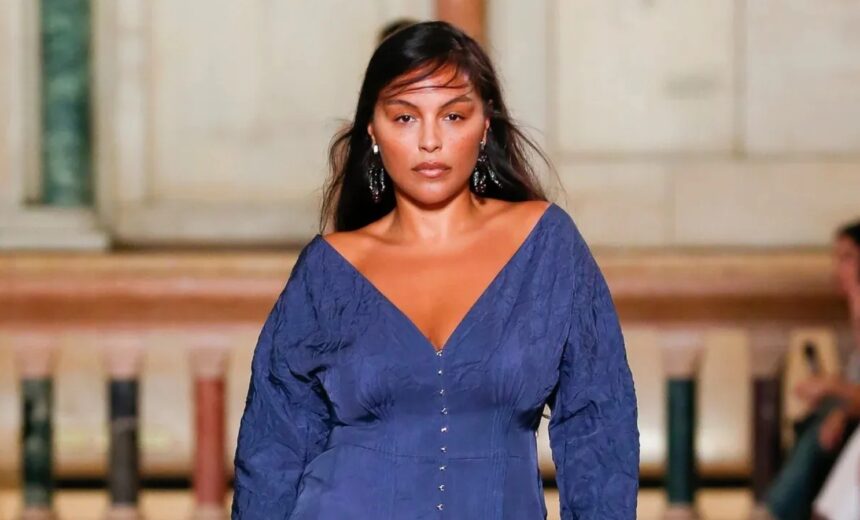
Not long ago, the fashion industry appeared to be undergoing a long-overdue transformation. Runways, campaigns, and digital platforms began showcasing bodies that were diverse, confident, and unapologetically real. Today, that sense of progress seems to be slowing. Amélie Doré, a plus-size model and advocate for body diversity, is calling attention to what she describes as a subtle yet very real decline in inclusive fashion.
A Recognisable Face of Body Diversity
Discovered in 2021, Amélie Doré quickly emerged as part of the rapidly expanding body-positivity movement. At the time, fashion appeared ready to embrace all body types, regardless of size or shape. Curves were celebrated, natural bodies were visible, and representation finally felt closer to reality.
For Amélie, this shift resulted in consistent professional work and growing visibility. Regular projects and collaborations reflected the belief that fashion could evolve — becoming more inclusive, representative, and socially aware. Her career symbolised a promise of lasting change, offering hope to many who had long felt excluded from the industry’s narrow standards.
When Opportunities Disappear Without Explanation
Over the past several months, however, that momentum has reversed. Amélie has witnessed a sharp decline in professional opportunities. What was once a steady flow of work has slowed to a handful of isolated projects, with collaborations quietly ending.
See more of our coverage in your search results.
Add Hunterfly on GoogleWhat stands out most is the absence of transparency. Brands have made no official statements and offered no clear explanations. The shift has happened in silence — as if plus-size representation could simply be withdrawn without acknowledgment. This quiet retreat raises questions about how deep the industry’s earlier commitments to inclusivity truly were.
When Inclusivity Becomes a Passing Trend
According to Amélie Doré, the issue lies in the way body diversity was adopted by many brands. Rather than being rooted in long-term values, inclusivity was often treated as a trend — a communication strategy designed to resonate with audiences seeking representation.
Once the conversation lost momentum, interest faded. Bodies that fall outside traditional fashion ideals were once again pushed to the margins, as though their presence had been conditional rather than essential.
Social Media and the Return of Old Beauty Standards
Amélie also points to a noticeable shift on social media platforms such as TikTok. Content promoting thinness, rapid weight loss, and “ideal summer bodies” is regaining visibility and influence. While these narratives are not new, their resurgence is shaping public perception once again.
These renewed ideals are also influencing brand decisions. As a result, diverse body types — which represent a large portion of the population — are becoming less visible in mainstream fashion, undermining progress toward a more equitable industry.
See more of our coverage in your search results.
Add Hunterfly on GoogleContinuing to Defend Free and Powerful Bodies
Despite the challenges, Amélie Doré remains outspoken. Through her social platforms, she continues to promote acceptance, respect, and appreciation for all body sizes. For her, body positivity extends beyond fashion imagery — it is about cultivating a healthy, peaceful relationship with one’s body, free from comparison or hierarchy.
Her message is clear: inclusivity should never be dependent on trends. Representing all bodies means recognising their legitimacy, beauty, and permanence.
Amélie Doré’s testimony ultimately poses a critical question to the fashion industry — is it ready to commit to inclusivity as a lasting value, or will body diversity continue to be treated as a fleeting moment?
See more of our coverage in your search results.
Add Hunterfly on Google