








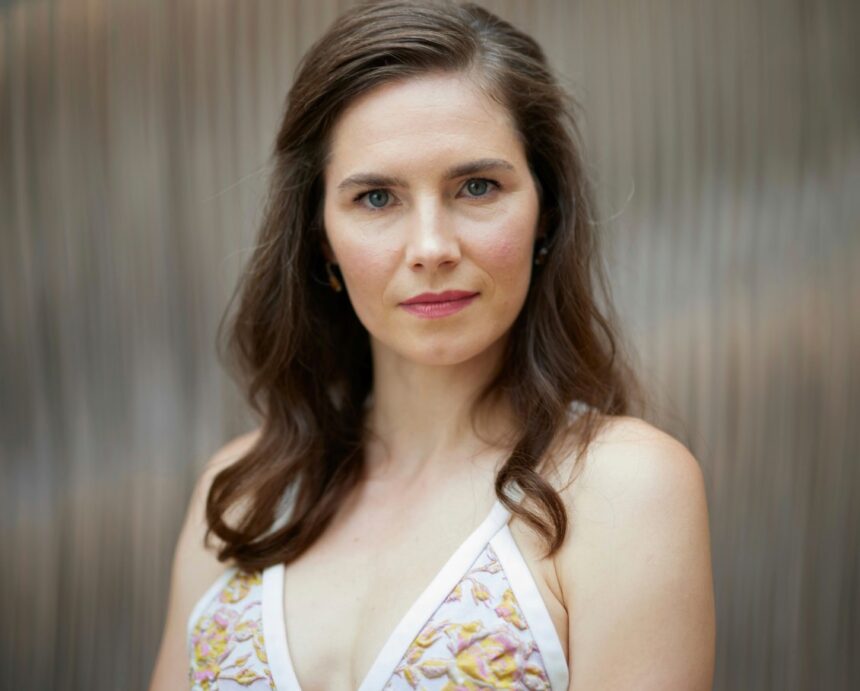
The Edinburgh Festival Fringe has defended its decision to allow Amanda Knox’s one-woman comedy show Cartwheel to proceed despite growing criticism and calls for its cancellation.
The production has attracted widespread attention after Stephanie Kercher, sister of murdered British student Meredith Kercher, argued that the performance risks trivialising violence against women. An online petition urging organisers to cancel the sold-out show has gathered thousands of signatures.
Festival organisers, however, say the Fringe remains committed to artistic freedom and open expression within the law.
Why Is Amanda Knox’s Show Controversial?
Amanda Knox’s show, titled Cartwheel, is described as a personal performance exploring motherhood, truth, justice and raising daughters in an unpredictable world.
See more of our coverage in your search results.
Add Hunterfly on GoogleThe title references reports from 2007 alleging Knox performed cartwheels inside a police station following Meredith Kercher’s death—an allegation that has remained part of public discussions surrounding the case.
Knox has consistently said the production is not a comedy about Meredith Kercher’s death and instead focuses on her own experiences and the lasting impact of public scrutiny.
Meredith Kercher’s Family Raises Concerns
Stephanie Kercher has publicly criticised the show, saying that presenting elements of the story in a comedic format sends the wrong message.
She argued that while comedy can challenge difficult subjects, this particular production risks diminishing the seriousness of violence against women and the memory of her sister.
Her comments have fuelled wider debate over the balance between artistic expression and sensitivity toward victims’ families.
See more of our coverage in your search results.
Add Hunterfly on GoogleAmanda Knox Responds
Responding on social media, Amanda Knox rejected the criticism surrounding the production.
She stated that many people calling for the show’s cancellation had not actually watched it.
According to Knox, Cartwheel explores:
See more of our coverage in your search results.
Add Hunterfly on Google- Motherhood
- Women’s safety
- Truth and justice
- Personal trauma
- The long-term effects of wrongful conviction
She also said the performance honours Meredith Kercher’s memory while addressing the violence that affected both women in different ways.
Edinburgh Fringe Defends Artistic Freedom
The Fringe Society emphasised that the Edinburgh Festival Fringe operates as an open-access festival.
Festival Director Tony Lankester said organisers are not afraid of controversial performances and explained that decisions regarding individual productions ultimately rest with performers and venues, provided they comply with legal requirements.
The venue hosting the production also reaffirmed its support for artistic freedom, stating that participating artists are responsible for the creative direction and content of their own shows.
Background to the Meredith Kercher Case
Meredith Kercher, a British exchange student studying in Perugia, Italy, was murdered in 2007.
Amanda Knox and her then-boyfriend Raffaele Sollecito were convicted in 2009 but maintained their innocence throughout years of legal proceedings.
In 2015, Italy’s highest court definitively acquitted Knox and Sollecito, citing significant flaws in the investigation and evidence.
Meanwhile, Rudy Guede was separately convicted for Kercher’s murder and later released from prison after serving part of his sentence.
Debate Continues
The controversy has prompted broader discussions about whether difficult real-life experiences can be explored through comedy and theatre.
Supporters argue that artistic works should be judged after audiences have seen them, while critics believe productions connected to traumatic events should be handled with exceptional sensitivity toward victims’ families.
The discussion reflects ongoing questions about creative freedom, public accountability and the responsibilities of artists when revisiting real-life tragedies.