








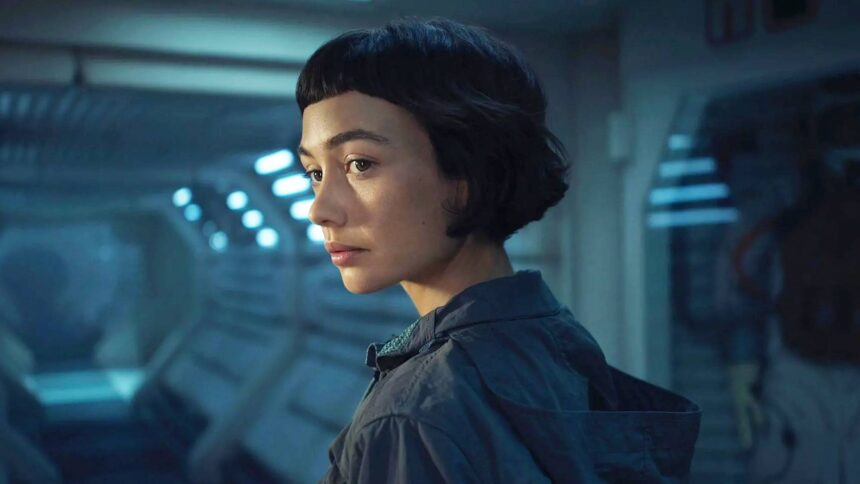
Alien: Earth, the latest expansion of Ridley Scott’s iconic sci-fi horror universe, delivers an unsettling mix of dread, mystery, and spectacle. Created by Fargo writer-director Noah Hawley, the series reimagines the franchise for television with a bold, unsettling confidence that refuses to hold the viewer’s hand.
A Dark Vision of the Future
Set in the year 2120, the show paints a grim portrait of a future dominated by corporations waging a “race for immortality.” Three competing technologies lead the charge — cyborgs (enhanced humans), synths (fully artificial beings), and hybrids (synthetic bodies implanted with human consciousness).
The narrative’s focus falls on hybrids, introduced through a haunting sequence at Prodigy — a trillion-dollar tech powerhouse. In a chilling experiment, a terminally ill girl’s mind is transferred into an adult synthetic body she names Wendy (Sydney Chandler). Wendy emerges not just alive, but as the first hybrid — soon becoming the leader of a group of child-robot soldiers, guided by the enigmatic Kirsh (Timothy Olyphant), whose unsettling presence hints at darker motives.
Chaos Unleashed in Space and on Earth
Parallel to this storyline, a human crew in deep space faces its own nightmare. Managed by a cold, rule-bound cyborg named Morrow (Babou Ceesay), their ship carries captured alien creatures in fragile containment. Predictably — and fatally — the restraints fail, unleashing carnage. Morrow survives, determined to deliver the specimens to the powerful Weyland-Yutani Corporation, but the ship’s fiery crash into an Earth city sets the stage for chaos.
See more of our coverage in your search results.
Add Hunterfly on GoogleAs Prodigy’s search-and-retrieve team — led by medic Hermit (Alex Lawther), who is secretly Wendy’s brother — arrives at the crash site, the aliens are finally loose. Unlike earlier Alien films, the threat isn’t confined to a spaceship; here, the terror spreads across urban ruins, amplifying the unpredictability.
Monsters and Metaphors
The creatures are both familiar and terrifying — from insect-like horrors to a more humanoid yet still lethal xenomorph. Hawley’s vision keeps the horror sharp, with each alien attack leaving behind disturbingly artful carnage reminiscent of Hannibal.
Thematically, Alien: Earth works as an allegory for unchecked AI development. Wendy’s hybrid abilities exceed her creators’ understanding, mirroring real-world fears about technology surpassing human control. Boy Kavalier (Samuel Blenkin), Prodigy’s eccentric CEO, embodies the dangerous arrogance of tech visionaries — a figure who might upend civilization out of hubris or boredom.
Strengths and Flaws
Visually, the series is immaculate — every frame designed to create unease, whether it’s a dimly lit corridor, rain-soaked debris, or the dead stare of a survivor. The performances are equally strong, with Chandler’s mix of innocence and latent menace contrasting with Lawther’s resigned detachment.
However, the first two episodes occasionally sacrifice clarity for atmosphere. Viewers may find themselves as bewildered as in the early seasons of Westworld. Yet, the tension never fades — the sense that something horrific lurks just out of sight keeps the audience hooked.
See more of our coverage in your search results.
Add Hunterfly on GoogleVerdict: Alien: Earth may not answer all its questions upfront, but it delivers the signature blend of dread and spectacle that defines the franchise. With its confident world-building, rich performances, and sharp thematic edge, it’s a chilling evolution of a sci-fi horror classic.