




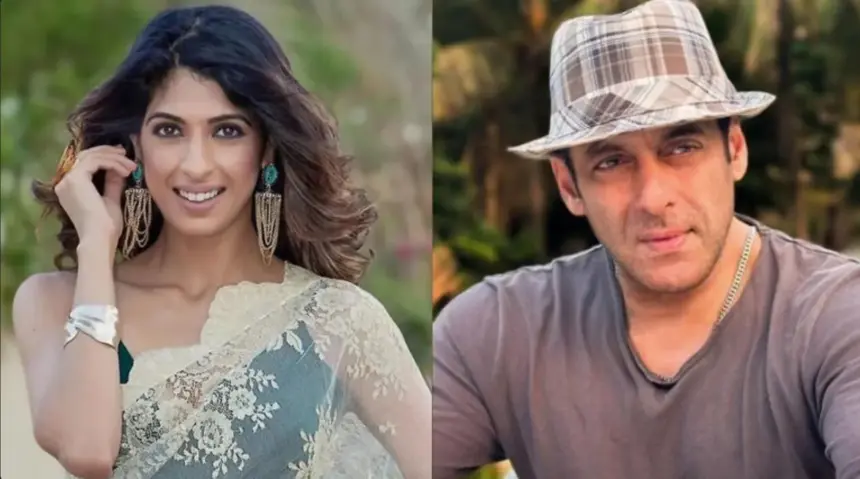
Aishwarya Sakhuja has spoken in support of Salman Khan’s concerns about social media trolling, arguing that online platforms need greater accountability and responsible use.
Television actress Aishwarya Sakhuja has weighed in on the growing debate around social media trolling and the kind of content people post online. In an exclusive conversation with Telly Talk India, the actress said she agreed with Salman Khan’s recent comments about the need for greater control and accountability on social media.
Aishwarya’s comments come amid continuing discussions about abusive online behaviour, trolling of celebrities and the circulation of problematic content on digital platforms.
Aishwarya Sakhuja Agrees With Salman Khan
Discussing Salman Khan’s position on social media, Aishwarya expressed strong agreement with the actor.
“Bhai is Bhai. And I think what he said is very right. There needs to be censorship on social media because a lot of people have been given a voice that they shouldn’t have,” she said in the conversation.
Her remarks focused on the responsibility that should accompany having a public platform. While social media allows people to express opinions instantly, the actress pointed to the darker side of online interactions, particularly when comments cross the line into personal abuse.
Aishwarya Says Celebrities Also Face Online Abuse
Aishwarya also shared her perspective on the trolling faced by public figures. According to the actress, celebrities can become targets of abusive comments, and responding to such comments can sometimes lead to attacks involving their family members.
“This happens with us too. First, they will give us really dirty abuses and then, if they get a response, they come after our sisters too. If you have the courage to troll me, then have the courage to keep trolling me. Why bring my sister into it?” she said.
Her comments highlight a broader issue surrounding online harassment: criticism of a public figure can quickly become personal, particularly when relatives are dragged into social-media disputes.
‘We Are Still Evolving Culturally’
Aishwarya further connected the issue to India’s changing digital culture. She suggested that the country is still adjusting to the widespread influence of social media and the responsibilities that come with having an online voice.
“Especially in India, I think we are still evolving culturally. We are still in a transitional phase. So, as a country, I think we need censorship coming into social media,” she added.
The actress’s comments reflect the continuing debate over how social-media platforms should balance freedom of expression with safeguards against harassment, abuse and harmful content.
Aishwarya Sakhuja Also Talks About Bigg Boss 20
During the same conversation, Aishwarya Sakhuja also discussed Bigg Boss 20 and shared her changing opinion of contestant Mahhi Vij.
The actress admitted that her initial impression of Mahhi had changed after watching her journey on the reality show. Aishwarya said she had essentially “judged the book by its cover” and went on to praise Mahhi’s approach to the game.
She also spoke about Qazi Touqeer, describing his personality as entertaining, while discussing the contestants she believes have the potential to make an impact as the season progresses.
Her comments offer another glimpse into how television personalities are viewing the latest Bigg Boss season, alongside the ongoing conversations around its contestants and their strategies.
The Larger Conversation Around Social Media Responsibility
The debate highlighted by Aishwarya Sakhuja is part of a much wider conversation surrounding online behaviour. Social platforms have made it easier for users to communicate directly with celebrities, politicians, influencers and other public figures. At the same time, the distance created by a digital screen can sometimes encourage comments that might not be made in a face-to-face setting.
For public figures, the challenge can be particularly complicated because criticism, disagreement and legitimate discussion can coexist with personal attacks and harassment.
Aishwarya’s remarks ultimately put the focus on responsibility alongside freedom of expression. Her argument is that having access to a public platform should not mean that users are free to target individuals or their families with abusive language.
As social media continues to play a central role in entertainment and public discourse, the question of how platforms can protect open discussion while limiting harassment is likely to remain an important subject of debate.