








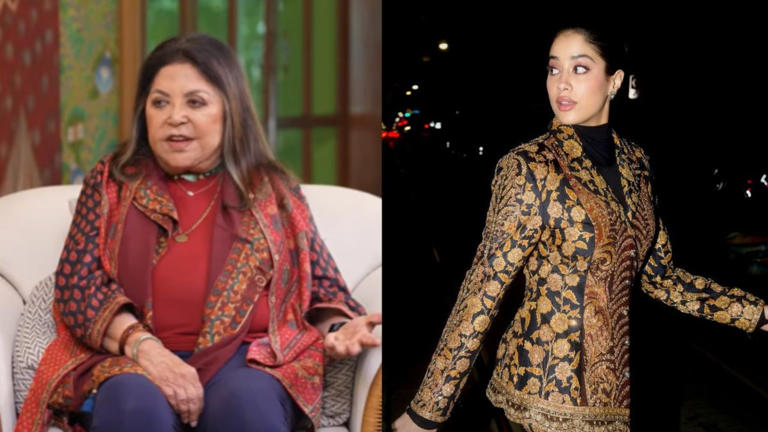
Veteran fashion designer Ritu Kumar has found herself at the center of an online debate after comments made during a recent YouTube interview reignited discussion about the historical origins of the term “zardozi.”
The celebrated designer, widely recognized for her contribution to reviving traditional Indian textile and embroidery techniques, made the remarks while appearing on The Masoom Minawala Show. The clip quickly circulated across social media platforms, drawing reactions from fashion professionals, historians, textile enthusiasts, and members of the public.
What Did Ritu Kumar Say?
During the conversation, Kumar reflected on an exhibition she organized decades ago and explained how she arrived at the name for a collection.
According to the interview, she said she combined the words “zar” and “dozi” while searching for a suitable title, adding that the term later became widely used.
See more of our coverage in your search results.
Add Hunterfly on GoogleThe statement surprised many viewers, particularly because “zardozi” is generally recognized as a historical embroidery term with roots that predate modern fashion brands by several centuries.
The interview segment quickly became a talking point online, with users debating whether Kumar intended to describe a branding decision connected to her collection or whether the remarks suggested she had originated the term itself.
Why the Comment Generated Debate
The primary reason for the backlash lies in the documented history of zardozi embroidery.
Historians and textile researchers have long traced the word to Persian origins. The term is commonly understood to derive from “zar,” meaning gold, and “dozi,” meaning embroidery or sewing. The craft became closely associated with royal courts and flourished across Persia and later the Indian subcontinent, particularly during the Mughal period.
Because of this well-established historical background, several commentators questioned the suggestion that the term originated in the late twentieth century.
See more of our coverage in your search results.
Add Hunterfly on GoogleMany social media users acknowledged Kumar’s role in promoting traditional crafts but argued that such recognition should remain separate from the historical origins of the word itself.
Researchers and Industry Voices Respond
Among those responding to the discussion was fashion and history enthusiast Pritha Dasmahapatra, who pointed to historical references that appear to predate the designer’s claim by more than a century.
Dasmahapatra cited archival material that reportedly included references to “zardozi” in publications dating back to the nineteenth century. She shared her findings online and indicated that she intends to conduct additional research into the history of the term.
See more of our coverage in your search results.
Add Hunterfly on GoogleThe debate also drew responses from professionals within the fashion industry.
Designer and entrepreneur Priyanka Raajiv expressed disappointment over what she described as insufficient fact-checking in content shared on social media. She also noted that she was unaware of any previous claims by Kumar regarding the creation of the term.
These reactions helped push the discussion beyond fashion circles and into broader conversations about historical accuracy and cultural documentation.
Social Media Divided Over the Issue
The interview’s comment sections and social media platforms quickly filled with reactions.
Many users criticized the statement and argued that historical records clearly establish the existence of the term long before contemporary fashion designers entered the industry.
Others took a more measured view, suggesting that Kumar may have been referring to how she popularized the term within modern Indian fashion rather than claiming authorship of the word itself.
The differing interpretations have contributed to the ongoing debate, with supporters and critics offering contrasting perspectives on what was actually meant during the interview.
The Larger Conversation About Cultural Crafts
Beyond the immediate controversy, the episode has renewed public interest in the history of zardozi embroidery itself.
The craft remains one of South Asia’s most celebrated decorative embroidery traditions, known for its intricate metallic threadwork and association with ceremonial garments, royal attire, and luxury textiles.
Fashion historians note that renewed attention to traditional crafts can have positive outcomes when discussions encourage deeper research and public understanding of cultural heritage.
As audiences revisit the origins of zardozi, many experts believe the conversation highlights the importance of documenting textile history accurately while also recognizing the designers and artisans who have helped preserve these traditions for modern generations.
Why the Story Matters
The debate surrounding Ritu Kumar’s remarks reflects a broader trend in the digital era, where public statements are rapidly scrutinized against historical records and archival evidence.
Whether viewed as a misunderstanding, an imprecise recollection, or a disputed historical claim, the discussion has succeeded in drawing attention to one of the most influential embroidery traditions in the region.
For many observers, the lasting impact of the controversy may not be the disagreement itself, but the renewed curiosity it has generated about the origins, evolution, and enduring legacy of zardozi craftsmanship.