








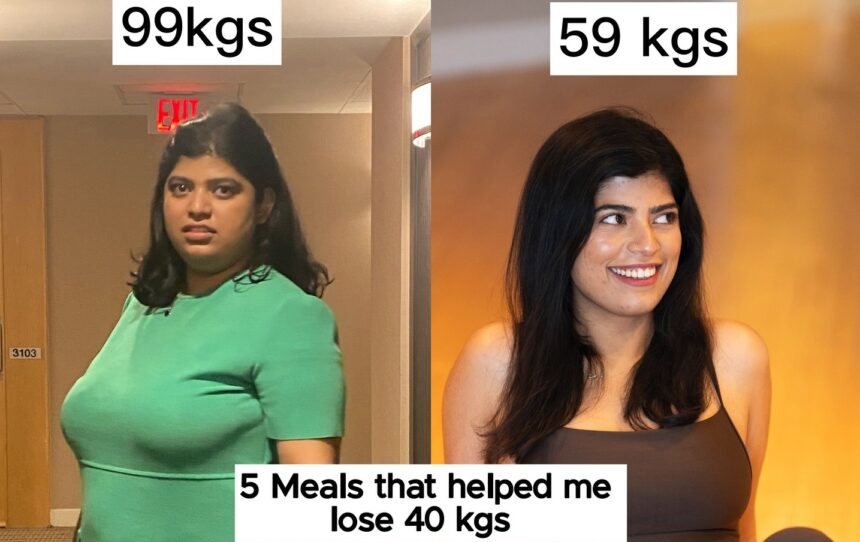
Fitness creator Saachi Pai has shared five everyday meals from her three-year transformation, showing how balanced portions, protein-rich foods and consistency helped her stay on track without completely giving up rice or familiar Indian dishes.
Weight loss is often presented as a choice between restrictive diets and complicated meal plans. But Saachi Pai’s three-year transformation offers a different perspective: according to the fitness creator, consistency with simple, satisfying meals played an important role in her journey from 99 kg to 59 kg.
Pai recently shared five meals she ate during her transformation, highlighting combinations of protein, vegetables, carbohydrates and filling foods. Rather than eliminating rice or relying on highly restrictive recipes, her meal choices focused on portion control and building more balanced plates.
Her experience is personal rather than a universal weight-loss prescription, but the meals offer an interesting look at how everyday foods can fit into a structured eating routine.
See more of our coverage in your search results.
Add Hunterfly on Google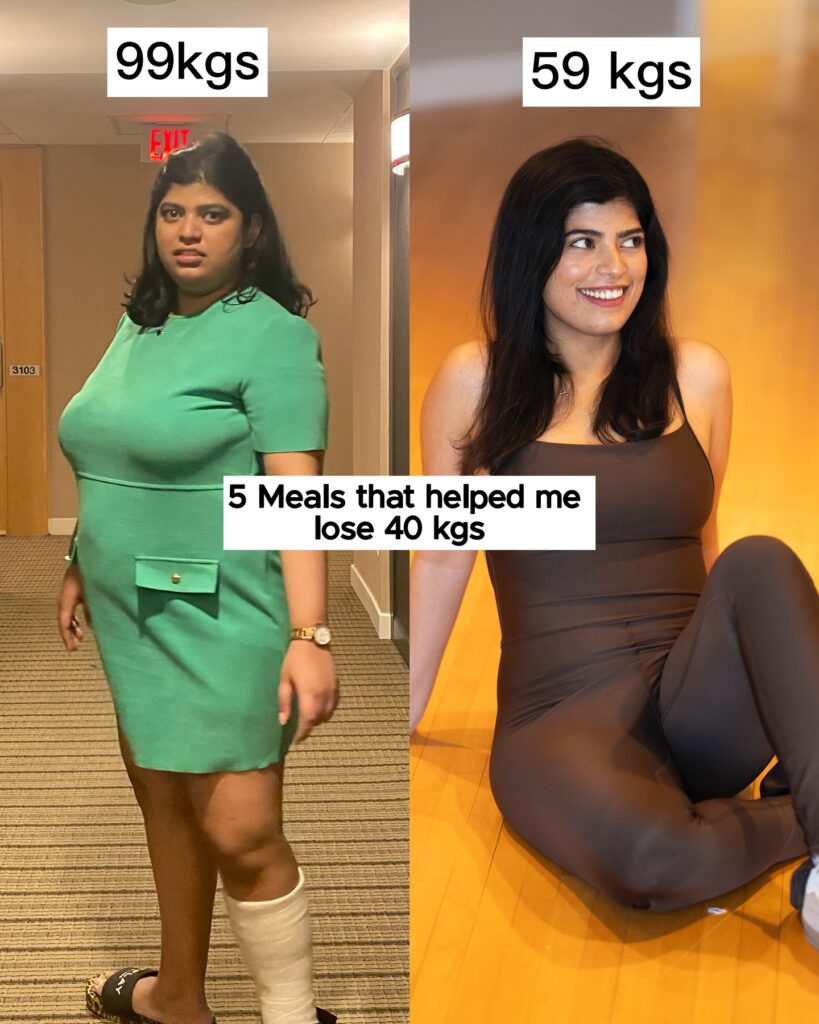
1. Palak paneer with rice and yoghurt
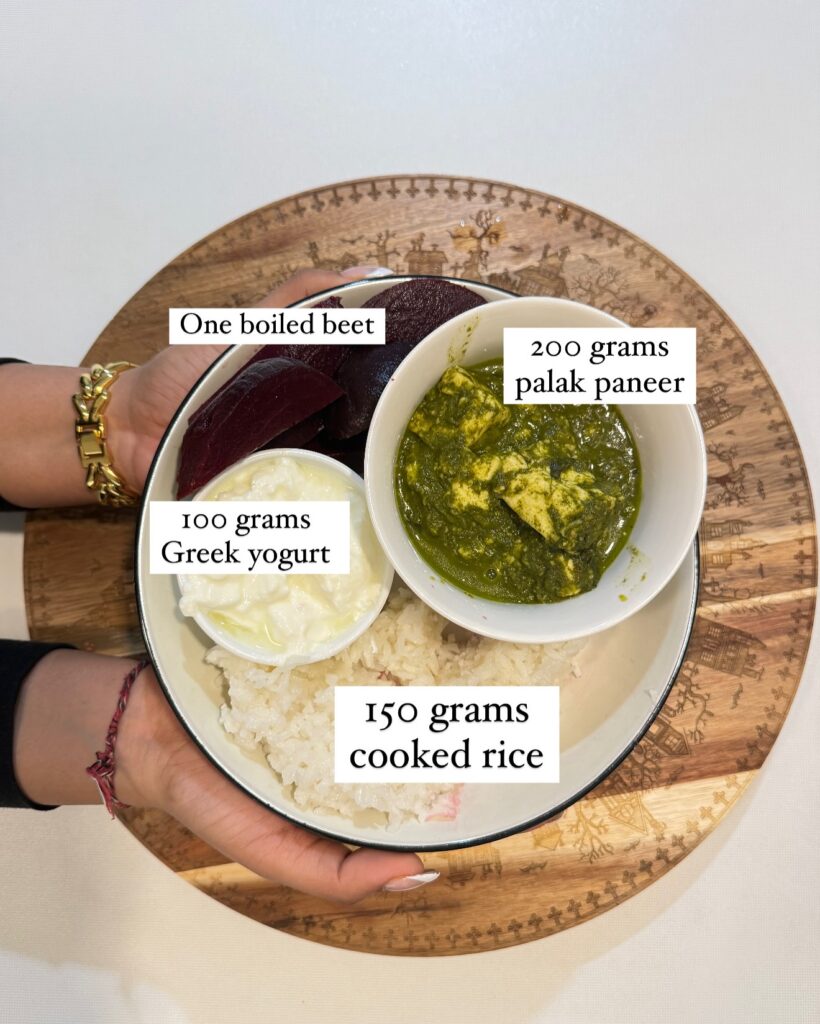
One of Pai’s meals combines palak paneer, cooked rice, Greek yoghurt and boiled beetroot.
Her reported serving included around 200 grams of palak paneer, 150 grams of cooked rice, 100 grams of Greek yoghurt and one boiled beet.
The combination brings together protein-containing foods, carbohydrates and vegetables in one plate. Greek yoghurt can also add additional protein, while spinach-based palak paneer provides a familiar way to include leafy greens.
The meal is a reminder that foods such as rice do not necessarily need to disappear from a weight-management routine. Portion size and the overall composition of the meal can matter more than simply labelling individual foods as “good” or “bad.”
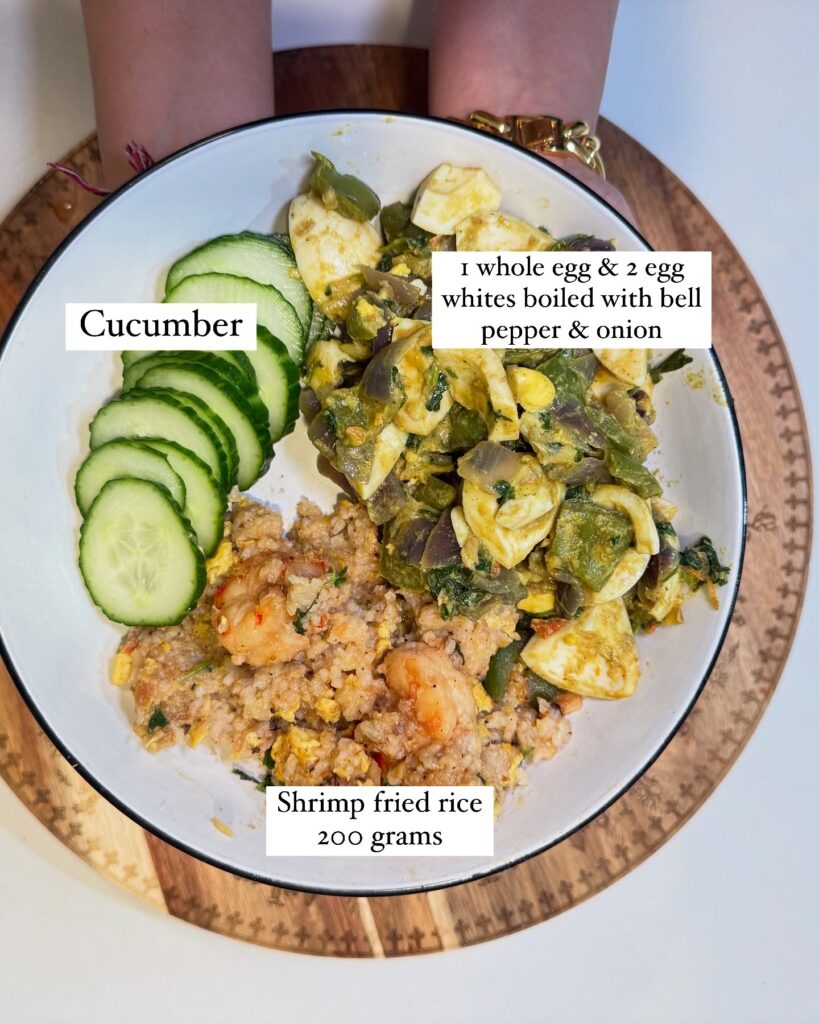
2. Shrimp fried rice with eggs and vegetables
Another meal featured shrimp fried rice paired with eggs, onion, bell peppers and cucumber.
See more of our coverage in your search results.
Add Hunterfly on GooglePai’s reported plate included approximately 200 grams of shrimp fried rice, one whole egg and two egg whites cooked with onion and bell peppers, along with sliced cucumber.
The meal combines seafood and eggs as protein sources with rice for carbohydrates. Adding vegetables also increases the variety and volume of the plate without requiring an elaborate recipe.
For someone trying to build a more filling meal, combining a protein source with carbohydrates and vegetables can be a practical approach.
See more of our coverage in your search results.
Add Hunterfly on Google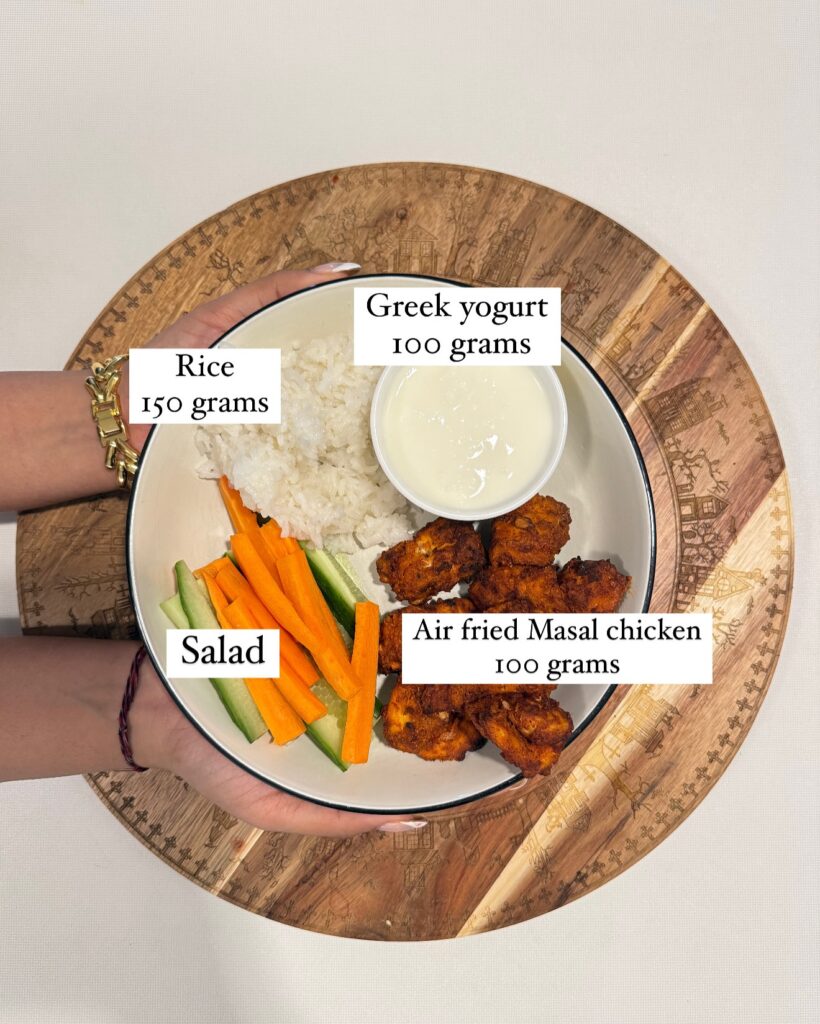
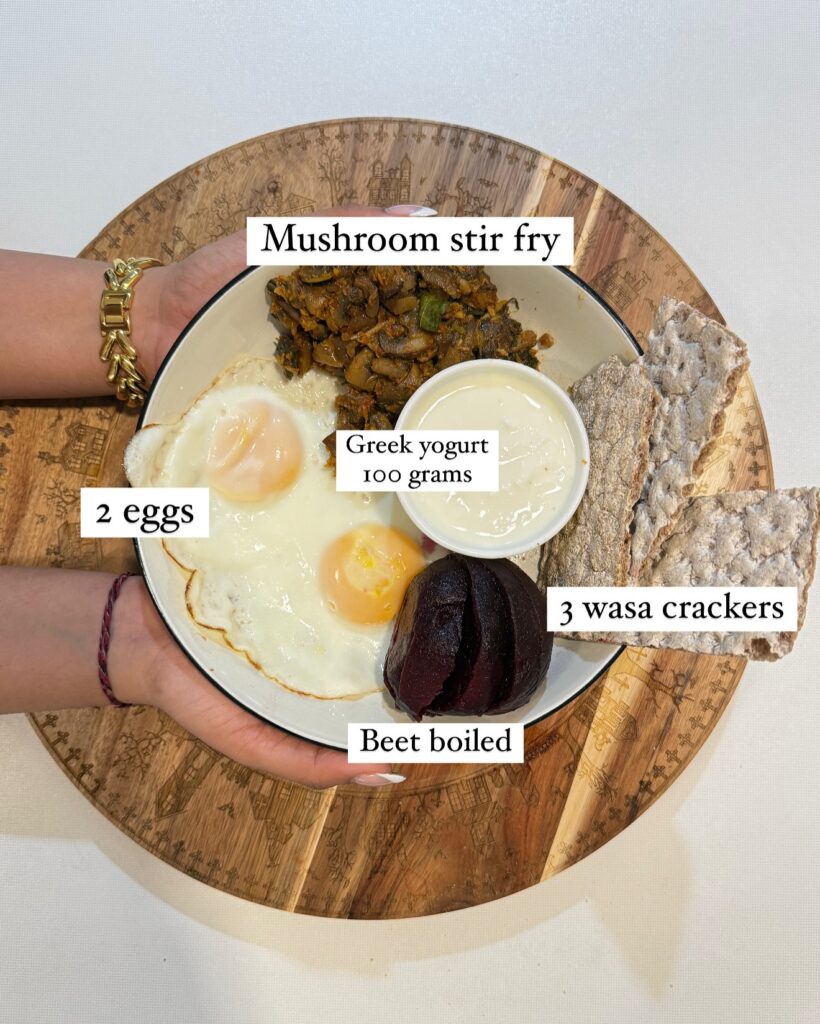
3. Eggs, mushrooms, yoghurt and crackers
Pai also shared a simpler meal built around eggs and mushrooms.
The plate included two eggs, mushroom stir-fry, 100 grams of Greek yoghurt, one boiled beet and three Wasa crackers.
Eggs provide protein and fat, while mushrooms and beetroot contribute vegetables and fibre. Greek yoghurt adds another protein-containing food, and the crackers provide a measured carbohydrate component.
The combination demonstrates another feature of Pai’s shared meals: rather than relying on a single food group, each plate brings together several different foods.
4. Air-fried masala chicken with rice
Chicken also features prominently in Pai’s meal ideas.
One of her reported combinations consisted of 100 grams of air-fried masala chicken, 150 grams of cooked rice, 100 grams of Greek yoghurt and a carrot-and-cucumber salad.
Air-frying can be a convenient cooking method for preparing chicken with less added oil than some traditional frying techniques. The meal also pairs the chicken with rice and fresh vegetables, creating a straightforward protein-and-carbohydrate combination.
The inclusion of yoghurt and salad adds further variety to the plate without making the meal particularly complicated.
5. Green chutney chicken with palak paneer
The fifth meal brings together two protein-containing dishes with rice and beetroot.
Pai’s reported plate included two air-fried green chutney chicken legs, 150 grams of palak paneer, 120 grams of rice and one boiled beet.
The meal combines chicken with a spinach-and-paneer preparation, while rice provides carbohydrates and beetroot adds another vegetable component.
It also illustrates how familiar Indian flavours can remain part of a structured eating routine instead of being automatically excluded during a weight-management journey.
What stands out about Saachi Pai’s meals?
The most noticeable feature of the meals Pai shared is their variety.
Rice appears in several of the plates. Paneer, eggs, chicken, shrimp and Greek yoghurt provide different protein options, while vegetables such as spinach, cucumber, carrots, mushrooms and beetroot appear throughout the meals.
Rather than promoting one “magic” food, the meals show a relatively simple pattern: include a protein source, add vegetables or other fibre-containing foods, keep carbohydrate portions measured and choose meals that can realistically be repeated.
Pai also emphasises the importance of the timeline behind her transformation. Her reported change from 99 kg to 59 kg took three years, rather than happening through a short-term crash diet.
That longer timeframe is important context. Sustainable weight management varies considerably from person to person and can be influenced by diet, activity, sleep, stress, medications, medical conditions and other factors.
A reminder that weight loss is not one-size-fits-all
Pai’s meals may provide inspiration for people looking for balanced meal ideas, but her reported results should not be interpreted as a guarantee that eating the same foods will produce the same amount of weight loss.
Individual nutritional needs differ, and anyone with a medical condition, history of disordered eating or specific dietary requirements should consider getting personalised advice from a qualified healthcare professional or registered dietitian.
What makes Pai’s story noteworthy is less about a particular ingredient and more about the consistency she says she maintained over several years. Her meals show that a weight-management approach can include familiar foods such as rice, paneer, eggs and chicken while still paying attention to portions and overall meal balance.
For many people, that emphasis on realistic and repeatable habits may be more useful than another promise of a rapid transformation.