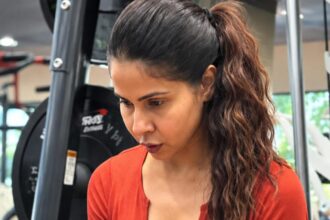






Cricketer Anaya Bangar has opened up about the physical changes she has experienced during her gender transition as she prepares for a potential new chapter in Australian cricket.
The 25-year-old said she is looking forward to training and playing Community Cricket in Australia after receiving clearance, while acknowledging that her transition, including hormone suppression and gender-affirming surgery, has changed her physical capabilities as an athlete.
In a video interview with ANI, Anaya said she is approaching the next phase of her cricket journey with renewed determination, despite feeling that she no longer possesses the same athletic advantages she had earlier in life.
Anaya, who played age-group cricket and shared the field with players including India internationals Sarfaraz Khan and Musheer Khan, has been exploring opportunities to continue her career in women’s cricket. After reportedly approaching the Board of Control for Cricket in India (BCCI) without receiving a response, she turned her attention towards opportunities in Australia.
See more of our coverage in your search results.
Add Hunterfly on GoogleLooking forward to cricket in Australia
Anaya described Australian women’s cricket as one of the highest standards in the sport and said she was excited to test herself in a new competitive environment.
“To be honest, the women’s standard in Australian cricket, I think it is of the highest quality and I am looking forward to training and performing and seeing how it goes for me because now I have a new body,” Anaya said.
Her comments underline the personal and professional adjustment involved in returning to competitive sport after significant physical changes. For an athlete, transition can bring not only a major personal transformation but also the challenge of understanding how a changing body responds to training, recovery and competition.
Anaya said she intends to approach the opportunity with an open mind.
“I don’t have the athletic capabilities I had previously. I am just going to try my best, see how it goes, and hopefully get selected in the WBBL as well,” she said.
See more of our coverage in your search results.
Add Hunterfly on GoogleThe Women’s Big Bash League, or WBBL, is among the world’s most prominent domestic women’s cricket competitions, featuring many of Australia’s leading players as well as international cricketers. Any potential progression towards that level would require consistent performances within the opportunities available to Anaya.
A new physical reality after transition
A central part of Anaya’s interview focused on the physical changes she says she has experienced during her transition.
She explained that testosterone suppression and other aspects of gender-affirming medical care had affected her body and athletic performance compared with her earlier years as a cricketer.
See more of our coverage in your search results.
Add Hunterfly on Google“People don’t understand how much the body changes after you suppress your testosterone for a period of time and it can lead to muscle loss, bone density loss and diminished athletic capabilities as well over time,” Anaya said.
She added that the effects she described have been examined in scientific research.
The subject of athletic performance after hormone treatment is medically and scientifically complex. Physical outcomes can vary between individuals and may be influenced by several factors, including the type and duration of treatment, training history, nutrition, age, genetics and overall health. For athletes, returning to competitive sport after significant hormonal and physical changes can require adjustments to strength training, conditioning and recovery programmes.
Anaya said she had supporting scientific material relating to her case and referred to evidence from Manchester University during her interview. She also highlighted the importance of sporting policies that attempt to balance inclusion, fairness and the dignity of athletes.
Cricket Australia pathway offers a new opportunity
Anaya said Cricket Australia’s framework had provided her with an opportunity to pursue Community Cricket in the country.
“I have already got scientific evidence backing my case from Manchester University and on top of that, the guidelines set by Cricket Australia maintain inclusion, fairness and dignity of women’s sport, while also having proper policies set, including the testosterone levels,” she said.
Eligibility policies in sport have become an important and often debated issue internationally. Different governing bodies can have different rules, and eligibility may depend on the specific level of competition and the regulations established by that sport’s administrators.
For Anaya, the opportunity in Australia represents a possible route back into competitive cricket after uncertainty over her future in the game.
She had previously explored possibilities in India, including an approach to the BCCI, according to the information shared in the interview. With no response from the Indian cricket board mentioned in the report, Australia emerged as the next destination in her efforts to continue playing.
From age-group cricket to a new chapter
Before her transition, Anaya was involved in competitive age-group cricket and played alongside several talented young players who later progressed in the sport. Among those she played with were Sarfaraz Khan and his brother Musheer Khan, both of whom have become well-known names in Indian cricket.
That background has given Anaya firsthand experience of the demands of structured competitive cricket. However, she now finds herself preparing for the game under very different physical circumstances.
Her comments suggest that the challenge ahead is not simply about regaining match fitness. It is also about learning how to train and perform in a body that she says has changed considerably.
This adjustment can be particularly significant in cricket, where athletic performance involves multiple physical components. Batting requires balance, coordination, reflexes and endurance. Bowling places different demands on strength, mobility and repeat performance. Fielding can depend heavily on acceleration, agility, throwing power and recovery.
An athlete experiencing changes in muscle mass, strength or other physical characteristics may therefore need to adapt their preparation accordingly.
Anaya acknowledged that she does not yet know exactly how her cricket will develop under these new circumstances.
“I am just going to try my best, see how it goes,” she said.
Hopeful of reaching the WBBL
While Anaya’s immediate focus is on training and Community Cricket, she also expressed hope about one day earning an opportunity in the WBBL.
Her ambition reflects a willingness to set a high target while accepting that her path back into competitive cricket will require sustained effort.
Australian women’s cricket has developed into one of the strongest professional ecosystems in the world, with elite domestic competitions providing opportunities for players to progress through local and higher-level pathways.
For Anaya, however, the immediate task appears to be proving herself through performance.
Rather than presenting her transition as an advantage, she spoke openly about what she sees as a reduction in some of her previous athletic capabilities. Her comments focused on the practical reality of returning to a demanding sport after significant changes to her body.
That willingness to discuss the issue directly has brought another perspective to a wider conversation about transgender participation in sport, particularly in disciplines where eligibility rules continue to evolve and differ between organisations.
A journey defined by adaptation
Anaya’s story is ultimately about more than eligibility and policy. It is also about an athlete attempting to continue a sporting career while adapting to profound personal and physical changes.
Her remarks indicate that she understands the challenges ahead. She is not expecting her cricket journey to resume exactly as it once was. Instead, she is preparing to discover what kind of player she can become under a new set of physical circumstances.
Australia may now provide the setting for that next stage.
With clearance to play Community Cricket and ambitions of eventually progressing further, Anaya is preparing to return to training with what she described as a new body and a new athletic reality.
Whether that journey eventually leads to higher levels of Australian women’s cricket remains to be seen. For now, her focus is on putting in the work, adapting to the changes she has experienced and allowing her performances to determine what comes next.
“I am looking forward to training and performing and seeing how it goes for me,” she said.
For Anaya Bangar, the next chapter of her cricket career will be defined not by the athlete she once was, but by how she adapts to the athlete she is becoming.