








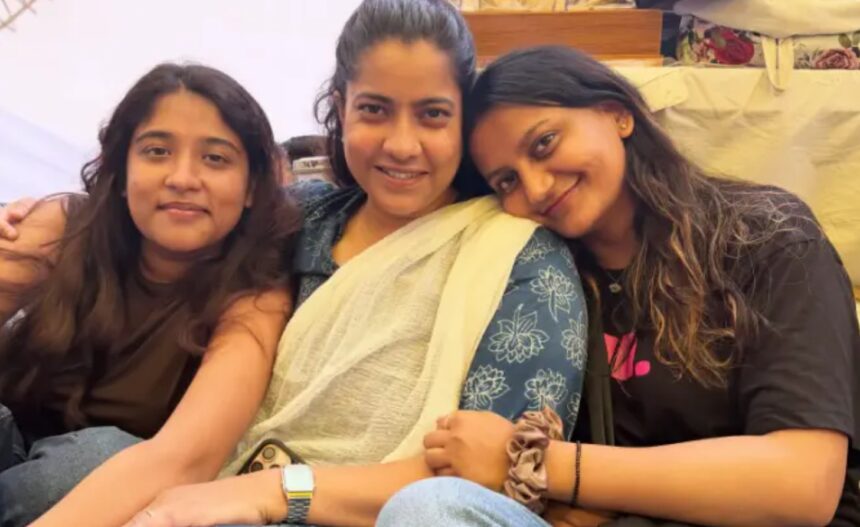
For 36 days, the protest camp at Delhi’s Jantar Mantar evolved into more than a demonstration site. It became a community where volunteers organized daily activities, discussed policy proposals, prepared meals, coordinated logistics and supported one another through long days of peaceful protest.
While public attention often centered on rallies, speeches and interactions with authorities, many of the movement’s day-to-day responsibilities were carried by women who remained actively involved behind the scenes. Their contributions ranged from volunteer management and policy discussions to emotional support and organizational planning, illustrating how leadership extended well beyond the public stage.
From Volunteer to Core Organizer
Among the participants was a young volunteer who had recently completed her Class 12 examinations before joining the movement.
Initially offering her time as a volunteer, she later became part of the organization’s core team after taking on greater responsibilities.
See more of our coverage in your search results.
Add Hunterfly on GoogleShe said her decision to remain at the protest was driven by her belief in the movement’s demand for accountability.
According to her, the commitment shown by organizers after the July 20 “Sansad Chalo” march strengthened her confidence in the campaign. She also described the presence of experienced women leaders as an important source of encouragement for younger volunteers working at the site.
Shared Responsibility Defined the Camp
Participants emphasized that the protest functioned through teamwork rather than individual leadership.
Prachi and Megha explained that responsibilities were distributed collectively, with volunteers contributing wherever they were needed.
Although fellow protesters occasionally showed additional concern because they were women, both viewed those gestures as well-intentioned. Megha noted that she preferred to be regarded as equally capable of handling responsibilities, stressing that every volunteer contributed according to their assigned role.
See more of our coverage in your search results.
Add Hunterfly on GoogleThe collaborative approach, they said, helped keep the protest organized throughout its 36-day duration.
Family Support Made Participation Possible
Several women credited their families for supporting their decision to participate.
Rasika said her family understood the purpose of the movement and encouraged her involvement, allowing her to remain at the protest site without hesitation.
See more of our coverage in your search results.
Add Hunterfly on GoogleAnother participant, Garima, described the experience as one of the most meaningful moments of her life. She believes the movement encouraged wider public discussion about accountability and civic engagement.
When asked what message they would share with young women considering participation in public movements, several participants encouraged greater involvement, saying civic engagement should be open to everyone.
Women in Leadership Roles
Women also occupied important leadership positions within the organization.
Ratna, a lawyer and one of the CJP’s spokespersons, said women’s participation was fundamental to the movement’s success.
According to her, any democratic movement benefits from the active participation of women representing diverse experiences and perspectives.
She noted that the protest brought together students, homemakers, senior citizens, professionals and women from different regions and backgrounds, all united by a common purpose.
Contributing to Strategy and Policy
Policy expert and CJP spokesperson Vaishnavi Gaur said women actively participated in the organization’s daily planning meetings, where operational strategies and policy discussions were held.
She explained that suggestions from women were regularly incorporated into decision-making, and she was entrusted with drafting the movement’s policy charter after gathering feedback from participants representing different communities.
The collaborative process, she said, ensured that multiple perspectives were reflected in the movement’s recommendations.
Preserving the Movement’s Legacy
Reflecting on the weeks spent at Jantar Mantar, CJP spokesperson and core leadership member Aafreen Nawaz said she hopes the movement will be remembered not only for its demands but also for the women who helped sustain it.
She said the contributions of volunteers, organizers and women leaders formed an essential part of the protest’s identity and should remain part of its historical record.
Emphasis on Safety
Women leaders also highlighted the importance placed on maintaining a secure environment throughout the protest.
According to organizers, no incidents of misconduct involving women participants were reported during the 36-day demonstration despite large daily gatherings at the venue.
Maintaining a safe and inclusive atmosphere, they said, remained a priority throughout the campaign.
Beyond the Headlines
Although many women were visible during marches, public addresses and media interactions, much of their work happened away from television cameras.
They coordinated volunteers, organized supplies, participated in policy discussions, supported fellow protesters during emotionally demanding moments and helped ensure that the camp continued operating each day.
Their experiences illustrate that the movement relied not only on public demonstrations but also on sustained teamwork, careful organization and shared responsibility.
As the protest concluded, participants said its legacy extends beyond its central demands. For many involved, it also demonstrated how women can contribute to every level of civic participation—from grassroots volunteering to strategic leadership—while helping shape the direction and resilience of a large public movement.