









Reality-show personality Anjali Arora faced intense online scrutiny after a private video was circulated on social media and falsely or allegedly linked to her. Anjali has denied being the person shown in the footage and described the video as fake or morphed.
Amid the controversy, social-media personality Urfi Javed spoke about the broader issue of private videos being circulated without consent. Rather than focusing on the authenticity of the disputed footage, Urfi argued that a person should not be blamed simply because a private recording has been shared publicly.
Her comments also renewed the debate around victim-blaming, digital privacy and the way women are treated when intimate material becomes the subject of an online controversy.
Urfi Javed Speaks Out in Support of Anjali Arora
Urfi Javed, who is known for her outspoken views and unconventional fashion choices, addressed the controversy surrounding Anjali Arora.
See more of our coverage in your search results.
Add Hunterfly on GoogleAccording to reports, Urfi’s central argument was that even if a person had recorded a private video themselves, that does not mean they consented to its public distribution.
She emphasized that the unauthorized release of private material makes the person whose privacy has been violated a victim rather than someone who should be publicly shamed.
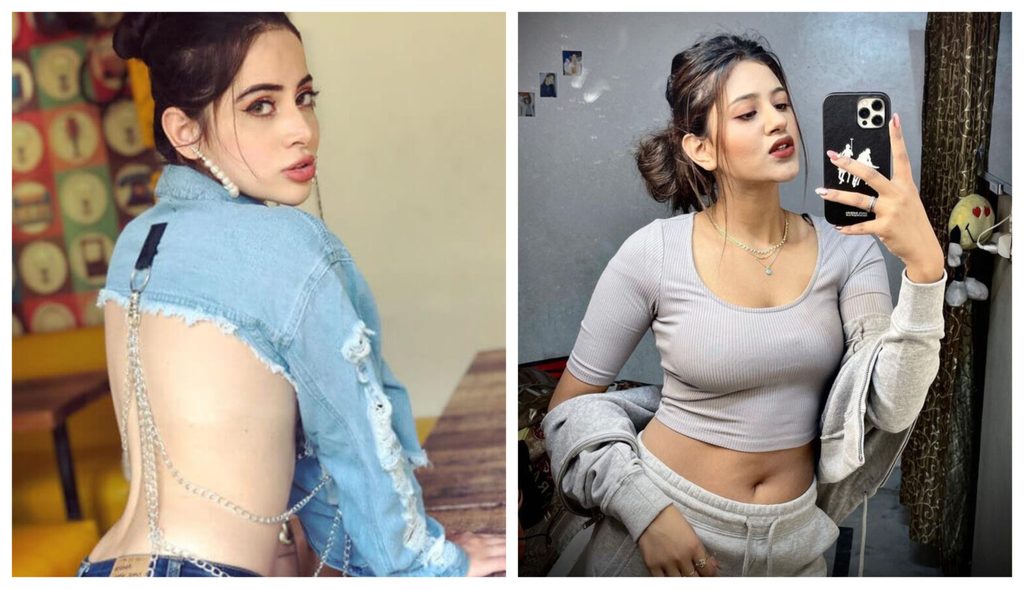
‘She Didn’t Want the World to See It’
In her comments, Urfi questioned why people blame individuals when private material becomes public.
She explained that recording something privately and publishing it publicly are two different matters. A person may create a recording for their own private use without giving anyone permission to distribute it.
Urfi’s remarks were essentially about consent and privacy: having possession of a private recording does not automatically give another person the right to publish or distribute it.
See more of our coverage in your search results.
Add Hunterfly on GoogleAnjali Arora Had Denied Being in the Video
Anjali Arora previously addressed the controversy and denied that she was the woman shown in the circulated footage.
The incident nevertheless generated substantial online attention, with social-media users discussing and reposting claims about the video.
The episode illustrates the difficulty public figures can face when unverified material is repeatedly circulated alongside their names.
See more of our coverage in your search results.
Add Hunterfly on GoogleA video’s popularity does not establish its authenticity, and repeated social-media claims should not be treated as independent confirmation.

Urfi Javed Raises the Issue of Victim-Blaming
Urfi also broadened the conversation beyond Anjali’s case.
She argued that women are frequently subjected to judgment when they become victims of harassment or the unauthorized distribution of private material.
According to Urfi’s comments, society often focuses on a woman’s appearance, clothing or personal choices instead of holding accountable the person responsible for the wrongdoing.
Her remarks therefore became part of a larger discussion about victim-blaming and digital harassment.
Private Recording Does Not Mean Consent to Publication
One of the most important issues raised by the controversy is the difference between consent to record and consent to distribute.
A person can consent to creating a private photograph or video without consenting to its publication.
If someone later obtains or shares that material without permission, the circumstances are fundamentally different.
This distinction is increasingly important in the era of smartphones, cloud storage, messaging applications and AI-generated or manipulated media.

Why Viral Claims Need Careful Verification
Online controversies involving celebrities can spread within minutes.
A video may be reposted with a person’s name even when:
- the identity of the person shown has not been verified;
- the original source is unknown;
- the footage has been edited;
- the context has been removed; or
- the material has been digitally manipulated.
For this reason, responsible reporting should distinguish between what has been verified, what the person concerned has said and what anonymous social-media accounts are claiming.
The Bigger Conversation Around Digital Privacy
The Anjali Arora controversy is part of a wider problem involving online privacy.
Technology has made it easier to copy, edit and distribute digital material. At the same time, AI tools have made manipulated images and videos increasingly difficult for ordinary users to assess.
People should therefore avoid forwarding intimate or disputed material simply because it is trending.
Sharing unverified material can amplify misinformation and may cause serious harm to the person being targeted.
What Should You Do If Private Material Is Shared Without Consent?
People affected by unauthorized distribution can take several practical steps:
Preserve evidence: Keep relevant URLs, account names, timestamps and screenshots where appropriate.
Report the content: Use the reporting mechanisms provided by the social-media platform or website.
Secure accounts: Change compromised passwords and activate two-factor authentication.
Avoid direct engagement with harassers: Responding to threats can sometimes encourage further harassment.
Contact authorities: Serious cases involving harassment, threats or unauthorized intimate content should be reported to the appropriate cybercrime or law-enforcement authorities.
What Urfi Javed’s Statement Means
Urfi Javed’s comments shift attention away from sensationalism and toward the question of consent.
Whether a disputed video is genuine, manipulated or falsely attributed, an individual’s private life should not become entertainment simply because material is circulating online.
The Anjali Arora controversy is therefore a reminder that social-media users should verify claims before sharing them and should understand that privacy does not disappear simply because content has been uploaded somewhere on the internet.