



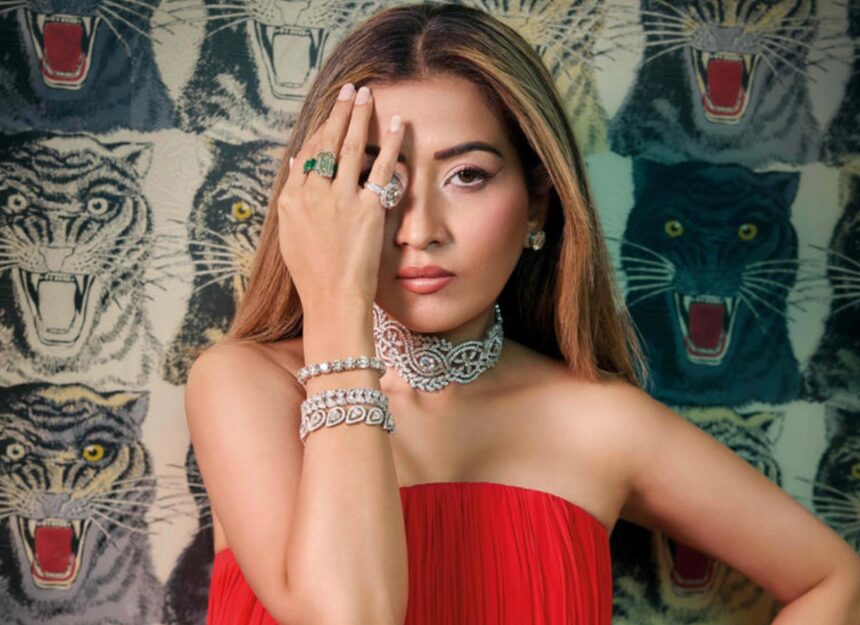
From bespoke handbags to craft spirits, Sanya V Jain has built a career at the intersection of fashion, design, entrepreneurship and India’s growing global identity.
Sanya V Jain has never treated fashion as simply a matter of clothes. Her relationship with style has gradually expanded into a broader understanding of design, branding, culture and business.
The entrepreneur, designer and fashion personality recently spoke exclusively with HELLO! India about her journey from launching her bespoke accessories label to co-founding craft vodka brand Smoke Lab with her husband, Varun Jain. She also discussed her Kolkata roots, international education, personal style and her vision for presenting Indian products to a global audience.
From SVJ to Smoke Lab
Sanya began her entrepreneurial journey with SVJ, a bespoke handbag and leather accessories label launched in 2012. The experience gave her an early understanding of what it takes to turn an aesthetic idea into a commercially viable product.
“I started out designing bespoke handbags by launching SVJ in 2012. Today, we have an Indian alcohol brand with a genuinely global identity, constantly improvising on products and positioning, collaborations, design, and international presentation,” she told HELLO! India.
Her next chapter came through Smoke Lab, the craft vodka brand she co-founded with Varun Jain. The vodka is distilled from locally sourced Basmati rice, bringing an Indian ingredient into a product positioned for international markets.
For Sanya, fashion remains part of that process even though her business focus has expanded beyond apparel and accessories.
“Fashion never really left me. It influences how I look at packaging, art, branding, spaces, and storytelling. So, in many ways, I haven’t moved away from it; I’ve just applied that discerning eye to a much bigger world.”
Smoke Lab launched in 2019 and subsequently entered the US market in 2020. The brand has also expanded internationally, with the UK becoming another market for the company.
Kolkata Remains a Creative Influence
Sanya’s connection with design began long before she entered the fashion and lifestyle industries. Growing up in Kolkata, she was surrounded by art, architecture, literature and craftsmanship.
She believes those influences continue to inform her approach to aesthetics and business.
“Your hometown stays with you in ways you don’t realise when you’re young. Kolkata influences you with its art, literature, architecture, old-world homes, craftsmanship, and a certain sense of romance. Essentially, its cultural soul.”
Her education subsequently took her outside India. After completing high school in Canada, Sanya studied at Parsons in New York and Central Saint Martins in London.
Those experiences broadened her understanding of design beyond fashion itself.
“They contributed to my global perspective on design and taught me to look beyond fashion itself — at culture, art, architecture, people, and the way they live. The combination of Kolkata and my experiences living in several countries made me the person I am today.”
What SVJ Taught Her About Business
When Sanya launched SVJ, her focus extended beyond creating attractive accessories. She also had to learn about production, quality, customers and the commercial realities of building a brand.
“SVJ taught me far more than just design — product, quality, production, customer service, and the realities of turning a creative idea into a business. There is a huge difference between loving fashion and actually creating a product that somebody wants to buy and live with.”
That experience has remained relevant as her entrepreneurial interests have moved into the spirits industry.
Her portfolio has also expanded with Mohulo, described in the supplied interview as a craft gin made using handpicked mahua flowers sourced from Madhya Pradesh and Chhattisgarh and connected to indigenous traditions of the Baiga community.
The move reflects Sanya’s interest in taking Indian ingredients and cultural references into contemporary products.
A Fashion Philosophy Built Around Personality
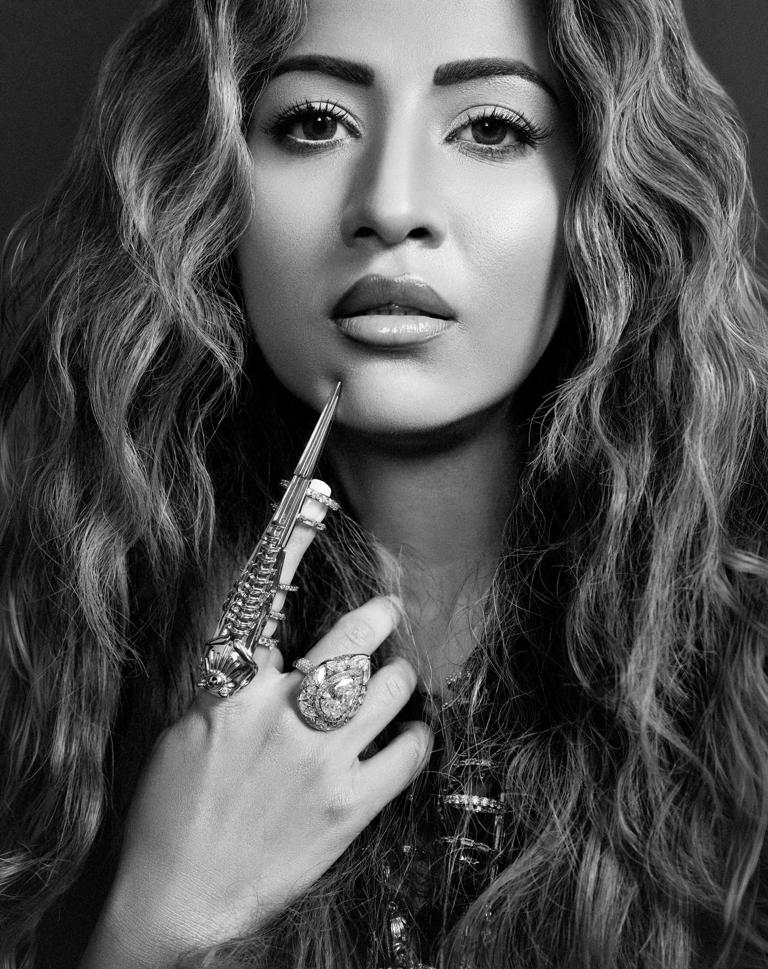
Despite her business interests, fashion remains a major part of Sanya’s identity. But her approach is not driven simply by seasonal trends.
She cites her mother and grandmother, as well as style figures including Maharani Gayatri Devi of Jaipur, Maharani Sita Devi of Baroda and Iris Apfel, as influences.
Rather than chasing every new trend, Sanya says she is drawn to distinctive pieces, unusual shapes and clothing with personality.
“My style is quite instinctive. It’s maximalist, to be precise, but I also exercise restraint!”
Her wardrobe can move between dramatic evening dressing and considerably simpler daytime looks. She says that growing older has brought greater confidence in making those choices.
“That’s what age does to you — it gives you confidence.”
For Sanya, experimenting with fashion is also part of developing an individual visual language. Even the choices that do not work become part of that process.
Why She Is Less Interested in Looking Perfect
Sanya’s approach to fashion is increasingly personal rather than performative. She says she is not particularly interested in creating an image that looks excessively coordinated or appears to have been taken directly from a runway.
Instead, she prefers combinations that reflect her own personality and experiences.
Travel has played a significant role in that evolution. Her sources of inspiration include art, hotels, restaurants, architecture, fashion shows and even everyday objects and packaging encountered abroad.
“Travel has also made me much less rigid about fashion. Instead of dressing entirely according to one culture, aesthetic or what technically shouldn’t belong together, I might pair an Indian jewel with something modern, couture with something casual or a vintage piece with a new designer’s work.”
That eclectic approach also explains her appreciation for designers with distinctive visual identities, including Chanel, Hermès, Schiaparelli, Comme des Garçons and Rick Owens.
Motherhood Keeps Her Grounded
Away from fashion events and business meetings, Sanya’s life revolves around her two sons, Enzo and Robin.
She describes them as her best reset, partly because their perspective is entirely separate from the world of business and fashion.
“Their world is completely removed from mine. They don’t care what meeting I’ve had or what I’m wearing. They bring me straight back to reality!”
The contrast appears to be important to Sanya’s outlook. While her professional world involves branding, aesthetics and presentation, motherhood offers an environment where those concerns carry far less weight.
Sanya V Jain’s Idea of a Global Indian
Sanya’s international experiences have also shaped how she sees Indian identity. Rather than viewing Indian and global influences as opposing choices, she believes the two can coexist naturally.
Her personal style reflects that philosophy, with Indian jewellery, contemporary clothing, vintage pieces and international designers appearing together.
For Sanya, the same principle applies to her entrepreneurial work.
“I can be in Paris wearing an Indian designer with vintage or international jewellery and, at the same time, be working on delivering an Indian indigenous vodka or a gin to a global audience. To me, the demarcations are blurred — my tastes are global, my references are universal, but there is a strong Indian confidence at the centre of it all.”
That philosophy also informs her view of India’s creative potential. She sees an opportunity for a new generation of entrepreneurs and designers to present the country’s craft, ingredients, culture and stories in contemporary formats without reducing them to stereotypes.
For Sanya V Jain, success appears less connected to staying within one industry than to carrying a consistent point of view across different ones. From fashion and accessories to spirits, branding and lifestyle, her career continues to be shaped by the same combination of curiosity, design sensibility and confidence in Indian creativity.