




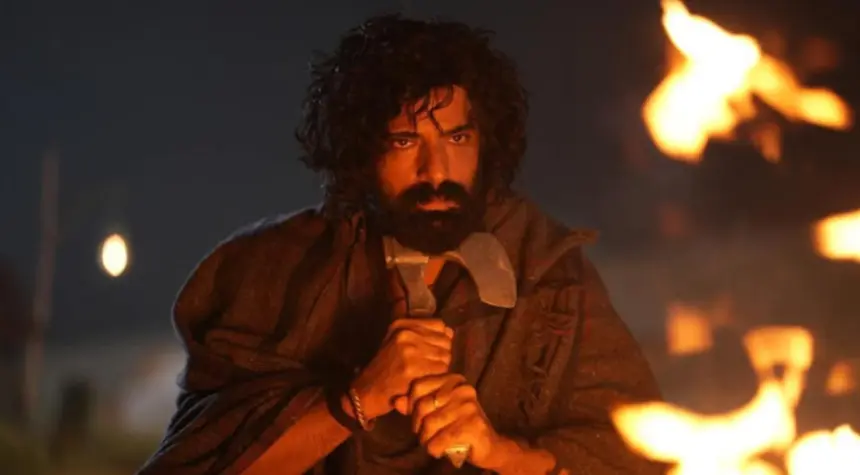
Mohit Malik has revealed why Birju Lohar’s death was retained in Mirzapur: The Movie, sharing what Farhan Akhtar told him about the character’s ending and why he believed the scene was essential to Birju’s story.
Mohit Malik’s portrayal of Birju Lohar has emerged as one of the talking points surrounding Mirzapur: The Movie. The character enters the story as a mysterious and intense figure before his personal history, violent ambitions and complicated relationship with Beena become increasingly important to the narrative.
Birju’s eventual death is among the film’s most significant moments. In an exclusive conversation with NDTV’s Hardika Gupta, Mohit Malik discussed his preparation for the role, Birju’s emotional journey, the decision to retain the death sequence and his evolving career beyond television.
Mohit Malik Explains How He Prepared to Play Birju
According to Mohit Malik, the biggest challenge was not learning Birju’s dialogue but understanding the character deeply enough to communicate his emotions through physical performance.
“The most difficult part was being in Birju’s shoes. Nothing else. My process is such that you have to become Birju somewhere. Birju has to go into your subconscious. Birju has to become your hard drive. It doesn’t look very cerebral; it feels more visceral,” Mohit told NDTV.
The actor explained that Birju’s relatively limited dialogue meant his performance had to rely heavily on his eyes, expressions and body language.
“I wanted to become Birju because, honestly, I didn’t have many lines. It is his body and his eyes that have to convey a lot of things,” he said.
That approach was particularly important because Birju carries years of trauma. Mohit explained that the character has spent five years waiting for an opportunity to reconnect with his love, making his emotional history an important part of the performance.
“The kind of trauma he has gone through had to be conveyed without saying anything. That was the toughest job,” he said.
Birju’s Vulnerability and Rage
Mohit described Birju as a character driven by two seemingly contrasting emotions: vulnerability and anger.
“He’s vulnerable, but at the same time, there is so much rage in him,” the actor said.
For Mohit, understanding that combination was essential to portraying Birju convincingly. While he felt the character was not entirely removed from him as an actor, Birju’s experiences were considerably darker.
“Birju as a character is not that far from me, but what Birju has gone through is something terrible,” he added.
Why Mohit Malik Wanted Birju to Die
Birju’s death could have taken a different direction during the filmmaking process. Mohit revealed that there were discussions about whether the sequence should remain in the movie or whether Birju should be kept alive for a possible continuation of his storyline.
“There were discussions about whether to keep that scene at the end. A lot of people don’t know about it. Some people wanted the scene, while others didn’t. Some were of the opinion that Birju should be kept for the second part and the thread should remain alive,” he explained.
Mohit, however, felt that Birju’s story needed a definitive conclusion.
“I was of the opinion that he should die. The director was also of that opinion, as was Puneet ji. When I was asked what I thought, I said, ‘He should die. Obviously, he should die.’ Thankfully, they kept that scene,” he said.
The actor subsequently thanked Farhan Akhtar for retaining the sequence. According to Mohit, Farhan explained that Birju’s character arc would not have been complete without the death.
“I told Farhan, ‘Thank you so much for keeping that scene.’ And he told me, ‘It has to be there. The character arc ends there. Otherwise, it will remain incomplete. The character is not fun,’” Mohit recalled.
Mohit Calls Birju’s Ending ‘Shakespearean’ and ‘Poetic’
Mohit said Birju’s fate was actually one of the reasons he agreed to take on the role.
“Honestly, it was one of the most important things I signed the film for because I thought it was a great ending for a character. It’s a very Shakespearean, very poetic end,” he said.
The actor pointed to the tragic irony at the centre of Birju’s story: after spending years trying to regain the person he loves, he is ultimately shot by her.
“He couldn’t get his love. He got shot by his love. What else? It’s so poetic. I said, ‘Lovely, what a beautiful ending,’” Mohit added.
He also said the scene had become an important talking point among viewers after the film’s release.
“That scene has become such an important part of the film. I don’t think anyone has not talked about it. It stays with you when you leave the theatre,” he said.
Why Audiences Connected With Birju’s Love Story
Despite Birju’s violent choices, the character has connected with viewers through his devotion to his love. Mohit said he understood why audiences had responded to that aspect of the character.
“We all relate to something in some way in our lives,” he said.
Mohit explained that Birju did not initially choose violence simply for the sake of killing. Instead, the character saw power as a means of confronting Kaleen Bhaiya and returning to the relationship he had lost.
“Birju has chosen violence not to kill people or for anything else. He has chosen violence to get empowered, so that he gets the power to take on Kaleen Bhaiya,” the actor explained.
At the same time, Mohit acknowledged that Birju’s decisions were wrong.
“I think people really resonated with the kind of intention he had – to get back his love and kill him. Because he was wrong there. He was wrong. People get things wrong in life, and it’s just a piece of fiction,” he said.
Mohit Malik on Playing Birju’s Violent Side
For Mohit, portraying Birju’s decision to kill required considerably more than simply performing the physical action. He had to understand the emotional journey that had brought the character to that point.
“As an actor, I had to reach the point where he decides to go for a kill. Killing someone is a very extreme thing. You have to reach that point; you can’t just go to the set and say, ‘Yeah, I’m going to kill someone.’ You have to really do your work and reach that headspace,” he explained.
The five-year wait that shaped Birju’s motivation was also central to Mohit’s preparation.
“Imagine being in that headspace for five years – waiting for that moment, waiting for an opportunity to go for the kill and get back his love. It was the toughest job to be in Birju’s shoes,” he said.
Mohit also viewed Birju’s love as something deeper than physical attraction.
“I’m not surprised that people are connecting with him because of the love he has. That love is not physical. I believe the love is more devotional, and I portrayed him like that,” he said.
Mohit Malik Says Television Is No Longer His Immediate Focus
Beyond Mirzapur: The Movie, Mohit Malik also spoke about the direction of his career. The actor, who has built a substantial television career, said his experience with Azaad played a role in changing the way he approached his professional choices.
“Obviously, yes. I think after Azaad, I made a choice. Once I got Azaad, I think that was the day I decided,” Mohit said.
He explained that his current commitments also make a return to television difficult.
“Basically, you don’t get time to do television now. I will not get time to do television now,” he said.
Mohit added that he would still consider television if a project genuinely interested him and offered the right creative opportunity.
“It’s very important to convince me, and I have to like something. I have done a very limited amount of work that I have liked,” he said.
The actor also stressed that he has deliberately been selective rather than accepting every project offered to him.
“I haven’t done everything and anything that was coming my way. I’m not that kind of actor. I want to grow with the people I’m working with because there is a lot of time that you dedicate to a show,” Mohit said.
For now, he suggested that television is not where he sees the right opportunity, adding that his schedule is another factor.
“I don’t find that right now in TV, to be very honest. Also, I don’t have the dates,” he concluded.