






Water makes up a significant portion of the human body. At birth, it accounts for nearly 70% of our composition, while in adulthood, it remains around 60%. This vital element exists both inside our cells and throughout our bloodstream, supporting nearly every biological function.
Here’s how water is distributed in the body:
- The brain contains about 75% water
- Muscles are made up of roughly 75% water
- Blood is over 90% water
- Even bones contain around 20–25% water
Despite this, many people do not prioritize hydration as much as they should, especially in adulthood.
The Masaru Emoto Experiment Explained
In the 1990s, Japanese researcher Masaru Emoto conducted a series of experiments that sparked global curiosity.
See more of our coverage in your search results.
Add Hunterfly on GoogleHis process was simple:
- He collected water samples from different sources
- Placed them in separate containers
- Exposed them to various words, emotions, and sounds
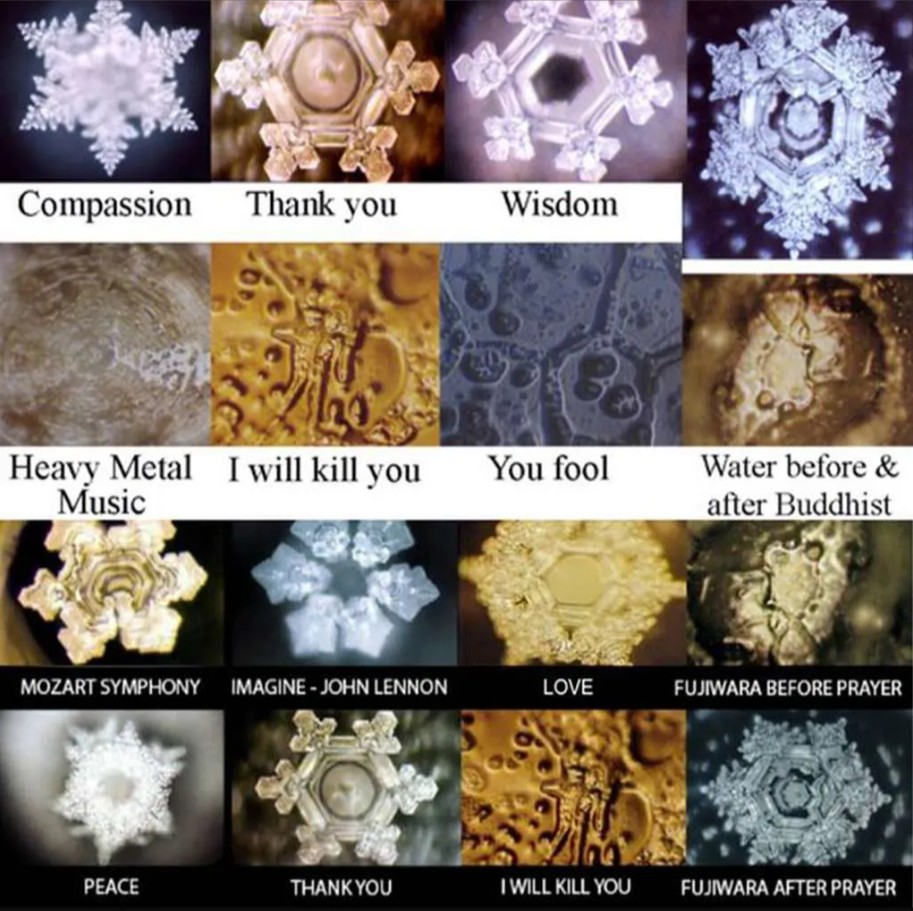
Some samples were labeled with positive words like “love” and “gratitude,” while others were exposed to negative expressions. A few were even played classical music.
After freezing the water, he examined the ice crystals under a microscope.
What he claimed to observe:
- Water exposed to positive words formed symmetrical, visually appealing crystal patterns
- Water exposed to negative expressions appeared irregular and less structured
- Natural water sources far from urban areas showed more defined crystal formations
Scientific Perspective: Fact or Interpretation?
While these findings gained widespread attention, they remain highly debated in the scientific community.
See more of our coverage in your search results.
Add Hunterfly on GoogleKey concerns include:
- Lack of controlled experimental conditions
- Limited reproducibility of results
- Potential observer bias in selecting crystal images
Because of these factors, most scientists consider these experiments inconclusive rather than proven evidence.
What Can We Take From This?
Even if the experiment itself is not scientifically validated, it raises an interesting psychological question:
See more of our coverage in your search results.
Add Hunterfly on GoogleCan our environment, words, and emotions influence our behavior and mindset?
Unlike water, humans clearly respond to language, tone, and emotional context. Positive communication is widely known to impact mental well-being, relationships, and productivity.
A Simple Reflection
The comparison often drawn is symbolic rather than literal.
Just like still water can become stagnant over time, a lack of movement, growth, or positive input in life can lead to stagnation.
Whether or not water stores emotions, one thing remains clear:
- Staying active matters
- Maintaining a positive environment matters
- What we say to ourselves and others matters
Final Thought
Masaru Emoto’s work sits at the intersection of science, philosophy, and curiosity. While it may not meet strict scientific standards, it continues to inspire discussions about awareness, intention, and human perception.
Even a debated idea can encourage more mindful living.