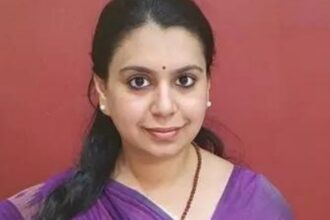






Mansi Sonawane had already cleared one of India’s most competitive entrance examinations after Class 12 when she made an unexpected career decision. Instead of pursuing an MBBS degree, she chose to prepare for the UPSC Civil Services Examination.
Her decision took her from the possibility of becoming a doctor to a completely different path in public service. After two unsuccessful UPSC attempts, Sonawane changed her preparation strategy, returned for a third attempt and eventually secured All India Rank 627 in UPSC Civil Services Examination 2021.
Her result led to her selection for the Indian Defence Accounts Service (IDAS).
Mansi Sonawane Had Cleared NEET Before Choosing Civil Services
For many students, clearing NEET after Class 12 represents the beginning of a clearly defined journey towards medical college.
That was also an option available to Mansi Sonawane.
The Aurangabad, Maharashtra, student had cleared NEET and was in a position to pursue medical education. Instead, she reconsidered the career she wanted to build and decided to prepare for the civil services.
A major influence was her father, Narendra Sonawane, an accountant who had himself aspired to become an IAS officer.
His aspirations encouraged Mansi to think seriously about civil services as a possible career for herself.
Rather than entering medical college, she chose to pursue a BA while beginning her preparation for the UPSC examination.
From Medical Aspirant to UPSC Candidate
The transition was not simply a change in examination preference.
Mansi was moving from a medical entrance pathway into one of India’s most demanding competitive examinations, requiring a completely different style of preparation.
The UPSC Civil Services Examination involves multiple stages, including the Preliminary Examination, Main Examination and Personality Test. Clearing one stage does not guarantee progression to the next, making sustained preparation particularly important.
Mansi’s initial attempts showed just how difficult the examination could be.
Two UPSC Attempts Ended Without Success
Mansi did not clear the examination in her first two attempts.
Her first attempt gave her an opportunity to understand the examination process and the level of preparation required. The second attempt also ended unsuccessfully, with shortcomings in her preparation affecting the result.
Instead of treating the setbacks as the end of her civil-services ambition, she used the experience to reassess her approach.
The failures gave her an opportunity to identify where she needed to improve and understand the examination more strategically.
A Different Approach in the Third Attempt
For her third attempt, Mansi returned to the examination with a revised preparation strategy.
This time, she successfully cleared all three stages of the UPSC Civil Services Examination:
- UPSC Preliminary Examination
- UPSC Main Examination
- Personality Test
Her performance ultimately placed her at AIR 627 in UPSC CSE 2021.
The result transformed a journey that had begun with an unconventional career switch into a successful civil-services outcome.
AIR 627 Led to Indian Defence Accounts Service
Mansi’s UPSC rank resulted in her selection for the Indian Defence Accounts Service (IDAS).
Her journey therefore moved through several distinct stages: clearing NEET, choosing not to pursue medicine, completing a BA, facing two unsuccessful UPSC attempts and finally securing a rank in the Civil Services Examination.
It is the change in direction that makes her story particularly notable.
She did not simply change her preparation strategy after failing UPSC. She had already changed her broader career plan before beginning the civil-services journey.
Why Mansi’s Story Stands Out
Career decisions after Class 12 can often appear permanent.
For a student who has cleared a highly competitive entrance examination such as NEET, choosing not to pursue medicine can represent a significant change in direction.
Mansi’s experience demonstrates that an early academic achievement does not necessarily have to determine a person’s eventual career.
Her decision was influenced by her interest in civil services and her father’s own aspirations, but the eventual result required her to stay committed through repeated setbacks.
Two Failures Became Part of the Learning Process
Mansi’s first two unsuccessful attempts became part of her preparation rather than the conclusion of it.
Each attempt provided information about the examination, the demands of preparation and areas where she needed to improve.
By her third attempt, she had changed her approach and successfully navigated every stage of the examination.
Her experience illustrates one of the difficult realities of UPSC preparation: success can require candidates to analyse unsuccessful attempts and make substantial changes rather than simply repeating the same strategy.
Mansi Sonawane’s Advice to UPSC Aspirants
Looking back at her journey, Mansi has emphasised persistence and self-belief for aspirants dealing with setbacks.
Her advice is particularly relevant to candidates who may feel discouraged after an unsuccessful attempt.
“Hang in there… it is important to have faith and confidence in oneself,” she said.
The message reflects the path she followed herself.
Her eventual AIR 627 did not come from a straight line. It followed a career decision that took her away from medicine, two unsuccessful attempts at UPSC and a third attempt in which she cleared all stages of the examination.
From NEET to UPSC: A Different Career Path
Mansi Sonawane’s journey is a reminder that academic success does not always have to lead to the career initially associated with it.
Clearing NEET gave her an opportunity to enter medicine. She chose another direction.
The decision ultimately led her toward civil services and, after repeated attempts, an All India Rank of 627 in UPSC CSE 2021 and selection for the Indian Defence Accounts Service.
For students navigating their own career choices, her story highlights another important point: changing direction can be part of the journey, provided the new goal is pursued with preparation, reflection and persistence.