








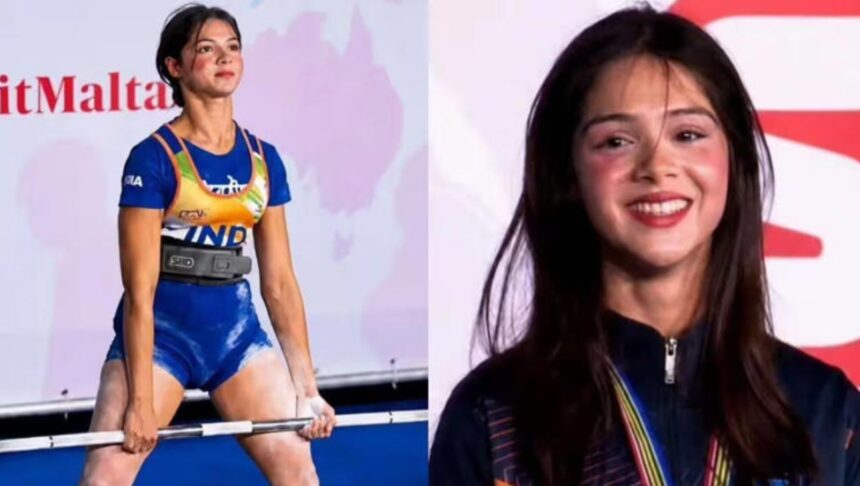
Indian powerlifter Keyaa Kunal Banerji delivered a remarkable performance at the 2026 IPF World Sub-Junior & Junior Classic Powerlifting Championships, deadlifting 140kg at a bodyweight of just 45.70kg. But after her achievement went viral, the young athlete says the attention quickly shifted from her sporting performance to sexism, fake accounts and the circulation of manipulated images.
For Keyaa Kunal Banerji, the numbers should have been the story.
At just 21, the Indian powerlifter walked onto the international stage at the 2026 IPF World Sub-Junior & Junior Classic Powerlifting Championships in Sun City, South Africa, and produced a 140kg deadlift while competing at a bodyweight of 45.70kg.
The lift was more than three times her competition bodyweight.
See more of our coverage in your search results.
Add Hunterfly on GoogleIt earned Banerji an individual silver medal in the deadlift event and helped put her name in front of a much wider audience.
But the attention that followed was not entirely about powerlifting.
As clips and photographs of her performance circulated online, Banerji said she became the target of sexualised comments, fake social-media accounts and the misuse of her photographs. She also spoke about manipulated and AI-generated images using her face and body being circulated without her consent.
What should have been a celebration of sporting achievement consequently became a conversation about how women athletes are treated when their performances suddenly attract mass attention.
A 140kg deadlift at 45.70kg bodyweight
Banerji competed in the Junior Women’s 47kg category at the world championships.
See more of our coverage in your search results.
Add Hunterfly on GoogleHer competition numbers were:
- Squat: 90kg
- Bench press: 50kg
- Deadlift: 140kg
- Total: 280kg
- Overall finish: Fifth
- Deadlift event: Silver medal
The deadlift was the standout performance.
At 140kg, Banerji lifted more than three times her competition bodyweight, a figure that immediately demonstrated the level of strength she has developed in a relatively light weight category.
See more of our coverage in your search results.
Add Hunterfly on GoogleThe international result also represented another step in her progression.
Reports indicate that Banerji had deadlifted 127.5kg at the 2025 national championships before moving up to 140kg at the 2026 nationals and then matching that mark at the world championships.
The progression illustrates the sporting story that was initially overshadowed by the reaction online: a young athlete steadily increasing her strength and carrying that improvement onto an international platform.
The attention changed after her performance went viral
Viral sports moments can introduce athletes to audiences far beyond their usual fan base.
For Banerji, however, that sudden visibility came with an unwanted consequence.
She has spoken about the appearance of fake accounts using her identity and the misuse of her photographs online. She also said that thousands of manipulated and AI-generated images featuring her likeness began circulating after her performance attracted attention.
The problem was no longer simply criticism or unwanted comments.
The use of artificial intelligence and image-manipulation technology creates an additional layer of vulnerability for public figures. Photographs can be altered, repurposed and redistributed at scale, often without the subject’s knowledge or consent.
For an athlete who became visible because of a sporting performance, having that attention redirected towards her appearance can be particularly frustrating.
“Sexism at its finest”
Banerji described the reaction as “sexism at its finest”, questioning why the conversation around a female athlete can so quickly move away from what she has achieved and towards her appearance.
Her argument raises a familiar issue in women’s sport.
Female athletes routinely have to negotiate two separate forms of attention: recognition for their athletic ability and scrutiny of their bodies, appearance and personal lives.
The distinction matters.
A powerlifter’s body is fundamentally part of her sporting discipline. Strength, muscular development, technique, conditioning and physical preparation are central to performance.
Reducing that body to an object of commentary ignores the years of training required to produce a lift such as Banerji’s 140kg deadlift.
Fake accounts add another layer of harassment
Impersonation can be particularly damaging for athletes whose public profiles are still developing.
A fake account can create confusion about what an athlete has actually posted, while photographs taken from legitimate social-media profiles can be reused in contexts the original subject never authorised.
For Banerji, the issue was therefore not simply that strangers were discussing her.
It was that her identity and image were allegedly being used in ways beyond her control.
That distinction is increasingly important in an era when social-media visibility and generative AI overlap.
AI manipulation is changing the risks of viral fame
The technology behind generative AI has made image creation and manipulation significantly more accessible.
A photograph that once required considerable editing expertise can now be altered or transformed using widely available tools.
That creates legitimate benefits for creators, filmmakers and businesses, but it also introduces serious risks when a person’s likeness is used without consent.
Women in the public eye can be particularly vulnerable to sexualised manipulation.
Banerji’s experience illustrates how quickly the problem can emerge when an athlete’s photograph becomes widely circulated.
The technology may be new, but the underlying problem is not.
The objectification of women athletes has existed long before generative AI. AI simply gives bad actors another mechanism through which that behaviour can be reproduced and amplified.
The conversation even moved beyond sport
Banerji also said online discussions surrounding her extended into areas including her ethnicity, ancestry and caste.
That took the conversation even further away from the reason people first encountered her: her performance on the powerlifting platform.
The incident illustrates how viral attention can become difficult for an athlete to control once a post or performance moves beyond its original sporting community.
An athlete can upload or compete in one context and suddenly find strangers constructing narratives about almost every aspect of their identity.
Banerji says strength is the reason she competes
Despite the unwanted attention, Banerji has continued to emphasise the reason she chose powerlifting.
In comments to Hindustan Times, she said that she pursues the sport because she enjoys challenging herself and becoming stronger.
That sentiment brings the story back to where it should have started.
A 21-year-old athlete entered an international competition, lifted 140kg and won a world-level silver medal in her event.
The achievement required training, discipline, technical preparation and the ability to perform under competition pressure.
Those are the facts that should define her sporting story.
A bigger issue for women’s sport
Banerji’s experience is part of a broader conversation about the treatment of women athletes online.
When a female athlete becomes successful, her visibility can increase dramatically. With that visibility can come genuine support from fans, but also unsolicited commentary, harassment, impersonation and the sexualisation of images.
The challenge is not to prevent athletes from becoming visible.
It is to ensure that visibility does not come at the cost of their dignity or control over their own identity.
Sport should give athletes a platform to demonstrate what they can do.
For Banerji, that platform produced a 140kg deadlift and a world championship silver medal.
The online reaction may have created another conversation, but it should not obscure the achievement that started it all.
Keyaa Banerji lifted 140kg for India on the international stage. That is the headline. The disturbing treatment that followed is a reminder of why the way we talk about women athletes matters just as much.