



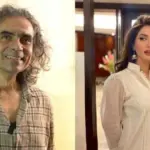


Singer Heer is carving out a musical identity built around experimentation rather than a single genre. Her recent work has taken her from intimate romantic tracks to energetic numbers and traditional compositions, while collaborations with established names such as Sonu Nigam and A.R. Rahman have added another dimension to her artistic journey.
With songs including Oh Tabassum, Dheere Dheere, Roop Di Rani, Hellallallo and Chhaap Tilak, Heer has explored a range of moods and musical styles. Her collaborations have also included Faheem Abdullah, Shilpa Rao, Tanishk Bagchi, Guru Randhawa and Paradox, alongside work connected with celebrated creative figures such as Javed Akhtar, Irshad Kamil and A.R. Rahman.
For the singer, working alongside artists she once listened to as a fan remains a special experience.
Heer on Collaborating With Artists She Grew Up Listening To
Heer admitted that stepping into a studio with artists she admired while growing up can still feel surreal.
See more of our coverage in your search results.
Add Hunterfly on Google“It’s always special and, frankly, a little surreal. When you’ve grown up listening to someone and then find yourself in a studio sharing a song with them, there is a certain excitement,” she said.
But she believes that excitement has to give way to concentration once the recording process begins.
According to Heer, the song itself has to become the priority. Rather than being overwhelmed by the stature of the collaborators, she focuses on becoming part of the music.
“That’s when the real magic happens. I feel truly blessed to be working with them,” she said.
What Heer Learned From Sonu Nigam and AR Rahman
Heer described both Sonu Nigam and A.R. Rahman as “institutions”, saying their approach to music offers lessons that extend beyond singing.
See more of our coverage in your search results.
Add Hunterfly on Google“They are both institutions, so there is so much to learn from them,” she said.
For Heer, some of the most valuable lessons come from observing details that may not always be obvious to listeners.
“With artists like them, you notice the smallest things, their thought process, how they approach a lyric, when they choose to hold back and when they let the emotion take over. Those things teach you a lot without anyone actually having to teach you,” she explained.
See more of our coverage in your search results.
Add Hunterfly on GoogleThat observation-based learning has become an important part of her own development as a performer.
Why Heer Enjoys Musical Versatility
Rather than committing herself to one particular sound, Heer says she enjoys moving between contrasting musical moods.
“I think versatility is something I naturally enjoy. I get bored if I keep doing the same thing. I want to be able to sing something soft and intimate one day and something completely energetic the next,” she said.
Her recent releases reflect that approach, moving across romantic, contemporary, energetic and traditional territory.
For Heer, changing styles is not simply about showcasing range. Each song allows her to discover something different about her own voice.
“Every song gives me an opportunity to discover another side of my voice,” she added.
How Working With AR Rahman Changed Her Approach
Among her professional experiences, working with A.R. Rahman appears to have had a particularly strong impact on the way Heer thinks about music.
“Working with A.R. Rahman has definitely changed the way I approach music. He has such a unique way of looking at a voice and understanding what it can bring to a song,” she said.
The experience encouraged her to listen more carefully and rely more on her instincts instead of overanalysing every musical decision.
“It has taught me to listen more carefully, trust my instincts and not overthink everything,” Heer added.
She also recalled the emotional rush of entering Rahman’s studio for the first time.
“I remember the first time I walked into his studio, I did not know if I am nervous, excited, anxious or just overwhelmed, it was too many emotions at once,” she recalled.
Independent Music and Film Songs Have Taught Her Different Lessons
Heer believes her work in independent music and film music has played two distinct roles in her development.
Her independent releases have given her greater room to experiment and discover the sounds she personally enjoys. Film music, meanwhile, has taught her to adapt her voice and performance to the requirements of a story.
“My independent music gave me the freedom to experiment and understand what I enjoy musically, while film music has taught me to adapt to a story and a particular emotion. I think both have shaped me in different ways,” she explained.
The contrast between the two spaces has allowed her to develop both artistic freedom and adaptability.
Heer Wants to Explore Classical, Folk and Experimental Sounds
Looking ahead, Heer does not appear interested in limiting her musical journey to one established formula.
She wants to explore more classical and folk-inspired music, while also leaving room for sounds that are entirely unfamiliar to her.
“I would love to explore more classical and folk-inspired music, but also something completely new and unexpected. I’d rather keep experimenting and let the music take me somewhere new,” she said.
For a singer whose recent work has already moved between intimate, energetic and traditional styles, that willingness to experiment could remain central to her evolving musical identity.