







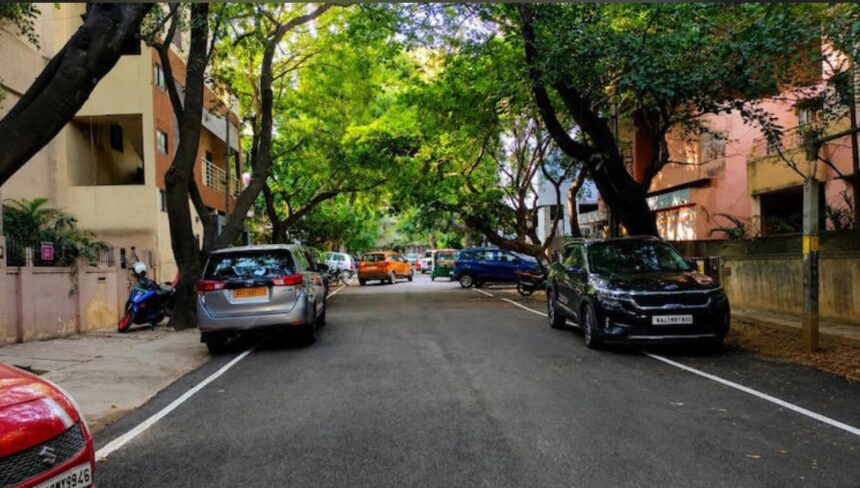
A social media post praising Bengaluru’s Indiranagar has triggered a fresh discussion about urban planning, infrastructure, and why certain neighbourhoods continue to offer a better quality of life despite the city’s rapid expansion.
The post, shared on X by Aaditya Aanand, an IIT Kanpur alumnus and founder of Multibagg AI, described Bengaluru as “a paradox”—a city where some localities struggle with flooding while others continue to impress with thoughtful planning, greenery, and walkability.
His observations quickly gained traction, with residents sharing their own experiences of living in different parts of the city.
“A City of Contrasts”
In his post, Aanand contrasted flood-prone Bellandur with Indiranagar, arguing that the difference between the two neighbourhoods highlights Bengaluru’s uneven urban development.
See more of our coverage in your search results.
Add Hunterfly on GoogleHe wrote that while some areas face recurring infrastructure challenges during the monsoon, Indiranagar offers an entirely different experience, comparing its atmosphere to that of an old European city on a pleasant evening.
According to him, 100 Feet Road represents an example of what well-planned urban development can achieve.
Why Indiranagar Stands Out
Describing his experience, Aanand highlighted several features that make Indiranagar attractive to both residents and visitors.
He pointed to:
- Wide, walkable footpaths
- Broad roads with organized parking
- Tree-lined avenues
- A vibrant mix of retail stores, cafés, restaurants, and startups
- A lively evening atmosphere balanced by quiet residential streets
He suggested that the neighbourhood successfully combines commercial activity with residential comfort, allowing people to enjoy both convenience and a sense of community.
See more of our coverage in your search results.
Add Hunterfly on GoogleA Balance Between Energy and Calm
Aanand also noted that the character of Indiranagar changes dramatically just a short distance away from its bustling commercial corridors.
According to his observations, walking a few minutes away from 100 Feet Road leads to quieter residential lanes with mature trees, independent homes, and significantly less traffic noise.
He described this balance as one of the neighbourhood’s defining strengths, saying it allows residents to experience both the vibrancy of city life and the calm of a traditional residential area.
See more of our coverage in your search results.
Add Hunterfly on GoogleSocial Media Users Join the Conversation
The post quickly attracted responses from Bengaluru residents and urban planning enthusiasts.
Some users argued that Bengaluru’s rapid population growth has placed immense pressure on infrastructure that was never designed for such expansion.
Others suggested that several neighbourhoods developed decades ago benefited from planned layouts featuring wider roads, parks, and better land allocation, while many newer areas evolved through unplanned urban growth.
Several commenters highlighted Indiranagar’s origins as a planned residential layout developed during the 1960s, noting that its broad arterial roads and green spaces continue to contribute to its appeal today.
Urban Planning Takes Center Stage
The discussion also shifted toward the broader topic of city planning.
Some users argued that governments should anticipate population growth by acquiring land, expanding road networks, and investing in long-term infrastructure before demand reaches critical levels.
Others pointed out that Bengaluru’s transformation into India’s technology hub happened at an extraordinary pace, making infrastructure development a continuing challenge for successive administrations.
Urban planning experts have often emphasized that sustainable city growth depends on coordinated investment in transportation, drainage, public spaces, utilities, and housing alongside commercial development.
Why Walkability Matters
Modern urban planning increasingly places emphasis on walkable neighbourhoods.
Areas with accessible footpaths, shaded streets, mixed-use development, and nearby public amenities often encourage healthier lifestyles while reducing dependence on vehicles for short trips.
Indiranagar’s combination of residential spaces, offices, restaurants, and retail outlets reflects principles that many cities worldwide have adopted to create more pedestrian-friendly communities.
Bengaluru’s Evolving Identity
The online discussion reflects a broader conversation taking place across India’s rapidly growing metropolitan cities.
As Bengaluru continues to expand, residents increasingly compare neighbourhoods based not only on property values but also on factors such as greenery, traffic management, drainage systems, public spaces, and overall quality of life.
While opinions differ on which locality offers the best living experience, the viral post has once again highlighted how thoughtful urban planning can shape the daily lives of millions.