




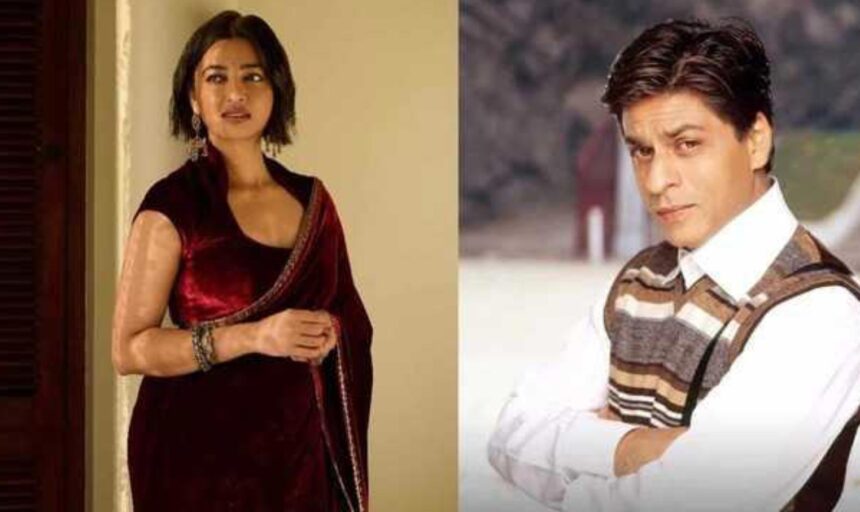
Shah Rukh Khan’s romantic films have delivered some of Bollywood’s most enduring love stories. For many viewers who grew up watching his movies, the persistent hero, grand gestures and dramatic pursuit were once presented as the ultimate expressions of romance. Actress Radhika Apte, however, says revisiting some of those films as an adult has made her look at them very differently.
Radhika, who has described herself as a longtime Shah Rukh Khan fan, recently reflected on the way older Hindi films portrayed romance and desire. She said she was “really taken aback” when she revisited some movies she had loved while growing up.
Radhika Apte on How Bollywood Portrayed ‘No’
According to Radhika, one of the biggest issues she noticed was the way a woman’s refusal was often treated on screen.
“When a woman says no, it’s never taken as no,” she said, pointing to the recurring storyline in which a male character continues pursuing a woman even after she has rejected him.
See more of our coverage in your search results.
Add Hunterfly on GoogleWhat once appeared to be romantic determination now feels troubling to her. Radhika recalled that films frequently presented relentless pursuit as evidence of genuine love, rather than acknowledging the woman’s choice.
She also admitted that, as a young viewer, she absorbed some of those ideas herself. The attention and persistence shown by male protagonists could appear desirable because cinema framed them as romantic gestures.
Looking back as an adult, she said she finds that response striking because the same behaviour can look very different outside the cinematic fantasy.
How Older Films Shaped Ideas About Romance
Radhika’s comments extend beyond individual Shah Rukh Khan movies. She questioned how mainstream Hindi cinema historically portrayed desire and relationships, particularly when male characters were given greater agency while female characters were expected to respond to their pursuit.
She suggested that repeated portrayals of persistence as romance can influence audiences, particularly younger viewers who are still developing their understanding of relationships.
See more of our coverage in your search results.
Add Hunterfly on GoogleThe concern, she noted, is not simply about whether an individual film is entertaining. Stories can also shape how audiences recognise affection, attraction, boundaries and unwanted attention in real life.
Radhika Apte Questions the Male Gaze in Raj Kapoor’s Cinema
The discussion also touched upon the work of legendary filmmaker Raj Kapoor and the way women were portrayed in some of his films.
Radhika questioned the male gaze in older Hindi cinema, arguing that women were often heavily sexualised while their own feelings and perspectives received comparatively less attention.
See more of our coverage in your search results.
Add Hunterfly on GoogleFilmmaker Shakun Batra, who was part of the conversation, also discussed how films from earlier eras approached desire. The discussion acknowledged that cinema reflects the social attitudes of its time, while also recognising that contemporary audiences can reassess those portrayals through a different lens.
Batra also noted that future generations may similarly identify shortcomings in films being made today.
Radhika Says Hindi Cinema Has Changed, But There Is More to Do
Radhika acknowledged that Bollywood has evolved considerably in the way it depicts relationships, consent and female desire. However, she believes the industry still has room to grow.
Her observations raise an uncomfortable question about some of Bollywood’s most beloved romantic narratives: when a heroine says no, does the story actually allow that refusal to remain a no?
The conversation also highlights how the interpretation of a film can change as its audience grows older. A scene that once felt romantic may later appear intrusive, while behaviour celebrated as persistence can be reconsidered through the lens of consent and personal boundaries.
Radhika Apte and Shakun Batra have worked on separate segments of Lust Stories 3. The anthology is scheduled to release on Netflix on September 18.