





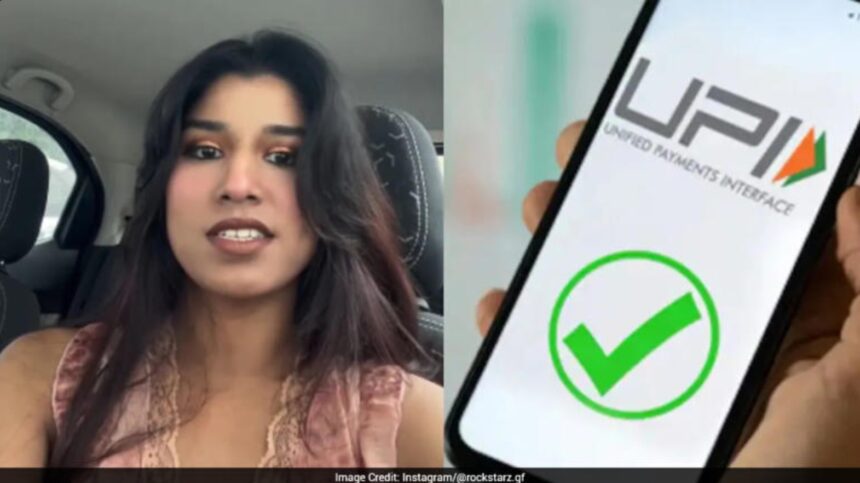
A Delhi woman’s personal finance experiment has sparked widespread discussion online after she revealed that stepping away from UPI for most daily expenses significantly changed the way she spends money.
In a now-viral Instagram post, content creator Sadaf shared that she has spent more than two months relying primarily on cash instead of digital payments. According to her, the shift made her more conscious of every purchase, helping her reduce unnecessary spending and manage her monthly budget more effectively.
Her experience has resonated with many users, prompting conversations about whether the convenience of digital payments sometimes encourages impulsive buying.
Why She Chose Cash Over UPI
Explaining her decision, Sadaf said she intentionally reduced her use of UPI for routine purchases such as snacks, coffee, and small shopping trips.
See more of our coverage in your search results.
Add Hunterfly on GoogleShe observed that digital payments often made multiple small transactions feel insignificant.
According to her, purchases that seemed minor individually could quickly add up without her noticing.
She shared that paying with physical cash created a stronger sense of awareness because she could actually see the money leaving her wallet.
Cash Made Every Purchase Feel More Real
One of the biggest changes she noticed was the psychological difference between tapping a phone and handing over currency notes.
She explained that every time she spent a ₹500 note, she became more mindful of whether the purchase was necessary.
See more of our coverage in your search results.
Add Hunterfly on GoogleThis simple shift helped reduce spontaneous spending on items she might otherwise have purchased without much thought.
For her, the visibility of remaining cash also made budgeting much easier than constantly checking a banking app.
Budget Tracking Became Simpler
Another benefit she highlighted was the ability to instantly know how much money remained available.
See more of our coverage in your search results.
Add Hunterfly on GoogleInstead of relying on transaction histories or digital account balances, she could quickly assess her spending simply by looking inside her wallet.
Many financial experts have long suggested that physical cash can encourage mindful spending because it creates a tangible connection between purchases and available funds.
Why She Hasn’t Given Up UPI Completely
Despite the positive results, Sadaf acknowledged that relying entirely on cash is not practical in today’s digital-first economy.
She noted that many retailers and small businesses now carry limited cash for change.
In situations where she only had a ₹500 note and a shopkeeper could not return the balance, digital payment remained the easiest solution.
To overcome this, she currently follows a hybrid approach:
- Around 80% of her spending money is kept in cash.
- Around 20% remains available through UPI for situations where cash transactions become difficult.
She described this balance as the most practical solution for her lifestyle.
Can Paying With Cash Really Reduce Spending?
Behavioural finance research has often explored the concept known as the “pain of paying.”
When consumers physically hand over cash, they may experience a stronger awareness of spending compared to contactless or digital transactions.
This doesn’t mean digital payments cause overspending for everyone, but payment methods can influence purchasing behaviour depending on individual habits.
People trying to build stronger budgeting habits sometimes combine digital tools with cash-based budgeting methods such as:
- Envelope budgeting
- Weekly cash allowances
- Spending categories
- Purchase tracking journals
The most effective system is usually the one that aligns with a person’s financial goals and daily routine.
The Growing Conversation Around Mindful Spending
India has become one of the world’s leading digital payment markets, with UPI transforming everyday transactions through speed and convenience.
At the same time, conversations around mindful spending continue to grow as consumers look for ways to improve budgeting and avoid unnecessary purchases.
Sadaf’s experience has added another perspective to this discussion, showing that for some individuals, temporarily stepping back from digital payments may encourage greater financial awareness.