







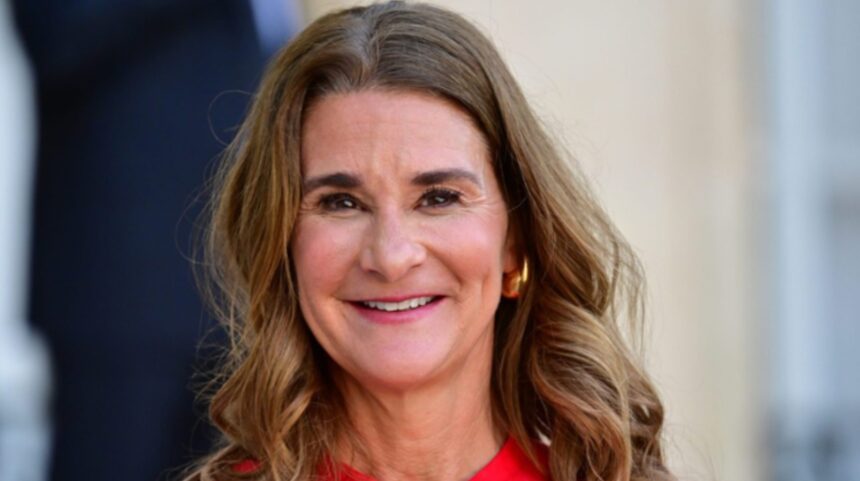
Melinda French Gates has spoken candidly about navigating major life changes, sharing a simple message for people going through difficult transitions: slow down, create space for yourself and allow time to process what has happened.
The philanthropist and former Microsoft executive reflected on the importance of self-care in her 2025 book, The Next Day: Transitions, Change, and Moving Forward. She has described her divorce from Microsoft cofounder Bill Gates as one of the most difficult transitions of her life and used her own experiences to explore how people can move forward after major personal changes.
Her advice is notably less about immediately finding the “next chapter” and more about allowing yourself to experience the period in between.
Melinda French Gates’ Advice: Make Time for Quiet
In an interview with Forbes, French Gates encouraged people to deliberately create moments of quiet in their daily routines.
See more of our coverage in your search results.
Add Hunterfly on Google“I want to tell everyone to take time in quiet,” she said, suggesting that people put their phones down and spend even 10 minutes a day doing something that gives them space to reconnect with themselves.
That could mean meditation, going for a run or simply engaging in another activity that provides a break from constant demands and distractions.
The idea is particularly relevant during periods of transition, when people can feel pressure to immediately make decisions, stay productive or move on.
French Gates’ message is that stepping back is not necessarily a sign of inactivity. It can be part of understanding what comes next.
What Motherhood Taught Melinda French Gates About Self-Care
French Gates has said that her understanding of self-care began developing during the early years of motherhood.
See more of our coverage in your search results.
Add Hunterfly on GoogleShe and Bill Gates have three children. During those years, her daily routine revolved heavily around childcare, school schedules and family responsibilities.
Finding time for herself was initially difficult.
But she gradually discovered small windows in which she could step away from her responsibilities. Those moments included early mornings and periods when her children were sleeping.
See more of our coverage in your search results.
Add Hunterfly on GoogleThe experience changed her perspective on self-care. Rather than viewing personal time as something that took away from her responsibilities as a mother, she began to recognise that taking care of herself could help her show up better for her family.
That lesson later became part of her broader thinking about transitions and personal wellbeing.
Why French Gates Says You Shouldn’t Rush the Next Chapter
One of the central ideas in The Next Day is that a major transition does not necessarily end when the obvious event itself is over.
A divorce may become legally final. A job may end. A child may leave home. A relationship may change. Yet the emotional processing can continue long afterward.
French Gates has encouraged people to resist the instinct to immediately replace one chapter with another.
“Don’t just leave and then jump to the next thing,” she said.
Instead, she suggested taking time to think about what happened and what the experience can teach you.
“Take some time on the next day, the day after what you thought was the transition, to really think and feel and learn, because there’s so much growth that can come in a transition.”
The distinction is important: moving forward does not necessarily mean forgetting the past. It can mean understanding it well enough to make more intentional choices about the future.
Her Divorce From Bill Gates Was a Major Life Transition
Melinda and Bill Gates announced their divorce in 2021 after 27 years of marriage.
The couple continued to share parenting responsibilities for their three children, while French Gates increasingly focused on her own philanthropic and professional work.
In discussing the experience publicly, she has emphasised the difficulty of navigating such a significant personal change while also dealing with the practical realities that accompany it.
Her reflections have also broadened the conversation around divorce beyond the immediate event itself. For many people, separation can affect identity, family structures, friendships, routines, work and plans for the future.
French Gates’ approach focuses on giving those changes enough time to be understood rather than treating recovery as a race.
Self-Care Does Not Have to Be Complicated
French Gates’ recommendation of 10 minutes of quiet may sound simple, but its value lies in consistency.
Self-care does not necessarily require an expensive retreat, a complicated wellness programme or a major change in lifestyle.
It can involve:
- Putting your phone away for a few minutes
- Taking a quiet walk
- Practising meditation
- Exercising
- Reading
- Spending time outdoors
- Journaling
- Sitting quietly without distractions
- Talking to someone you trust
The important element is creating intentional space rather than allowing every moment of the day to be occupied by work, family responsibilities, notifications or social media.
For someone navigating a major transition, even a short daily pause can provide an opportunity to recognise emotions instead of constantly pushing them aside.
Mental Wellbeing Is Also About Everyday Habits
The broader principle behind French Gates’ advice is consistent with established approaches to maintaining wellbeing.
Mental health is influenced by multiple factors, including sleep, physical activity, social relationships, nutrition and the ability to manage stress.
The US National Institute of Mental Health recommends maintaining connections with other people, getting sufficient sleep, eating well and making time for activities that support wellbeing.
That does not mean a short meditation or exercise session can solve every mental health challenge. Rather, everyday habits can form part of a broader approach to taking care of emotional and physical health.
People experiencing persistent emotional distress or significant changes in their ability to function should consider seeking professional support rather than relying solely on self-care practices.
Work-Life Balance Is Another Part of the Conversation
French Gates’ comments also come at a time when work-life balance remains an important issue for employees, entrepreneurs and business leaders.
Long working hours and constant digital connectivity can make it difficult for people to create boundaries between professional responsibilities and personal life.
Some business leaders have argued that deliberately protecting personal time can ultimately make work more sustainable.
Netflix cofounder Marc Randolph, for example, has previously discussed the importance of work-life balance and said it helped him maintain his wellbeing throughout his career.
Crumbl cofounder Jason McGowan has also pointed to the company’s decision to close its stores on Sundays as a way of giving employees time away from work and with their families.
These examples reflect a broader shift in how people think about productivity. Being constantly available is not necessarily the same as being effective.
French Gates’ Larger Message About Change
Perhaps the most significant part of French Gates’ advice is her suggestion that people should not treat discomfort as something that must immediately disappear.
Major transitions are often uncomfortable precisely because familiar structures have changed.
Trying to avoid every difficult emotion can make it harder to understand what the experience means. Allowing yourself some quiet time, by contrast, can create room for reflection.
That does not mean remaining stuck in the past. It means acknowledging what has happened before deciding where to go next.
French Gates’ own journey — from motherhood and a long marriage to divorce, philanthropy and building a new chapter of her life — provides the personal context behind her advice.
Her message is ultimately straightforward: when life changes dramatically, give yourself permission to pause before rushing toward whatever comes next.