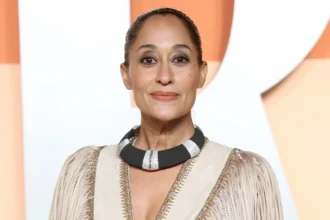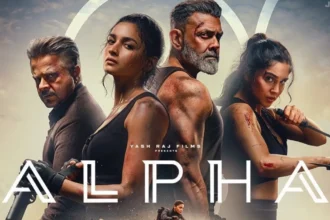






Poonam Pandey has criticised Swara Bhasker over the latter’s comments about the jauhar sequence in Sanjay Leela Bhansali’s Padmaavat. Poonam said she was disappointed by Swara’s remarks and questioned the criticism of a scene that she believes was intended to depict a historical account.
A fresh debate has erupted around Sanjay Leela Bhansali’s Padmaavat, with actress Poonam Pandey publicly responding to comments previously made by Swara Bhasker about the film’s controversial jauhar sequence.
Speaking to IANS, Poonam said she was surprised by Swara’s remarks and revealed that she had once been a fan of the actress. While she acknowledged Swara’s intelligence and education, Poonam said she strongly disagreed with her interpretation of the sequence.
The comments have brought renewed attention to the debate over how historical events involving women, honour, sexual violence and self-sacrifice should be represented on screen.
See more of our coverage in your search results.
Add Hunterfly on GoogleWhat Did Poonam Pandey Say About Swara Bhasker?
Reacting to Swara’s criticism, Poonam said she believed the actress should not have made those comments.
“I used to be her fan, a long time ago. Now, whatever she said… She shouldn’t have said that,” Poonam told IANS.
She further argued that Bhansali’s film was attempting to portray history rather than inventing an entirely fictional narrative.
“The makers only showed history. They didn’t make up a story. Sanjay Leela Bhansali showed a film based on history,” she said.
Poonam also described Swara’s comments as disappointing, saying she had previously viewed her as an educated and intelligent person.
See more of our coverage in your search results.
Add Hunterfly on GoogleHer remarks became particularly sharp when she criticised Swara personally. Poonam said she was angry about the comments but did not want to elaborate further.
Swara Bhasker Had Questioned the Message of the Jauhar Scene
The controversy stems from remarks Swara Bhasker reportedly made at the “Woman Life Freedom” talk at the India International Centre in Delhi on August 31.
During the discussion, Swara questioned the way the jauhar sequence in Padmaavat could be interpreted by women who have survived sexual violence.
See more of our coverage in your search results.
Add Hunterfly on GoogleShe raised the concern that presenting death as the ultimate way of preserving a woman’s honour could send a damaging message to survivors.
Swara was quoted as saying:
“I was watching it, and I thought that if God forbid, I was a rape survivor, what is this film telling me? I would feel like a coward that I didn’t commit suicide to save my honour.”
She went on to question whether cinema should suggest that a woman loses her right to live or her dignity after experiencing sexual violence.
“Are we saying that rape is end of a woman’s life? This scene was so problematic,” she said.
Swara’s comments were therefore focused on the potential social impact of the depiction, rather than simply whether the historical event itself occurred.
Why Is Padmaavat’s Jauhar Scene Still Debated?
Padmaavat, directed by Sanjay Leela Bhansali and released in 2018, generated considerable discussion even before its theatrical release.
The film depicts the legendary story associated with Rani Padmavati, played by Deepika Padukone, and Sultan Alauddin Khilji, portrayed by Ranveer Singh. Shahid Kapoor played Maharawal Ratan Singh.
The film’s climax includes a depiction of jauhar, a historical practice associated with women choosing collective self-immolation in certain wartime circumstances rather than facing capture.
The representation of the practice remains controversial because of the competing questions it raises: whether filmmakers should reproduce historical narratives faithfully, how much artistic interpretation should be applied to them, and how such depictions may affect contemporary audiences.
That tension is at the heart of Swara’s criticism and Poonam’s response.
Poonam Pandey and Swara Bhasker Take Different Positions
The disagreement between the two actresses ultimately centres on how the scene should be understood by a modern audience.
Poonam’s argument is that the filmmakers were depicting an event rooted in historical tradition and should not necessarily be judged as though they had invented the underlying story.
Swara, meanwhile, has questioned the message that such a depiction could communicate to women today, particularly survivors of sexual violence.
Neither position changes the historical or cinematic debate by itself, but their contrasting reactions have once again brought the scene into the public conversation.
Padmaavat Continues to Spark Debate Years After Release
The latest exchange demonstrates why Padmaavat remains a subject of discussion years after its theatrical release.
The film was already surrounded by controversy over its portrayal of historical figures and events. Its depiction of jauhar added another layer to those conversations, particularly around questions of women’s agency, honour and survival.
Poonam’s latest remarks have now reopened that discussion, while Swara’s original comments continue to generate reactions from other members of the entertainment industry.