




Questions surrounding the death of Disha Salian had been raised by a forensic expert more than a year before the recent Central Bureau of Investigation (CBI) developments, according to a report accessed by ThePrint.
A forensic report prepared in April 2025 examined two photographs of Salian alongside her postmortem report and pointed to what the experts described as discrepancies that required further examination.
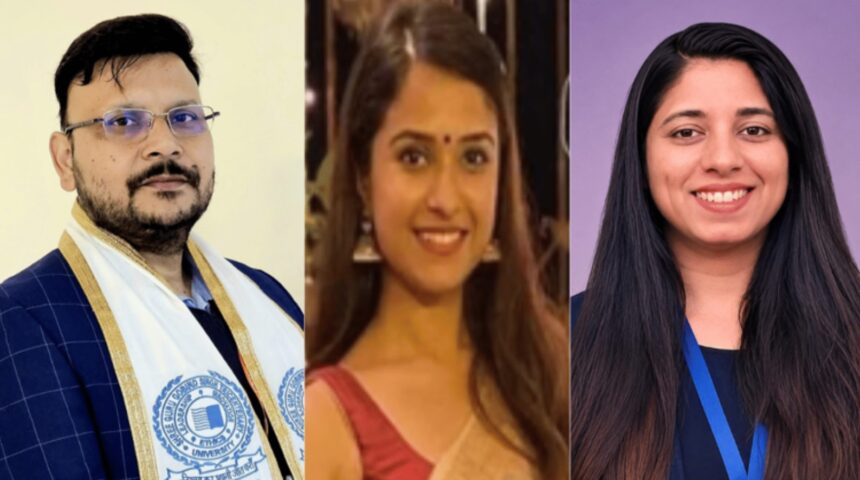
The report was prepared by Dr Bhoopesh Kumar Sharma, a forensic science professor at SGT University in Gurugram, along with associate professor Megha Walia, after advocate Nilesh Ojha, who represents Salian’s father Satish Salian, approached Sharma in March 2025.
Among the issues discussed were the reported condition of Salian’s face, the postmortem reference to missing front teeth and the fact that the body was reportedly found without clothes.
See more of our coverage in your search results.
Add Hunterfly on GoogleThe expert report did not itself establish how Salian died. Instead, it called for a fresh examination of the circumstances with qualified forensic assistance.
What Did the Gurugram Forensic Report Examine?
According to the supplied report, Sharma and Walia reviewed two digital photographs of Disha Salian along with her postmortem report.
Their examination reportedly focused on visible injuries and whether those observations corresponded with descriptions contained in the postmortem documentation.
Sharma’s report noted that the photographs showed no obvious injury around areas including the right eyebrow, eye orbit, forehead, nose and right cheek. It also recorded that there was no visible facial bleeding in either image.
The significance of those observations, according to the report, was that they appeared inconsistent with certain descriptions contained in the postmortem record and therefore warranted closer forensic scrutiny.
See more of our coverage in your search results.
Add Hunterfly on GoogleExpert Questions Reference to Facial Injury
The report also discussed a section of the postmortem documentation that reportedly described the facial features as “injured”, with the eyes and mouth described as semi-closed.
Sharma noted that the photographs did not appear to show an obvious facial injury corresponding to that general description.
He also pointed out that the wording reportedly did not specify the exact nature or location of the injury, making it difficult to reconcile the written description with the photographs on their own.
See more of our coverage in your search results.
Add Hunterfly on GoogleSuch a discrepancy would require examination of the original medical and forensic records rather than relying solely on photographs.
Why the Missing Front Teeth Became a Key Question
One of the most significant observations in the expert report concerned the reported loss of Salian’s front teeth.
Sharma’s report questioned how the teeth could have been broken in the circumstances described while the photographs apparently showed no corresponding visible injury to the surrounding facial area.
The report argued that direct trauma to the mouth or jaw would ordinarily be expected to produce associated signs such as cuts, bruising or swelling, although the extent and nature of injuries in a fall can vary depending on the point and mechanism of impact.
Sharma characterised the specific combination described in the available material as difficult to reconcile and wrote that it was “scientifically implausible” for the frontal teeth alone to be broken while the face otherwise appeared uninjured.
That statement was the expert’s reported opinion and is not, by itself, a judicial finding or proof that the death occurred through any particular mechanism.
The Question of the Missing Clothing
Another issue highlighted by the forensic report was the condition in which Salian’s body was reportedly found.
The report said the postmortem record described the body as nude. Sharma argued that the clothing, its location and its condition should be examined as evidence before drawing conclusions about the circumstances surrounding the death.
The report reportedly listed several possible scenarios that forensic investigators could consider, including a fall or suicide, an assault before the fall, staging or other circumstances. These were presented as investigative possibilities requiring evidence, not as conclusions about what actually happened.
Bombay High Court Also Raised Questions About the Postmortem
According to the supplied report, the issue later came before the Bombay High Court, which questioned aspects of the postmortem documentation while considering the wider investigation.
The court reportedly questioned how a fall from the 12th floor could result in broken front teeth while leaving the facial bones, jaw and nasal bone without fractures.
The bench was also said to have noted that the issue of why Salian’s body was nude when it reached the postmortem doctor remained unexplained, despite the police having separately identified and seized clothing through a panchnama.
These observations were part of the court’s assessment of whether the earlier police inquiry had adequately investigated the circumstances of the death.
Court Found Earlier Inquiry Inadequate
The supplied report states that a Bombay High Court bench comprising Justices Sarang V. Kotwal and Ranjitsinha Raja Bhonsale found the Mumbai Police inquiry under Section 174 of the CrPC inadequate and insufficient.
The court subsequently directed the CBI to investigate the death.
The direction reportedly included registering an FIR, recording Satish Salian’s statement and conducting the investigation independently of the court’s observations.
The court’s intervention did not establish the guilt of any individual. It directed further investigation into circumstances that it considered insufficiently explained by the earlier inquiry.
CBI FIR Names No Accused
The supplied report states that the CBI registered an FIR on 14 September, after Satish Salian gave his statement to the agency.
Importantly, the FIR reportedly does not name anyone as an accused. The report attributes this to the High Court’s direction that no person be treated as an accused unless the investigation itself produces grounds for suspicion.
Satish Salian, however, reportedly provided investigators with a list of people whose possible roles he wanted examined.
That list included public figures, police officials, people connected to the circumstances surrounding Salian’s death and personnel associated with the postmortem and forensic process.
Being named by the complainant or asked to be investigated does not establish wrongdoing.
Satish Salian’s Requests to the CBI
According to the supplied report, Satish Salian asked the agency to examine, among others, Sooraj Pancholi, bodyguards associated with Aditya Thackeray, Showik Chakraborty, Rohan Rai, former Maharashtra chief minister Uddhav Thackeray, former state home minister Anil Deshmukh, former Mumbai police commissioner Param Bir Singh, former police officer Sachin Vaze, a serving DCP and officers associated with the Malvani police station.
He also reportedly sought examination of members of the later special investigation team, doctors involved in the postmortem and personnel at the forensic science laboratory.
These requests reflect the complainant’s position about what the CBI should investigate. They are not findings by the investigating agency.
Sanjay Raut Calls FIR a ‘Political Conspiracy’
The developments have also drawn a political response.
According to the supplied report, Shiv Sena (UBT) MP Sanjay Raut described the FIR as a “political conspiracy” directed at the Thackeray family.
That characterization is a political claim and should be distinguished from the CBI’s investigative actions. The supplied report states that the agency has not publicly commented beyond registering the case and seeking records from the Malvani police.
What Sharma’s Report Actually Concludes
The Gurugram forensic report reportedly concluded that, prima facie, the circumstances visible in the available material did not adequately align with a death caused by a fall and that discrepancies between the photographs and postmortem report warranted a fresh investigation.
Sharma and Walia called for the involvement of qualified forensic specialists in examining the evidence.
That conclusion should be understood in its proper context: the experts examined photographs and documentation supplied to them. It is not the same as a complete forensic reconstruction based on all original evidence, and it does not determine criminal responsibility.
Why the Earlier Report Matters Now
The significance of the 2025 report, according to the supplied account, is that several of the issues it identified later featured in the High Court’s consideration of the case.
The reported questions about the front teeth, facial injuries and the condition of the body were therefore raised independently by the Gurugram experts before the case reached its latest investigative stage.
With the CBI now examining the death, those earlier observations may form part of the material investigators consider alongside original medical records, forensic evidence, witness statements and other records.
Investigation Remains Ongoing
The death of Disha Salian remains the subject of an ongoing investigation following the High Court’s directions and the subsequent CBI FIR described in the supplied report.
The forensic report by Sharma and Walia raises questions about how certain observations in the photographs correspond with the postmortem report, but those questions should not be treated as proof of a particular cause of death or evidence of criminal conduct by any named individual.
The CBI’s investigation, including examination of medical, forensic, police and other evidence, is the process through which those unresolved questions are to be tested.