






Srijla Guha is stepping into unfamiliar territory with Keu Bole Biplobi Keu Bole Dakat, taking on the role of Miss Shefali, a cabaret performer whose life extends far beyond the stage.
For the actor, the part presented an opportunity to explore a character and a performance tradition she had not previously encountered on screen. While the cabaret world naturally brings glamour, music and elaborate movement to the foreground, Srijla was more interested in discovering the woman underneath the performance.
Srijla Guha Looks Beyond the Cabaret Glamour
Srijla says her first reaction to the role was a mixture of excitement and curiosity. What attracted her was not simply the opportunity to perform a cabaret number, but the possibility of portraying someone from a world she had never explored as an actor.
Rather than approaching Miss Shefali as a glamorous stage persona alone, Srijla wanted to understand her motivations, vulnerabilities and emotional life.
See more of our coverage in your search results.
Add Hunterfly on GoogleThat distinction became an important part of her preparation. For the actor, cabaret in the period depicted by the film was not merely about dancing for an audience. It involved a combination of movement, expression, confidence, rhythm and storytelling.
Once she began looking at it that way, the choreography became part of the character-building process.
Learning the Language of Cabaret
Preparing for the role required considerably more than memorising dance steps. Srijla had to adapt her physicality to a performance style that demanded a different kind of body language from the dance forms she was already familiar with.
Posture, rhythm, pauses and stage presence became particularly important.
She describes the rehearsal process as physically demanding but rewarding, because the objective was not simply to execute the choreography accurately. She wanted the movements to appear as though they naturally belonged to Miss Shefali.
See more of our coverage in your search results.
Add Hunterfly on GoogleThat meant developing an ease and confidence that could make the performance look effortless on camera.
Srijla also studied classic cabaret performances and films from the period. Her research particularly drew her attention to the restraint of performers from that era.
Instead of relying on exaggerated gestures, many of them could hold an audience through a glance, a pause or a controlled movement. For Srijla, that observation became an important lesson in understanding the character.
See more of our coverage in your search results.
Add Hunterfly on Google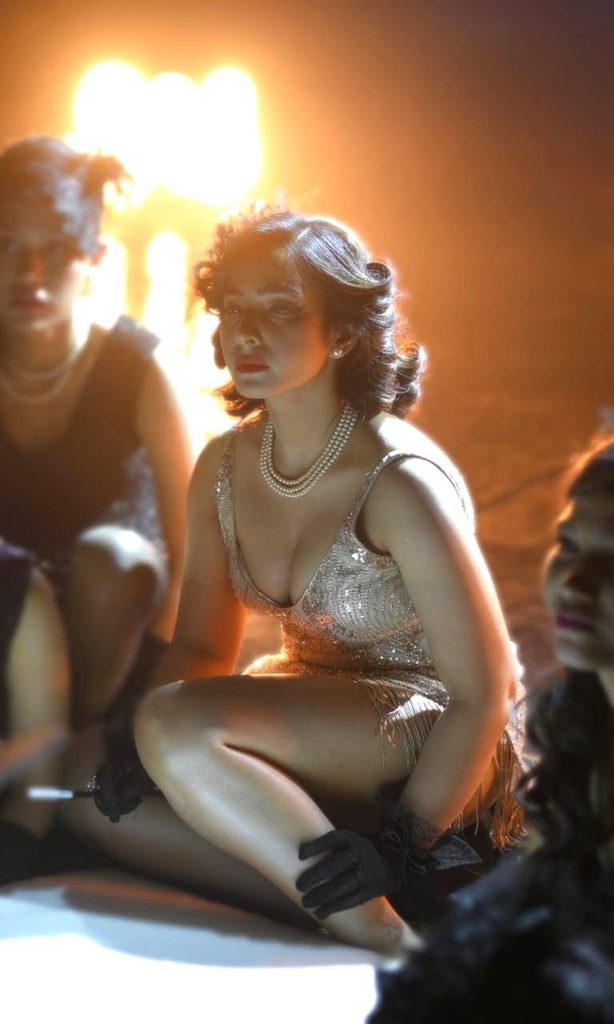
Why Stillness Matters as Much as Movement
One of the biggest discoveries Srijla made during the process was that cabaret relies heavily on presence.
The actor notes that while several dance forms place strong emphasis on technique and physical energy, cabaret can communicate just as much through subtle expressions and controlled movements.
That changed the way she approached Miss Shefali.
The challenge was to make the character alluring without turning her into a caricature, while maintaining the glamour of the performance without losing her emotional authenticity. According to Srijla, achieving that internal confidence was more difficult than simply mastering the choreography.
The character had to appear completely comfortable in command of the stage, even when the performance demanded restraint.
Costumes and Styling Helped Build Miss Shefali
The transformation also happened away from the dance floor.
Srijla says the costumes, hair, makeup and styling significantly influenced the way she inhabited the character. The visual transformation changed her posture and physicality, helping her move and respond differently.
For the actor, the external appearance effectively became a gateway to the character’s internal world.
The filmmaking team similarly focused on recreating the period through the choreography, costumes, music and overall visual presentation. The intention was to make the cabaret sequence feel rooted in its setting rather than like a contemporary performance dressed in vintage styling.

The Discipline Behind the Glamour
Srijla’s research also changed her perception of cabaret performers.
She believes audiences can sometimes reduce cabaret to glamour, overlooking the technical discipline and performance skills required to hold a room. Her preparation made her appreciate the control performers needed over music, movement, expression and audience interaction.
That understanding influenced how she approached Shefali outside the performance sequences as well.
Srijla describes the character as emotionally intelligent and resilient, with her own dreams, fears and vulnerabilities. Her profession is only one aspect of who she is.
That became crucial to ensuring that Miss Shefali remained a fully developed character rather than simply serving as the film’s glamorous cabaret figure.
Srijla Guha and Jeet Discuss Naam Na Jaana
Srijla also spoke with Jeet about Naam Na Jaana and the role the song plays within the film.
She describes Jeet as supportive throughout the process, with their conversations helping her understand the mood and narrative purpose of the song. As a result, she approached the sequence as an emotional component of the story rather than treating it as an isolated dance performance.
The filming itself brought another challenge: maintaining the same energy, expression and character continuity across multiple takes.
A performance sequence can be physically demanding, but it also requires consistency because every shot has to retain the freshness and emotional intensity of the first take.
A New Side of Srijla Guha
At some point during the shoot, Srijla realised just how different the character was from the roles she had previously played.
The combination of the period styling, cabaret vocabulary, confidence and emotional texture pushed her into unfamiliar territory. That challenge is also what makes the role significant for her.
Srijla has said she enjoys characters that can alter how audiences perceive her as an actor. With Miss Shefali, she hopes viewers will look beyond the visual glamour and discover the woman whose story exists behind the stage.