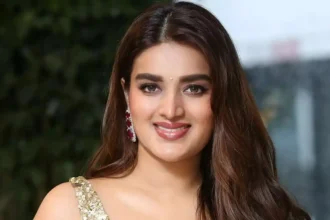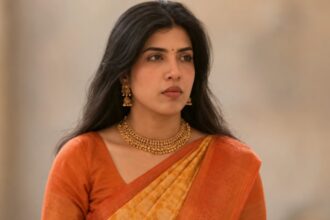







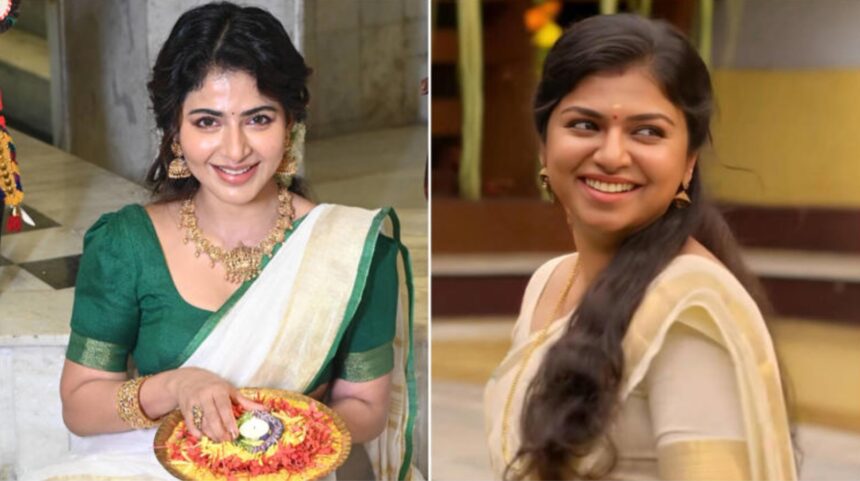
For many Malayalis, Onam is as much about family traditions and shared memories as it is about the festive feast. For actresses Iswarya Menon and Raveena Ravi, the tradition of making a pookalam carries memories of family, flowers, laughter and the people who made the celebrations special.
While Iswarya continues to make pookalam with her family, Raveena’s memories of the tradition are closely connected to her late father and the flower-buying trips they made together in Chennai.
Iswarya Menon on why pookalam means more than flowers
For Iswarya Menon, some of her happiest Onam memories revolve around sitting with her family and creating a pookalam together.
“We would all sit together, collect flowers and slowly create the design. For me, a pookalam is not just an arrangement of flowers. It is about togetherness, laughter and the festive feeling,” she says.
See more of our coverage in your search results.
Add Hunterfly on GoogleThe actress sees the floral design as part of the larger spirit of Onam rather than simply a decorative tradition.
For her, the pookalam also has a ritual significance associated with welcoming Mahabali.
“Making the pookalam is also a way of welcoming Mahabali. We traditionally place the Thumba Kudam and Thrikkakkara Appan in the centre of the pookalam. It is a ritual I grew up with, and it makes the Onam celebration feel truly complete,” she says.
Iswarya prefers traditional and symmetrical designs
When it comes to the design itself, Iswarya says she particularly enjoys traditional and symmetrical patterns.
She is drawn to combinations of yellow, orange, white and purple, colours that give the floral arrangement a bright and festive appearance.
See more of our coverage in your search results.
Add Hunterfly on Google“It looks vibrant and festive. But honestly, the beauty of a pookalam is in the flowers themselves, so every combination has its own charm,” she adds.
For Iswarya, there is no need for elaborate design choices to make a pookalam beautiful. The natural colours, textures and variety of flowers are an important part of its appeal.
Pookalam becomes family time for Iswarya
Iswarya continues to participate in the tradition with her family, helping with the design as well as selecting the flowers.
See more of our coverage in your search results.
Add Hunterfly on GoogleThe process itself becomes a shared family activity.
“Together, we discuss the design, which flower goes where, the colours to be used and the shapes,” she says.
But the planning is only one part of the experience. The laughter and conversations that happen while creating the pookalam are equally important to her.
“In between, there’s hysterical laughter and jokes. It’s so beautiful that the art of pookalam helps us to bond even more as a family without phones or social media,” she adds.
For the actress, that sense of togetherness is perhaps the most valuable part of the tradition.
Raveena Ravi’s Onam memories begin at Koyambedu
For actress and dubbing artiste Raveena Ravi, pookalam memories are closely associated with her father.
Raveena has mostly celebrated Onam in Chennai and recalls how her father would take her to the Koyambedu flower market to buy flowers for the celebration.
“My dad, who is no more, used to take me to the Koyambedu flower market and buy loads of flowers. On Thiruvonam day, I would make a pookalam in front of our flat while achan and amma cooked the sadhya,” she recalls.
The memory connects the visual beauty of the pookalam with a much more personal family tradition — choosing flowers together before returning home for the Onam celebrations.
Raveena’s pookalam designs were spontaneous
Unlike someone who prefers to plan every detail in advance, Raveena says her pookalam designs have traditionally been spontaneous.
She also enjoyed experimenting with materials available at home.
One of her unusual ideas involved using leftover coconut from the cooking to create the white sections of the floral design.
“The next day, loads of ants will be eating it,” she says with a laugh.
Her approach reflects the playful side of making a pookalam, where creativity does not necessarily require elaborate materials.
Why Raveena added lamps and diyas
Raveena also likes incorporating lamps and diyas into her pookalam designs.
She acknowledges that lamps are not typically part of traditional pookalam designs in Kerala, but she enjoys experimenting with the idea.
“Mostly, in Kerala, lamps aren’t used in pookalam designs, but I try to incorporate lamps and diyas into mine,” she says.
Her first attempt, however, came with a practical problem. Some of the diyas were positioned in places she could not reach easily.
“The first time I did it, I couldn’t light them because I couldn’t reach the places where I had kept the diyas. My dad finally had to light them for me. Later, I made sure to keep the diyas where my hands could reach,” she recalls with a laugh.
The anecdote is another reminder of how family members became part of her Onam traditions.
After her father’s death, pookalam became difficult for Raveena
Raveena’s relationship with the tradition changed after her father’s death.
She says she stopped making pookalam because she found it difficult to return to the Koyambedu flower market without him.
“I never had the heart to go to Koyambedu to buy flowers,” she says.
However, she has not ruled out returning to the tradition.
“Maybe this year, I’ll try my best to find the strength to do it,” she adds.
Her hesitation illustrates how seemingly simple festive traditions can become deeply connected to memories of loved ones.
Raveena’s stray cats may have the final say
Even if Raveena does decide to make a pookalam again, she has another challenge waiting at home.
The actress says she feeds three stray cats that regularly visit her floor.
“All my hard work will be gone in two seconds if they see the flowers!” she says, ending her recollection on a lighter note.
The playful comment brings a touch of humour to an otherwise emotional memory and captures the everyday unpredictability that can accompany festive traditions.
Pookalam as a celebration of family
For both Iswarya Menon and Raveena Ravi, pookalam represents something much larger than a floral design.
For Iswarya, it is an opportunity to spend uninterrupted time with family, share jokes and continue a tradition she grew up with.
For Raveena, it carries memories of her father, childhood celebrations and trips to the flower market before Thiruvonam.
Their stories show how Onam traditions can take on different meanings for different families — from ritual and creativity to nostalgia, remembrance and togetherness.
At its heart, however, the pookalam remains a shared expression of the festive spirit, built one flower at a time.