







Whether it’s a morning cup of tea or homemade desserts, sugar is a regular part of many diets. As health awareness increases, people are shifting from refined sugar to natural alternatives like jaggery.
Both are derived from sugarcane, yet their processing methods, nutritional value and impact on blood sugar differ significantly.
What Is White Sugar?
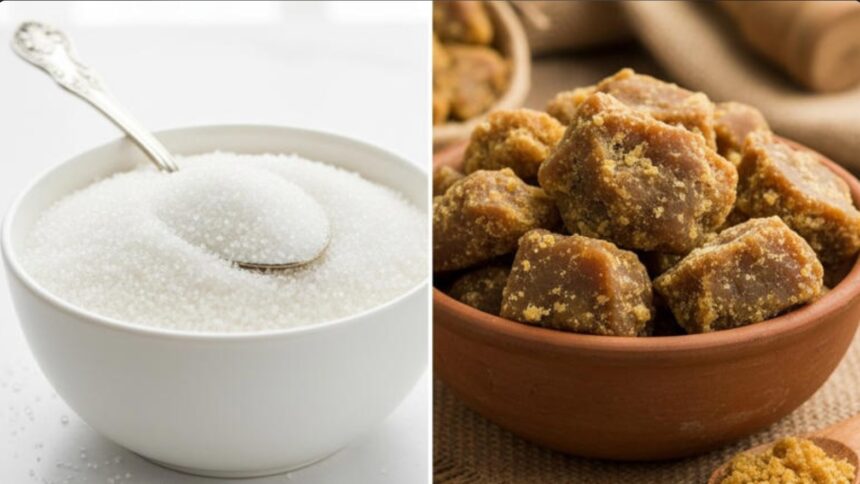
White sugar is produced by extracting sugarcane juice and refining it to remove molasses and impurities. During processing, most natural minerals and nutrients are stripped away, leaving behind pure sucrose crystals.
While it provides quick energy and a clean sweet taste, it contains:
See more of our coverage in your search results.
Add Hunterfly on GoogleNutritional Profile (Per 100g)
- Calories: ~387 kcal
- Carbohydrates: 100g
- Fiber: 0g
- Vitamins & Minerals: Negligible
Key Fact: Refined sugar has a high glycemic index (GI), meaning it can cause a rapid spike in blood glucose levels.
What Is Jaggery?
Jaggery (gur) is made by boiling sugarcane juice or palm sap without separating the molasses. This minimal processing helps retain trace minerals and natural compounds.
It has a rich brown colour and a deep caramel-like taste.
Nutritional Profile (Per 100g)
- Calories: ~383 kcal
- Carbohydrates: ~97g
- Iron: 11 mg
- Potassium: 1050 mg
- Calcium: 80 mg
Key Fact: Jaggery has a lower glycemic index compared to white sugar but can still increase blood sugar if consumed in excess.
Key Differences Between White Sugar and Jaggery
| Factor | White Sugar | Jaggery |
|---|---|---|
| Processing | Highly refined | Minimally processed |
| Nutrients | None | Contains iron, calcium, antioxidants |
| Taste | Neutral sweet | Earthy, caramel-like |
| Blood Sugar Impact | Rapid spike | Slower release |
| Shelf Life | Long | Can harden over time |
| Best Use | Baking, beverages | Traditional sweets, teas |
Health Benefits of Jaggery
1. Supports Iron Levels
Its natural iron content may help reduce the risk of iron-deficiency anemia.
See more of our coverage in your search results.
Add Hunterfly on Google2. Aids Digestion
In many Indian households, jaggery is consumed after meals to promote digestive activity.
3. Supports Detoxification
It may assist liver function and help flush out toxins.
4. Relieves Cold and Throat Irritation
Warm water or tea with jaggery, ginger or black pepper is traditionally used for cough and cold relief.
See more of our coverage in your search results.
Add Hunterfly on GoogleThe Downsides
Despite its benefits, jaggery is still high in sugar and calories. Excess consumption can contribute to:
- Weight gain
- Blood sugar fluctuations
- Increased risk for diabetics
White sugar, on the other hand, offers only “empty calories” — providing energy but no nutrients.
So, Is Jaggery Healthier Than White Sugar?
Yes — but only slightly.
Jaggery contains trace minerals and has a comparatively lower glycemic impact. However, it remains a form of sugar and should be consumed in moderation.
Smart Approach:
- Replace refined sugar with jaggery where possible
- Control portion sizes
- Pair with a balanced diet and regular physical activity
Choosing a better sweetener is helpful — but overall lifestyle habits matter most for long-term health.