







Indian sarees are not just garments—they are a celebration of heritage, craftsmanship, and cultural identity. Among the countless traditional weaves, Banarasi and Kanjivaram sarees stand out as the epitome of elegance, often worn during weddings, festivals, and grand occasions. Though both are crafted from silk, they differ in origin, weaving technique, motifs, and overall aesthetic.
Origin and Craftsmanship
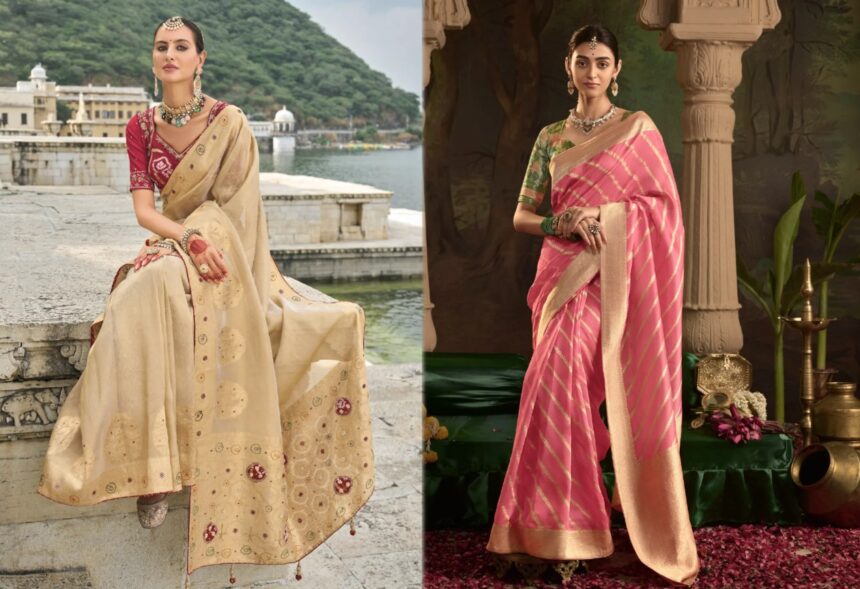
Banarasi Saree: Hailing from Varanasi, Uttar Pradesh, the Banarasi saree is a product of the city’s rich weaving tradition. Made from fine mulberry silk, it uses jacquard weaving techniques interwoven with zari brocade. Mughal-inspired patterns like jali work, floral vines, paisleys, and intricate gold motifs distinguish this saree. Banarasi weaving can take months to craft, with attention to delicate detail.
Kanjivaram Saree: Originating from Kanchipuram, Tamil Nadu, Kanjivaram sarees are celebrated for their heavy silk and structural elegance. Woven using the Korvai method, which seamlessly blends contrasting silk colors for borders, the fabric is durable and often features dense, raised zari work. Motifs draw inspiration from temples, peacocks, and traditional South Indian designs, giving it a regal, architectural appeal.
Banarasi vs Kanjivaram: Key Differences at a Glance
| Feature | Banarasi Saree | Kanjivaram Saree |
|---|---|---|
| Silk Type | Fine, lightweight mulberry silk | Thick, heavy mulberry silk |
| Motifs | Floral kalga-bel, paisley, Mughal gardens | Temple borders, peacocks, checks |
| Zari Work | Delicate, embroidery-like | Dense, raised, bold patterns |
| Weight & Drape | Light, soft, fluid fall | Heavy, stiff, structured silhouette |
| Best For | North Indian weddings, evening events | South Indian rituals, daytime celebrations |
Styling Tips for Each Saree
Banarasi Saree: Its fluid and soft texture calls for minimal jewelry and lightweight blouses, allowing the saree’s intricate zari work to shine. Pairing with delicate accessories enhances the ethereal and elegant vibe, perfect for evening receptions or festive occasions.
See more of our coverage in your search results.
Add Hunterfly on GoogleKanjivaram Saree: Known for grandeur and regality, Kanjivaram silk is best styled with heavy temple jewelry and traditional blouses. Its architectural drape and vibrant colors make it ideal for weddings, rituals, and special daytime events.
Why You Should Own Both
While Banarasi sarees offer graceful fluidity and understated charm, Kanjivaram sarees exude royal opulence and bold elegance. For Indian women embracing tradition, owning both drapes is a way to celebrate regional craftsmanship and timeless heritage, ensuring a wardrobe ready for any occasion.
Write By – Prosenjit Barman