








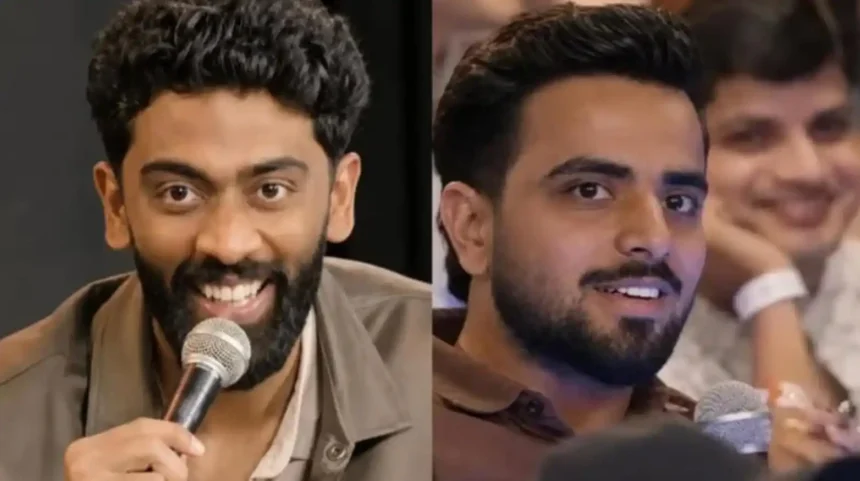
What began as a casual crowd-work moment at a stand-up comedy show in Gurgaon has escalated into a wider cultural debate about dating norms, entitlement, and consent in India.
At the centre of the controversy is a remark from an audience member who described spending around ₹360–₹370 on a plate of biryani during a date and suggested that he expected something in return because of that expense. The comment, made during comedian Pranit More’s performance, has since gone viral and triggered widespread criticism online.
From a “joke” to a serious conversation
The incident might have stayed a fleeting comedy exchange, but its underlying logic struck a nerve.
The idea that a small financial expense on a date creates an implied obligation has been widely criticised as transactional thinking in relationships. The reaction has gone beyond the specific incident, evolving into a broader discussion about how entitlement can distort modern dating culture.
See more of our coverage in your search results.
Add Hunterfly on GoogleAt its core, the controversy highlights a mindset where emotional connection is replaced by an unspoken ledger of “what was spent versus what is owed.”
The transactional mindset in dating
Relationship experts often describe this pattern as a form of entitlement-based thinking, where generosity is not given freely but with expectations attached.
In such dynamics, acts like paying for a meal or planning a date are no longer gestures of interest but perceived investments that must yield returns. This transforms dating from mutual choice into an implicit negotiation.
For many women, this creates an added layer of social calculation. Decisions around accepting gifts, splitting bills, or even continuing a date can become complicated by concerns about perceived obligation or expectations.
What should be simple interactions risk becoming emotionally loaded exchanges.
See more of our coverage in your search results.
Add Hunterfly on GoogleWhen generosity becomes leverage
Healthy relationships are built on mutual consent and voluntary participation. Once generosity is tied to expectations, it stops being generosity altogether.
The controversy has resonated widely because it reflects a familiar pattern: the shift from “I want to treat you” to “you now owe me something in return.”
This framing reduces consent to a transactional outcome rather than a freely given choice, raising concerns about how entitlement can subtly influence interpersonal dynamics.
See more of our coverage in your search results.
Add Hunterfly on GoogleUnderstanding India’s so-called ‘vasooli culture’
The term “vasooli,” commonly associated with forceful recovery of money, has been used in commentary around this controversy to describe a broader cultural mindset.
In this framing, relationships—especially early-stage dating—are treated like recoverable investments. Money spent on dinners, gifts, or outings is viewed not as discretionary spending but as an advance that must be repaid in emotional or physical form.
Critics argue that this mentality normalizes a transactional view of intimacy, where affection and consent are subtly reframed as returns on investment.
From dating expectations to systemic issues
Commentators have also pointed out that similar patterns extend beyond dating culture into more entrenched social practices, where relationships are influenced by economic exchange and perceived “value.”
This raises uncomfortable questions about how deeply transactional thinking is embedded in everyday social interactions, and how it shapes expectations around gender roles and relationships.
The role of audience and accountability
Following the viral clip, the audience member who made the remark reportedly faced professional consequences, while the comedian also issued a public apology for not challenging the statement during the performance.
However, the broader debate has shifted beyond individual accountability to collective responsibility—how such ideas are received, normalized, or challenged in public spaces.
Why the controversy struck a nerve
The reason the incident gained traction is not the amount involved—₹370 is symbolic—but the mindset it represents.
It reflects a friction point in modern relationships between evolving ideas of consent and older notions of entitlement and reciprocity.
The conversation has highlighted how even casual remarks can expose deeper cultural tensions around gender, autonomy, and respect.
Beyond the viral moment
While the controversy may fade from social media timelines, the questions it raises remain relevant: What defines consent in modern dating? When does generosity become expectation? And how do cultural attitudes shape these invisible boundaries?
Until these conversations move beyond viral outrage into sustained reflection, similar incidents are likely to resurface in different forms.