




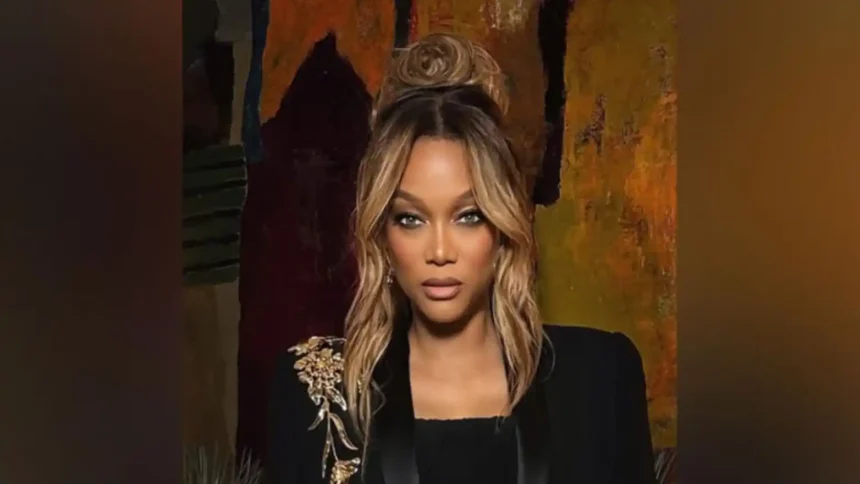
Supermodel, entrepreneur, and television personality Tyra Banks has filed a lawsuit against Netflix and the producers of a documentary series examining the legacy of America’s Next Top Model (ANTM), alleging that the project presented her comments in a misleading manner and damaged her public reputation.
The legal complaint, filed on Saturday, targets Netflix, 89 Blocks Holdings, EverWonder Studio, Netflix Music, and documentary co-directors Mor Loushy and Daniel Sivan.
Why Tyra Banks Is Taking Legal Action
According to court filings cited by multiple media reports, Banks participated in an extensive interview for the documentary series Reality Check: Inside America’s Next Top Model. The interview reportedly lasted approximately three-and-a-half hours.
However, Banks alleges that only a small portion of her interview—around 16 minutes—was included in the final production. She claims that key parts of her responses were removed, creating what her legal team describes as a distorted and inaccurate portrayal.
See more of our coverage in your search results.
Add Hunterfly on GoogleThe lawsuit argues that the documentary used selective editing, omitted crucial context, and presented viewers with a narrative that Banks says does not reflect what was actually discussed during filming.
Claims of a ‘False Narrative’
A central argument in the lawsuit is that important sections of Banks’ interview, including moments where she acknowledged criticisms of the show and reflected on its shortcomings, were allegedly excluded from the final edit.
According to the complaint, the resulting documentary suggested that Banks knowingly ignored or mishandled serious concerns involving former contestants—an implication she strongly disputes.
The filing reportedly states that the documentary created a narrative that was both false and harmful, reaching millions of viewers through Netflix’s global platform.
Focus on the Shandi Sullivan Storyline
One of the documentary’s most discussed segments revisits events involving former ANTM contestant Shandi Sullivan.
See more of our coverage in your search results.
Add Hunterfly on GoogleAccording to the lawsuit, Banks was asked during her interview whether she remembered Sullivan’s story. The complaint alleges that the documentary edited her response in a way that implied she could not recall a significant incident involving a contestant.
Banks argues that she was not informed during filming that Sullivan’s account would be framed in a particular way within the documentary. Her legal team contends that the editing created an unfair impression about her knowledge and recollection of events.
The lawsuit claims this sequence was especially damaging because it suggested a level of indifference that Banks says does not reflect reality.
See more of our coverage in your search results.
Add Hunterfly on GoogleThe Legacy of America’s Next Top Model
Launched in 2003, America’s Next Top Model became one of the most influential reality competition shows of its era.
Created and hosted by Tyra Banks, the series ran for 22 cycles and introduced aspiring models to audiences worldwide. The show played a major role in shaping reality television during the 2000s and helped establish Banks as one of the most recognizable personalities in the entertainment industry.
In recent years, however, ANTM has faced renewed scrutiny as former contestants and viewers revisited aspects of the show through a modern lens, prompting debates about reality television standards and contestant treatment.
Netflix Yet to Respond Publicly
At the time of publication, neither Netflix nor the documentary’s filmmakers had issued a public response to the lawsuit.
Legal experts note that disputes involving documentary editing often center on questions of context, editorial discretion, and whether a portrayal crosses the line into defamation or misrepresentation.
As the case moves forward, it is likely to draw significant attention from both the entertainment industry and legal observers due to its connection to one of reality television’s most recognizable franchises.
What Happens Next?
The lawsuit is expected to proceed through the court system, where both sides will have the opportunity to present evidence regarding:
- The original interview footage
- Editorial decisions made during production
- Whether the final documentary accurately represented Banks’ statements
- The extent of any alleged reputational harm
The outcome could have broader implications for documentary filmmaking, particularly regarding interview editing and the portrayal of public figures.