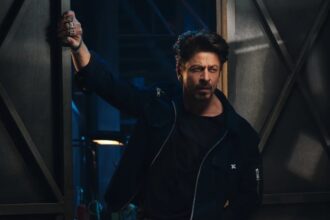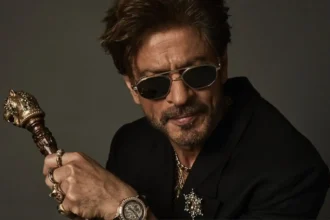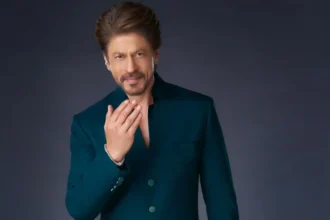







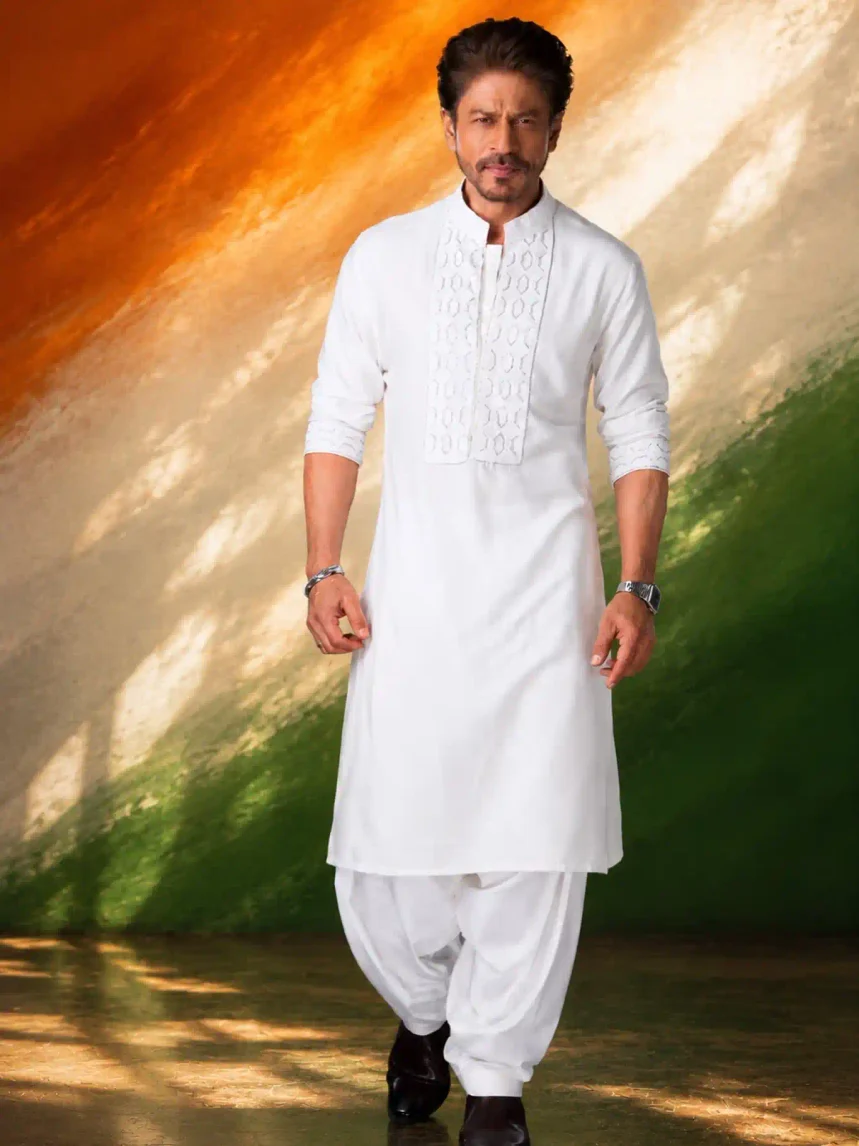
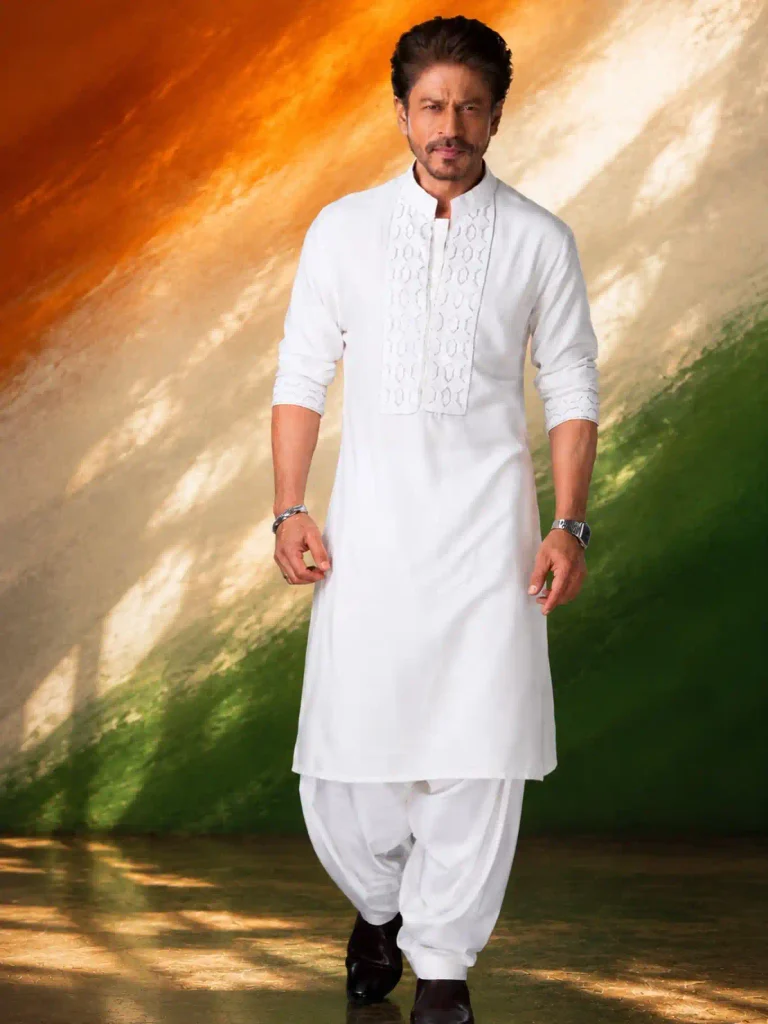
An AI-generated Independence Day-inspired visual featuring Shah Rukh Khan presents the Bollywood superstar in traditional white attire against a saffron, white and green backdrop, creating a striking tribute to India’s national spirit, unity and diversity.
An AI-generated visual inspired by Shah Rukh Khan has captured the essence of an Independence Day tribute through a simple yet powerful combination of traditional Indian clothing, the colours of the national flag and a message centred on unity.
The visual portrays the Bollywood superstar in a crisp white traditional kurta-salwar, with subtle detailing around the placket and cuffs. Behind him, a soft-focus composition of saffron, white and green creates an unmistakable visual connection with the Indian tricolour.
Rather than relying on elaborate graphics or a crowded patriotic design, the concept uses Shah Rukh Khan’s instantly recognisable screen presence and understated traditional styling to communicate a broader message about India, its diversity and the pride associated with the nation’s Independence Day.
It is important to note that the image is an AI rendition and should be understood as a creative digital representation rather than a verified photograph of Shah Rukh Khan or evidence of an official endorsement by the actor.
A Traditional Look With a Modern Presentation
The most noticeable feature of the visual is its clothing.
Shah Rukh Khan is depicted wearing a white traditional kurta paired with salwar-style trousers. The clean white palette gives the portrait a festive and ceremonial appearance while allowing the colours in the background to become the principal visual accent.
Subtle embroidery along the placket and cuffs adds texture without overwhelming the overall composition. The styling also reflects a familiar aspect of Indian festive fashion, where a classic silhouette is often paired with restrained detailing.
The choice of white is particularly effective in this setting. Alongside saffron and green, it completes the three-colour visual language associated with the Indian national flag while maintaining a sophisticated photographic aesthetic.
The result is a portrait that feels celebratory without becoming excessively decorative.
The Tricolour Becomes the Central Visual Element
The background uses a dynamic blend of saffron, white and green, echoing the colours of the Indian national flag.
Instead of reproducing the flag as a literal backdrop, the visual uses an atmospheric interpretation. The colours appear softly blended, giving the image a cinematic quality while retaining its patriotic identity.
This approach is significant because the visual message does not depend on a large headline or extensive text. The colour palette itself establishes the occasion.
Saffron, white and green have strong symbolic associations for audiences across India, particularly during national celebrations. When used thoughtfully, these colours can communicate patriotism while allowing the subject to remain visually prominent.
The composition therefore combines a familiar Bollywood face with an equally familiar national colour palette.
Shah Rukh Khan’s Cultural Reach Adds to the Impact
Shah Rukh Khan has maintained an extraordinary cultural presence in Indian popular cinema for decades. His career has connected him with audiences in India and around the world, making his image particularly effective in visual campaigns centred on Indian identity and popular culture.
That cultural familiarity is one reason an AI-generated portrait featuring the actor can attract attention quickly on social media and digital platforms.
However, the appeal of this particular visual extends beyond celebrity recognition.
The image places the actor in traditional clothing rather than a conventional film or red-carpet setting. That decision shifts the focus away from entertainment and towards the broader themes of Indian culture, heritage and national pride.
The visual consequently works as a conceptual Independence Day portrait rather than a movie-related image.
A Message About Unity and Diversity
At its heart, the visual communicates a straightforward idea: India’s strength lies in its unity amid diversity.
Independence Day is not simply a date on the national calendar. It is an occasion associated with India’s journey as an independent nation and with the values of citizenship, freedom, responsibility and collective identity.
A celebrity portrait can sometimes become focused entirely on the individual. In this case, the tricolour-inspired backdrop gives the image a wider context.
The combination of a nationally recognised celebrity, traditional attire and the colours of the flag creates a visual representation of shared pride.
India is home to many languages, cultures, traditions, communities and regional identities. A patriotic visual can therefore carry greater meaning when it presents national pride as something inclusive rather than exclusive.
That is where the concept behind this AI rendition finds its strongest value.
AI Is Changing the Way Patriotic Visuals Are Created
The visual also reflects a larger development in digital publishing: the increasing use of generative artificial intelligence in image creation.
AI image-generation technology allows creators to develop highly stylised portraits and campaign concepts without the need for a conventional photography session. Lighting, clothing, backgrounds and visual themes can be explored digitally within a short period.
For publishers and social media creators, this can make it easier to experiment with different creative directions.
At the same time, AI-generated celebrity imagery requires responsible presentation.
A digitally generated image should not be presented as an authentic photograph. Similarly, creators should avoid suggesting that a celebrity participated in, approved or published an AI-generated visual unless there is reliable evidence supporting that claim.
Clear labelling helps audiences understand what they are seeing and protects the distinction between creative interpretation and factual reporting.
In this case, describing the image as an AI rendition provides important context.
Why the Visual Works
Several creative decisions make the portrait particularly effective.
First, the styling is familiar. The white kurta-salwar immediately establishes an Indian festive and cultural context.
Second, the colour palette is instantly recognisable. Saffron, white and green establish the Independence Day connection without requiring excessive text.
Third, the background remains soft. This keeps attention on the subject while allowing the tricolour theme to remain visible.
Fourth, the concept is emotionally accessible. It focuses on pride, unity and national identity rather than a complicated political or ideological message.
Finally, the use of a globally recognised Indian film personality gives the creative a strong cultural reference point.
Together, these elements produce a visual that is both contemporary and rooted in Indian cultural symbolism.
Independence Day and the Meaning of Collective Pride
India’s Independence Day is observed on August 15 every year. The occasion commemorates India’s independence from British rule in 1947 and remains one of the country’s most significant national observances.
Across the country, Independence Day is marked through flag-hoisting ceremonies, cultural programmes, educational events, public gatherings and patriotic campaigns.
Digital platforms have also become an important part of how people participate in national occasions. Photographs, illustrations, videos and social media messages allow individuals and organisations to share their interpretations of patriotism with wider audiences.
A visual such as this one fits naturally into that digital environment.
Its message is uncomplicated: celebrate India, respect its diversity and recognise the shared sense of belonging that connects people across different backgrounds.
A Celebrity Portrait With a Larger Message
The strongest aspect of the AI rendition is arguably its simplicity.
There is no need for a complicated storyline. Shah Rukh Khan’s recognisable appearance establishes immediate context, while the traditional clothing and tricolour-inspired setting provide the emotional framework.
The result is a portrait that can be interpreted as a celebration of Indian identity through the lens of contemporary digital creativity.
For Shah Rukh Khan fans, the image offers a new visual interpretation of the actor. For audiences interested in digital art, it demonstrates how generative AI can combine celebrity-inspired imagery with cultural themes. And for publishers, it illustrates how a carefully constructed visual can communicate a national occasion without relying on excessive design elements.
At the same time, responsible labelling remains essential.
The distinction between an authentic celebrity photograph and an AI-created representation should always be clear, particularly when images are published alongside news or editorial content.
The Bigger Picture
Patriotic imagery is often most effective when it balances emotion with authenticity.
This AI-generated Shah Rukh Khan visual does that through three familiar elements: traditional Indian attire, the colours of the tricolour and a message of unity.
Its appeal comes from the meeting point between India’s popular culture and its national identity. Shah Rukh Khan represents one side of that equation through his enormous influence in Indian cinema, while the tricolour-inspired setting connects the image to a much broader national occasion.
Ultimately, the visual is less about celebrity and more about the sentiment surrounding Independence Day.
It presents India through a contemporary digital lens while retaining the traditional visual language of celebration.
As AI-generated imagery becomes increasingly common across publishing, advertising and social media, such creative work can offer new ways to tell familiar stories. But the most valuable visuals will continue to be those that combine strong creativity with transparency and responsible communication.
This particular rendition succeeds because its message is immediately understandable: India’s diversity can be celebrated through a shared sense of unity, culture and pride.
Jai Hind!
Editorial Note: This article discusses an AI-generated creative rendition featuring Shah Rukh Khan. The visual should not be interpreted as an authentic photograph or as a statement of endorsement, participation or approval by Shah Rukh Khan unless independently confirmed by an authorised source.
ALSO READ:
- Alliance: Payal Gaming Claims She Was Targeted, Alleges Kushal Tandon Made Personal Remarks After Her Eviction
- Nayanthara Eyes Second ₹50 Crore Opening as Toxic Builds Strong Box Office Momentum
- The Traitors 2: Soundous Moufakir Says She Couldn’t Connect With Krystle D’Souza Ahead of Reality Show Debut
- Avika Gor Says She Wants Meaningful Roles: ‘I Don’t Want to Be Just Furniture in a Film’
- Aditi Sharma Files Domestic Violence Complaint Against Husband and In-Laws; Mumbai Police Register FIR
- Aditi Sharma Files Domestic Violence Complaint Against Husband and In-Laws; FIR Registered in Mumbai
- Sonu Thukral Alleges Viral ‘Jugni’ Clip Featuring Jacqueline Fernandez Was Altered Using AI
- Blake Lively and Taylor Swift Friendship Draws Fresh Attention Amid Justin Baldoni Legal Case
- Who Is Aditi Sharma’s Husband Abhineet Vidyanand Kaushik? Here’s What Is Publicly Known
- How Falguni Nayar Turned Decades of Experience Into Nykaa’s Success Story: Career Lessons That Matter at Any Age
- Nauheed Cyrusi Opens Up About Two Miscarriages and Why She Chose a Different Path to Parenthood
- Sooraj Pancholi Urges Responsible Reporting as He Revisits Jiah Khan Case in Emotional Statement