






Nusrat Jahan’s journey from Bengali cinema to electoral politics brought together celebrity culture, public life and fashion. Here’s how her evolving style shaped her public image.
Nusrat Jahan’s career has unfolded across two highly visible worlds: Bengali cinema and public life. After establishing herself as a leading actor in the Bengali film industry, she entered electoral politics and became one of the most closely watched celebrity-turned-politicians in West Bengal.
Her transition was notable not simply because of the move from films to politics, but because she continued to maintain a distinctive personal style while adapting to the demands of public life.
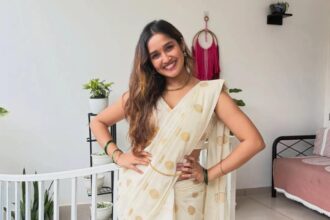
From traditional sarees and handloom-inspired looks to contemporary fashion and campaign attire, Nusrat’s wardrobe became another part of the public conversation surrounding her.
Her story offers an interesting look at how celebrity identity, fashion and political visibility increasingly overlap in India’s digital-first media environment.
From Bengali Cinema to Electoral Politics
Before entering politics, Nusrat Jahan had already built considerable recognition through Bengali cinema.
Her filmography includes titles such as Shotru, Khoka 420 and Power, helping establish her as a familiar face in the Bengali entertainment industry.
Her public profile expanded further through fashion appearances, social media and brand-oriented photoshoots.
In 2019, Nusrat entered electoral politics as a candidate of the Trinamool Congress from the Basirhat Lok Sabha constituency in West Bengal. Her candidacy attracted substantial attention because she was entering an intensely competitive political environment while already carrying the visibility associated with a successful entertainment career.
She subsequently won the Basirhat seat in the 2019 Lok Sabha election.
That transition changed the context in which her public image was viewed.
An outfit that might previously have been discussed primarily through the lens of celebrity fashion could now become part of a broader conversation about public representation, political campaigning and personal identity.
When Celebrity Visibility Meets Campaign Politics
Election campaigns demand a different kind of public appearance from film promotions or fashion events.
Political campaigning involves long hours, outdoor travel, meetings with residents and repeated interactions with supporters. Clothing therefore has to function practically while also communicating a public image.
For Nusrat, traditional Indian clothing frequently became an important part of that visual language.
Sarees, particularly during public engagements in West Bengal, offered a natural connection between contemporary celebrity styling and a more culturally familiar form of political dressing.
The effect was not necessarily about abandoning her existing fashion identity.
Instead, it demonstrated how an established celebrity could adapt her appearance to a new professional environment.
The Saree as a Public-Image Statement
The saree occupies an interesting position in Indian public life.
It can be formal without necessarily being corporate, traditional without appearing outdated and visually distinctive without requiring excessive ornamentation.
For a public figure moving between entertainment and politics, that versatility can be useful.
Nusrat’s saree appearances have ranged across different fabrics, colours and styling approaches, reflecting the fact that the garment itself is not a single aesthetic category.
A handloom saree can communicate regional and cultural familiarity.
A contemporary drape can feel youthful.
A richly coloured silk saree can create a more formal appearance.
The styling decisions surrounding the saree—blouse, jewellery, hair and footwear—can further alter its overall character.
Fashion Beyond the Campaign Trail
Nusrat’s public fashion identity has also extended well beyond political events.
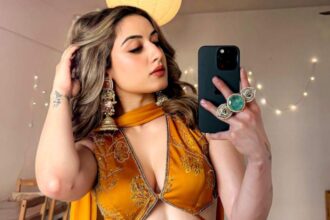
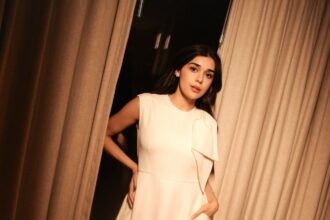
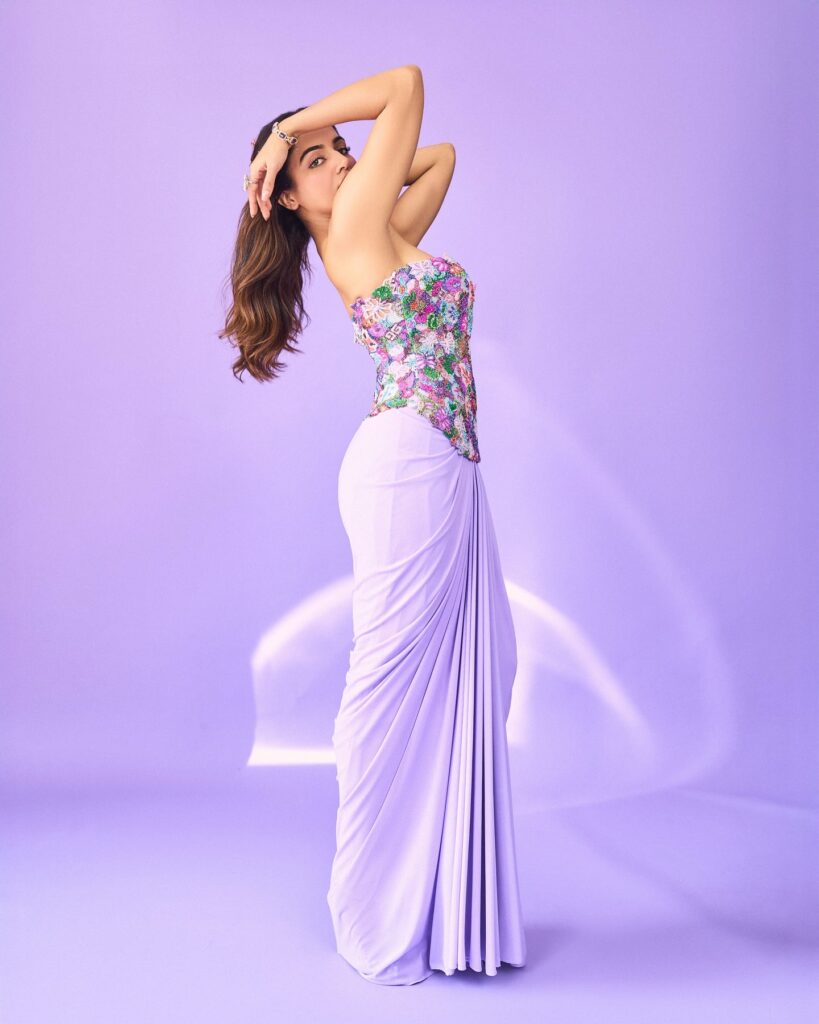
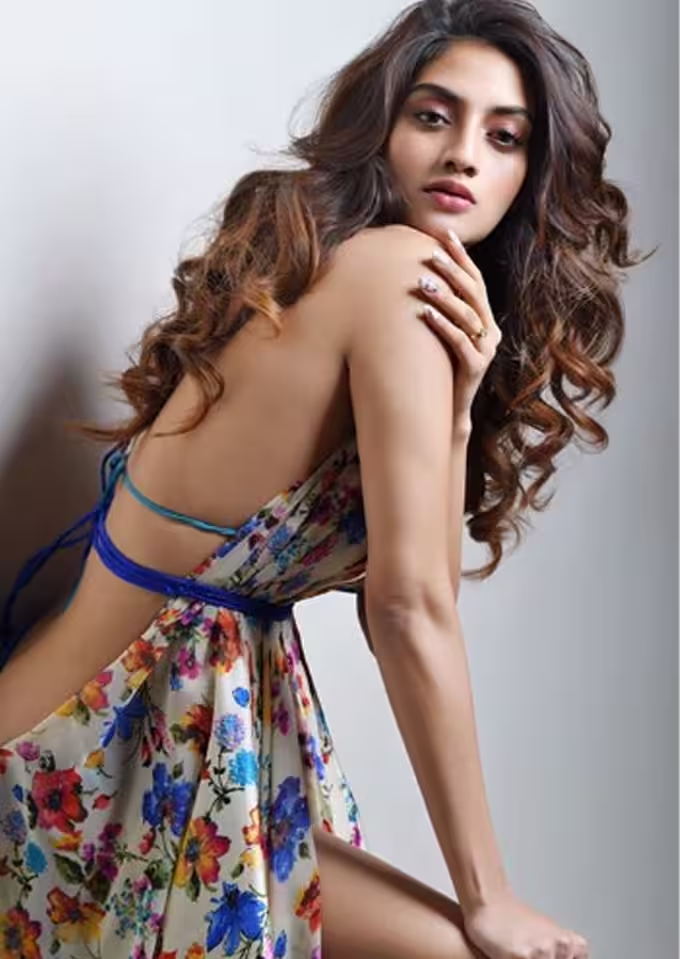
Her social-media presence has featured a broad range of contemporary clothing, including modern western silhouettes, statement separates, prints and occasionwear.
This diversity is significant because it illustrates the difference between personal style and professional dress codes.
A public figure does not necessarily have one fixed visual identity.
The same person can appear in a traditional saree at a civic engagement, a structured contemporary outfit at a public event and a more experimental fashion look during a photoshoot.
For celebrities entering public office or electoral politics, managing those different identities can become part of the broader challenge of public communication.
A Younger Image of Political Leadership
Celebrity politicians have existed in India for decades, but social media has changed the way their public personas are consumed.
Previously, a politician’s appearance might primarily be documented through television coverage and newspaper photographs.
Today, individual images can circulate independently across Instagram, Facebook, X and other platforms.
That changes the relationship between fashion and political communication.
A photograph from a campaign event can become a fashion discussion.
A fashion photograph can become part of a celebrity’s political identity.
The boundary between entertainment coverage, lifestyle journalism and political reporting can therefore become increasingly fluid.
Nusrat’s public career sits directly within that changing environment.
The Importance of Context
It is important, however, not to reduce a political career to clothing.
Fashion can influence public perception, but electoral politics involves substantially more than appearance.
For an elected representative, issues such as constituency work, policy positions, parliamentary participation, public statements and engagement with voters are considerably more consequential than wardrobe choices.
Nusrat’s fashion profile is therefore best understood as one component of her broader public image rather than a measure of political performance.
This distinction is particularly important when covering celebrity politicians.
A fashion article can analyse styling and visual identity, but it should not imply that clothing determines political credibility or electoral success.
Balancing Tradition and Contemporary Style
One of the more interesting aspects of Nusrat’s fashion profile is the movement between traditional and contemporary clothing.
The contrast is not necessarily contradictory.
Indian fashion itself has evolved through constant interaction between heritage textiles and modern silhouettes.
A traditional handloom saree can be styled with a contemporary blouse.
A classic saree can be paired with minimalist jewellery.
A modern western outfit can incorporate Indian textile techniques or jewellery.
This ability to move between categories has become a defining characteristic of celebrity fashion in India.
Why Digital Platforms Amplify Celebrity Style
Social media has transformed fashion coverage from an occasional editorial feature into a continuous stream of visual content.
Celebrities can now communicate directly with audiences through photographs and short-form videos without relying entirely on traditional media.
For someone such as Nusrat Jahan, whose career already spans entertainment and politics, that creates an unusually broad public-facing identity.
A single post can simultaneously reach film audiences, fashion followers and politically engaged users.
That does not mean every fashion post is political.
Rather, it shows how difficult it has become to separate different aspects of a highly visible public figure’s identity.
The Evolution of the Celebrity-Politician
Nusrat’s career reflects a larger Indian phenomenon: individuals with established recognition in entertainment, sport and popular culture increasingly entering electoral politics.
Their pre-existing audiences provide immediate visibility, but political office also changes expectations.
Celebrity status can attract attention during a campaign, while political responsibilities require a different form of sustained public engagement.
The transition is therefore more complicated than simply moving from one profession to another.
It involves adapting an existing personal brand to an environment where public statements, constituency relationships and political decisions receive scrutiny.
Style as Communication, Not Just Decoration
Clothing communicates information even when it is not deliberately political.
A saree may signal familiarity with a cultural setting.
A restrained outfit may be appropriate for a formal meeting.
A more contemporary look may reinforce an established celebrity identity.
The interpretation ultimately depends on context.
That is why fashion journalism surrounding public figures should focus on observable elements—silhouette, fabric, colour, accessories and styling—rather than making unsupported assumptions about what a particular outfit supposedly says about a person’s political beliefs.
For Nusrat Jahan, this distinction allows her fashion journey to be examined without turning clothing into a substitute for political reporting.
A Public Image Built Across Multiple Worlds
Nusrat Jahan’s visibility comes from the intersection of several industries.
She has experience as:
- A Bengali film actor
- A public personality
- A fashion and lifestyle figure
- A social-media creator
- An elected political representative
Each role creates different expectations.
Cinema rewards screen presence.
Fashion rewards visual experimentation.
Social media rewards immediacy and engagement.
Politics demands public accountability and sustained constituency engagement.
Navigating all four simultaneously makes her public image particularly interesting from a media and cultural perspective.
The Bigger Fashion Story
The significance of Nusrat Jahan’s style is ultimately less about individual outfits and more about how Indian public figures increasingly operate across professional boundaries.
The modern celebrity is no longer confined to cinema.
Actors can become entrepreneurs, influencers, producers, political candidates and public advocates. Their visual identities travel with them.
That means fashion becomes part of a much larger conversation about personal branding, cultural representation and digital visibility.
Nusrat’s transition from Bengali cinema to electoral politics illustrates that evolution particularly clearly.
Her wardrobe changed according to context, but her willingness to maintain a recognisable sense of personal style remained visible.
Final Takeaway
Nusrat Jahan’s journey from Bengali cinema to electoral politics demonstrates how celebrity identity can evolve when it enters public life.
Her fashion choices—from traditional sarees and culturally rooted textiles to contemporary silhouettes—have remained an identifiable part of her public persona.
But the more meaningful story lies beyond individual outfits.
Her career reflects the changing relationship between cinema, fashion, social media and Indian politics, where public figures increasingly communicate with audiences across multiple platforms and professional identities.
Style may attract the camera, but public life ultimately demands much more.
For Nusrat Jahan, the enduring interest lies in how she has navigated that transition while maintaining a visible identity of her own.
ALSO READ:
- CINTAA Crisis Deepens as Eight Executive Committee Members Resign, Raise Concerns Over Governance
- Hania Aamir Surprises Lock Upp 2 Winner Shreya Kalra During Instagram Live; Her Reaction Wins Fans Over
- Mahima Makwana on ‘Musafir Cafe’, Reuniting With Vikrant Massey and Being Judged Before Auditions
- Ankita Lokhande Remembers Watching Devdas in Class 11: ‘Part of My Dream’
- Rasika Dugal Returns as Beena Tripathi in Mirzapur The Movie: ‘Women Are Allowed to Be Complicated’
- Ahilya Says She Isn’t Afraid to Speak Up on Student Protests and Auroville: ‘There’s Fear for Actors to Lose Work’
- Nirahua, Amrapali Dubey and Neelam Giri Break Down Gen Z Dating Terms in Fun ‘Bhojpuri Bawaal’ Chat
- Rakul Preet Returns to the Gym With a Gentle Workout After Back Injury: 7 Exercises to Know
- Shilpa Shetty Kundra Makes a Case for Chocolate-Brown Sarees With a Sculptural Necklace Blouse
- Farah Khan Responds to ‘Biased Host’ Claims After Shreya Kalra’s Lock Upp 2 Win
- Parul Gulati Reveals Why Her ₹40,000-a-Night Goa Airbnb Plan Fell Short
- Avika Gor Apologizes to Jasmin Bhasin on Khatron Ke Khiladi 15: ‘I Feel So Guilty’