




In an era dominated by fast-changing fashion trends and global luxury labels, Nita Ambani continues to make a compelling statement through a different kind of luxury—one rooted in heritage, craftsmanship and India’s centuries-old textile traditions.
Whether attending global cultural events, business gatherings or philanthropic engagements, the Reliance Foundation chairperson has consistently chosen handwoven sarees that celebrate the skill of India’s master artisans. Beyond their visual appeal, these garments represent months of meticulous craftsmanship, preserving techniques that have been passed down through generations.
Her wardrobe has increasingly become a showcase for India’s rich handloom legacy, bringing regional weaving traditions and artisan communities into the spotlight on national and international stages.
A Tribute to Indian Craftsmanship
What sets many of Nita Ambani’s most admired sarees apart is the extraordinary amount of work involved in their creation.
See more of our coverage in your search results.
Add Hunterfly on GoogleUnlike mass-produced luxury fashion, these pieces often require months—and sometimes more than a year—of dedicated effort by skilled artisans.
From intricate hand embroidery to labor-intensive weaving techniques, each saree represents a blend of artistry, patience and cultural heritage.
Fashion experts often note that true luxury is defined by craftsmanship, rarity and authenticity. Ambani’s textile choices reflect this philosophy by emphasizing the value of handmade artistry over fleeting fashion trends.
A Stunning Kanjeevaram at the AAPI Humanitarian Award
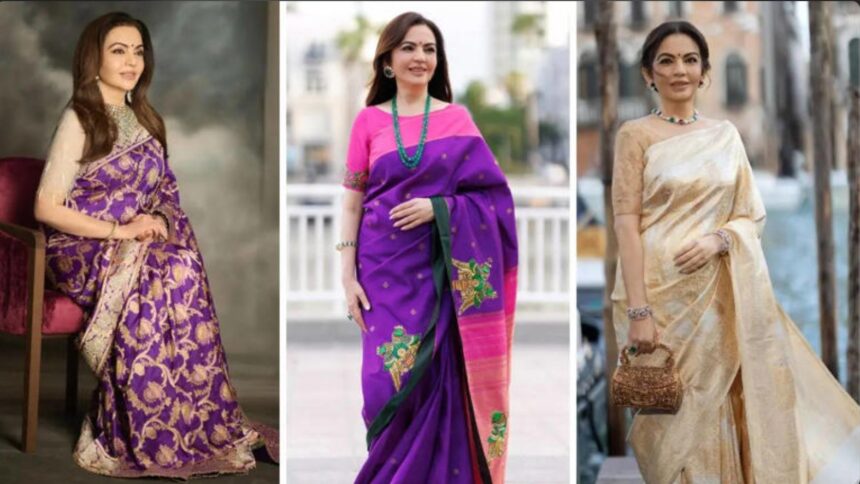
One of her most recent appearances at the AAPI Humanitarian Award ceremony in Florida drew attention for a remarkable purple Kanjeevaram silk saree.
The handcrafted creation featured motifs inspired by traditional Tanjore paintings and was designed by National Award-winning artisan Shri B. Krishnamurthy.
See more of our coverage in your search results.
Add Hunterfly on GoogleThe saree incorporated:
- Hand-painted artistic detailing
- Traditional peacock (mayil) motifs
- Sacred chakram designs
- Pure gold zari weaving
- A distinctive pink-and-black korvai border
The korvai technique, considered one of the most sophisticated methods in Kanjeevaram weaving, requires exceptional precision to seamlessly join contrasting borders and body fabrics.
The result was a garment that celebrated both artistic expression and traditional weaving excellence.
See more of our coverage in your search results.
Add Hunterfly on GoogleThe Chikankari Masterpiece That Took More Than a Year
At Reliance Industries’ Annual General Meeting, Ambani chose another remarkable handcrafted creation—a mauve Chikankari saree completed by master artisan Anjani Kashyap.
The intricate work reportedly took more than a year to finish and showcased several traditional embroidery techniques, including:
- Do Taar Chikankari
- Jaali work
- Murri embroidery
- Ghaas Patti detailing
- Balda craftsmanship
Originating from Lucknow, Chikankari remains one of India’s most celebrated embroidery traditions, known for its delicate handwork and refined elegance.
The saree highlighted the enduring relevance of handcrafted embroidery in contemporary fashion.
Celebrating Banarasi Weaving Traditions
Banaras has long been regarded as one of India’s most important centres for textile artistry, and several of Ambani’s recent appearances have featured exceptional Banarasi creations.
For a celebratory dinner linked to the return of the India Pavilion at the Venice Biennale, she wore a Banarasi brocade Kadwa saree that took master artisans Ashfak Ansari and Habiburrahman more than five months to weave.
Another notable appearance featured a Banarasi silk saree crafted by master weaver Shri Amresh Kushwaha and his daughter Angika Kushwaha, reflecting the intergenerational nature of India’s weaving traditions.
The intricate Kadwa technique, often used in premium Banarasi textiles, allows each motif to be woven individually, resulting in highly detailed patterns and exceptional durability.
Handloom Heritage on the Global Stage
Nita Ambani’s appreciation for heritage textiles has extended beyond India.
During the TIME100 Gala in New York City, she wore a handwoven Katan silk Banarasi saree created using the Kadwa weaving technique by artisans Raheem and Gulzar.
The saree reportedly required five months of dedicated craftsmanship and showcased the precision and artistry associated with Banaras’ renowned weaving community.
Similarly, an ivory-and-gold Kanjeevaram silk saree crafted by master artisan R. Varadhan took more than four months to complete, highlighting another important weaving tradition from southern India.
These appearances have helped introduce global audiences to the richness of Indian textile craftsmanship.
Why These Sarees Matter
Beyond their aesthetic appeal, these garments represent the livelihoods, skills and cultural knowledge of artisan communities across India.
Many traditional weaving and embroidery techniques face challenges from mechanized production and changing consumer preferences. High-profile support from influential figures can help bring visibility to these crafts and encourage appreciation for handmade textiles.
Each saree serves as a reminder of:
- India’s diverse textile heritage
- The importance of preserving traditional crafts
- The economic value of artisan communities
- Sustainable alternatives to fast fashion
- The cultural significance of handloom traditions
For many artisans, recognition on international platforms can generate greater awareness and demand for their work.
Redefining Modern Luxury
As luxury fashion increasingly embraces craftsmanship, authenticity and sustainability, Nita Ambani’s wardrobe choices offer a distinct perspective on what modern luxury can represent.
Rather than focusing solely on designer labels, her saree collection highlights the artistry of weavers, embroiderers and craftspeople whose expertise has been refined over decades.
From Kanjeevaram silks and Banarasi brocades to intricate Chikankari embroidery, these creations demonstrate that some of the world’s most extraordinary luxury garments continue to emerge from India’s traditional craft communities.
In doing so, they transform fashion into something more meaningful—a celebration of heritage, artistry and the enduring value of handmade excellence.