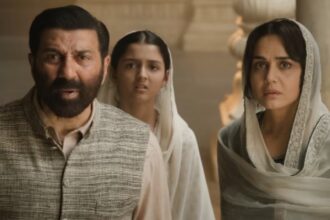



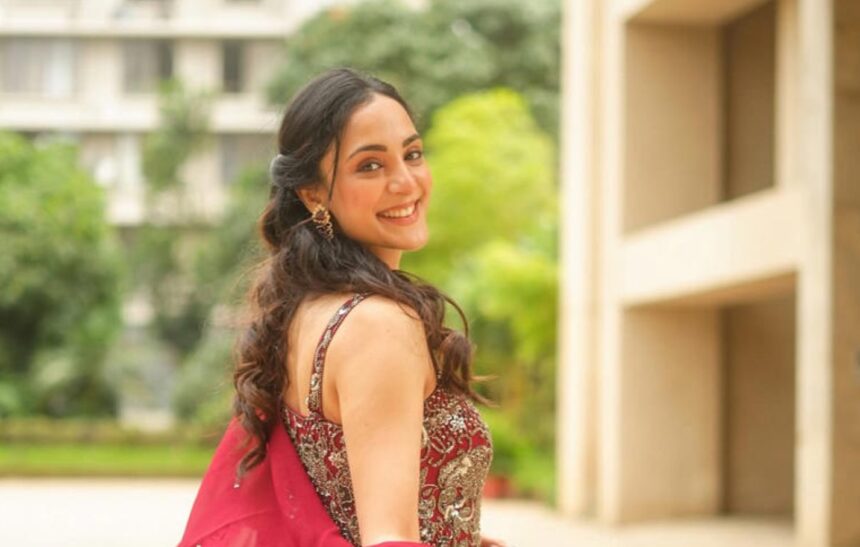
Kanikka Kapur says acting gave her a sense of freedom and confidence she had never experienced before. From discovering theatre at Delhi University to working across films and languages, the actress now sees Batwara 1947 as an important new chapter in her career.
For Kanikka Kapur, acting began with an unexpected discovery: she could become someone completely different from herself.
The actress found her way into theatre during her first year at Delhi University, where an audition introduced her to a confidence she did not know she possessed. What began as an experiment gradually became a career choice, with psychology, theatre and her curiosity about human behaviour all influencing the way she approaches characters.
“When I would act, I could just be whoever I wanted to be. I don’t know from where I would get that confidence and that freeness. No one is judging me and I can be whoever I want to be,” Kanikka recalled.
See more of our coverage in your search results.
Add Hunterfly on GoogleThat feeling of freedom eventually convinced her that acting was where she wanted to build her future.
From Theatre to Batwara 1947
Kanikka’s journey since then has taken her through journalism, modelling, theatre and films. Her latest project, Batwara 1947, has given her an opportunity to step into a period setting and work with filmmaker Rajkumar Santoshi.
The actress said she went through multiple stages of the audition process before securing the role.
“After my first audition and a subsequent meeting with Rajkumar Santoshi sir, I learnt that there would be two more rounds of auditions,” she recalled.
Rather than becoming overwhelmed by the process, Kanikka said she became focused on one thing—proving that she could get the role.
See more of our coverage in your search results.
Add Hunterfly on Google“After that, I never thought about whether I wanted to do it or not. I just wanted to see how I crack it,” she said.
Her audition eventually became one of the most memorable moments of her career.
When Santoshi called “cut”, Kanikka remained in character. She then noticed people around her standing and applauding, including actor Preity Zinta.
See more of our coverage in your search results.
Add Hunterfly on Google“And then I saw everyone standing and clapping and Preity Zinta ma’am was standing and clapping. That was when I knew that I got the role. To see them stand and clap for you, that is a moment that I will never forget,” she said.
Preparing for a Story Set in 1947
Working on a film set around the Partition era required extensive preparation, particularly when it came to language.
Kanikka and co-star Karan Deol underwent dialect training to recreate the Punjabi spoken during the period depicted in the film.
The language also carried a personal connection for Kanikka because her grandparents had experienced Partition. That family history gave the subject an additional emotional dimension for her.
The filmmakers eventually reduced the amount of Punjabi used in the film to make the story more accessible to audiences across different parts of India.
Why Kanikka Kapur Never Wanted to Be Typecast
Experimentation has remained central to Kanikka’s career.
Her work across projects such as Tippu, Missing on a Weekend, Dono, Honeymoon and Murderbaad has taken her through different genres, characters and filmmaking environments.
Rather than restricting herself to one particular kind of role, she says she has always wanted to experience something new.
Her first major experience with South Indian cinema came with Tippu, a Telugu film. At the time, however, Kanikka did not know the language, and the experience proved challenging because there was no Hindi-speaking environment on set.
Looking back, she feels she may have taken on the challenge before she was ready.
“After I did that film, I realised that maybe back then, I was really young. I realised that maybe, I was not ready for regional cinema and I should first try Hindi cinema. Once I understood how this works, then probably I can do something in a different language,” she said.
Today, her approach is different. With more experience behind her, Kanikka is open to working across languages and industries.

Kanikka Kapur Wants to Work With Mani Ratnam
Among filmmakers from South India, Kanikka has a particular admiration for Mani Ratnam.
“Mani Ratnam sir. If I get a chance to work with him, I would love to,” she said when discussing the filmmakers she hopes to collaborate with.
Her connection with South Indian cinema also brings back memories of Hyderabad, where much of Tippu was filmed.
The actress was still in her first year of college at the time and spent several months travelling between Delhi and Hyderabad for the production.
“Much of the filming for Tippu took place in the city while I was still in my first year of college. For five to six months, I would spend around 10 days every month in Hyderabad before returning to attend college,” she recalled.
Although some of the details have become hazy over the years, Kanikka remembers enjoying Jubilee Hills and Hyderabad’s biryani.
She also remembered being particularly fond of Mahesh Babu during that period, describing him as “everyone’s crush” and recalling that she found him very cute.
‘Something Good Is Happening Now’
For Kanikka, Batwara 1947 represents more than another acting credit. She sees the project as part of a gradual shift towards the kind of scripts she had hoped to find throughout her career.
“Probably the kind of scripts that I always wanted to do. At least I’m getting to read them now,” she said.
For an actor whose career has been shaped by curiosity and a desire to inhabit different worlds, that change represents an encouraging new phase.
“So that’s a really big step for me and I think something good is happening now,” Kanikka concluded.