




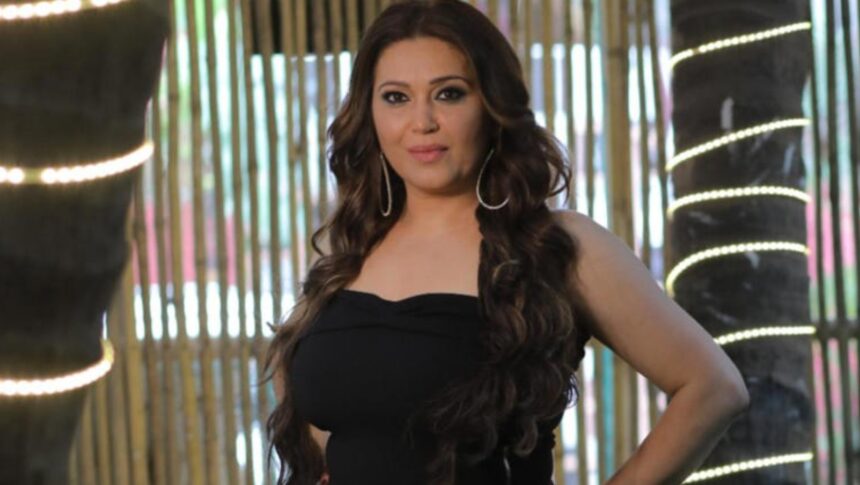
After more than three decades in the entertainment industry, Niki Walia says she is still determined to challenge the image audiences and casting directors have associated with her. From choosing self-respect over career opportunities early on to seeking rural and unconventional characters, the actor says she wants to prove that performers should not be confined to one kind of role.
Niki Walia has experienced several phases of the Indian entertainment industry, from her early film appearances to television and her return to more prominent screen roles.
In a recent conversation with mid-day, the actor reflected on her career choices, her experience of being compared with Madhuri Dixit and her continuing efforts to move beyond the polished, urban characters she has often been offered.
Her latest role in Bhai Tera Star Hai has given her an opportunity to experiment with a different personality on screen.
See more of our coverage in your search results.
Add Hunterfly on GoogleNiki Walia on Playing Mandy in Bhai Tera Star Hai
Walia plays Mandy, the wife of Sanjay Kapoor’s character in Bhai Tera Star Hai. She described Mandy as loud, unapologetic and someone who is not afraid to express herself.
For Walia, taking on such a part was significant because it allowed her to move outside the comfort zone associated with many of her earlier roles.
After roughly 30 years in the industry, she viewed the opportunity to play a different kind of character as a welcome challenge.
The actor also expressed disappointment over the film’s reported box-office performance, saying she felt particularly bad for the people involved in the project, including Vivek Agarwal and Raghav Juyal.
Why Niki Walia Chose Dignity Early in Her Career
Walia also revisited one of the more defining decisions of her early career.
See more of our coverage in your search results.
Add Hunterfly on GoogleAfter making her film debut in Mr Azaad, the actor eventually moved away from films and entered television. Looking back, she described herself as someone who was outspoken even when speaking up could have consequences for her career.
Walia recalled feeling uncomfortable with certain expectations placed on newcomers in the industry at the time. She said that when she felt she was not being treated appropriately on the sets of Mr Azaad, she chose to voice her concerns.
She was around 20 at the time and said she ultimately prioritised her dignity over continuing along a particular career path.
See more of our coverage in your search results.
Add Hunterfly on GoogleThe actor also recalled being uncomfortable with the expectation that she should attend dinners with distributors as part of promoting a film. According to Walia, she did not want professional opportunities to come at the cost of compromising her personal boundaries.
Niki Walia Recalls Working With Anil Kapoor
Walia also spoke about her experience working with Anil Kapoor in Mr Azaad.
She described herself as nervous around the senior actor and said she maintained a professional distance rather than developing a particularly informal equation with him.
At that stage of her career, she was still relatively new to the industry, while Kapoor was already an established actor. Walia said she therefore remained conscious of the professional hierarchy between them.
The Madhuri Dixit Comparisons That Followed Her
Another recurring theme in Walia’s career has been comparisons with Madhuri Dixit.
The actor recalled being told repeatedly that she resembled the celebrated actress. According to Walia, the comparison became so frequent that she has continued hearing it even years later.
While comparisons between actors are common in the entertainment industry, Walia’s comments underline how such associations can become part of an actor’s public identity.
Rather than allowing the comparison to define her career, Walia has continued to seek opportunities that establish her as a performer in her own right.
Niki Walia Wants to Move Beyond Her ‘Urban’ Image
One of Walia’s biggest frustrations, she explained, is the industry’s tendency to categorise her as an urban, elite or polished character.
The actor wants casting directors to consider her for rural and more grounded roles as well.
Walia said she has repeatedly tried to convince casting professionals that her appearance should not automatically determine the kind of characters she can portray. She is even willing to make significant changes to her appearance if a role requires it.
Her point is that transformation is part of an actor’s craft.
“If Amitabh Bachchan Can Play a Dwarf, Why Not Me?”
To explain why she believes casting should be more flexible, Walia referred to Amitabh Bachchan’s performance in Paa, in which he played a child affected by progeria.
She argued that if a performer as physically recognisable as Bachchan could undergo a major transformation for a role, then her own established screen image should not prevent her from playing a rural character.
Walia said she repeatedly tells casting directors that her “elite and urban look” can also be changed for a role.
Her argument is ultimately about the possibilities of performance: an actor’s existing appearance does not necessarily have to dictate the boundaries of the characters they can play.
A Career Still Looking for New Challenges
Walia’s comments suggest that experimentation remains an important part of the next phase of her career.
After decades in entertainment, she is not looking to simply repeat the roles that audiences already associate with her. Her interest in rural characters, unconventional personalities and more demanding transformations reflects a desire to keep expanding her range.
Her journey also highlights the changing expectations placed on actors over the years. For Walia, the next challenge is not only finding work but finding roles that allow audiences to see something they have not seen from her before.