





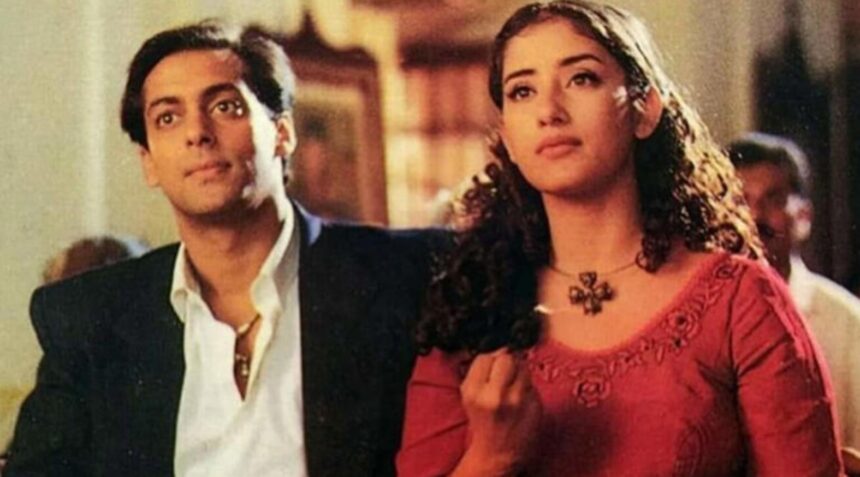
Thirty years after Khamoshi: The Musical, Sanjay Leela Bhansali’s debut remains an important chapter in the story of one of Indian cinema’s most distinctive filmmakers. The 1996 film introduced audiences to a director whose fascination with music, emotion, visual detail and Indian storytelling would become central to his later body of work.
Some directorial debuts introduce a filmmaker. A select few reveal an artistic identity that continues to evolve for decades. Sanjay Leela Bhansali’s Khamoshi: The Musical belongs to the latter category.
Released in 1996, the film marked Bhansali’s arrival as a feature-film director and offered an early indication of the cinematic language he would continue developing throughout his career.
The film was driven by family, love, communication and emotional conflict, but its impact also came from the way Bhansali approached music and visual storytelling. Those elements would eventually become defining characteristics of his cinema.
See more of our coverage in your search results.
Add Hunterfly on GoogleThe Film That Introduced Bhansali’s Voice
Khamoshi: The Musical centred on Annie, played by Manisha Koirala, the daughter of deaf parents portrayed by Nana Patekar and Seema Biswas. Salman Khan also featured in the film as Raj.
Rather than treating music merely as an accompaniment to the story, Bhansali made it an important part of the film’s emotional framework.
The result was a debut that announced a filmmaker interested not only in what characters said, but also in what could be communicated through silence, performance, music, atmosphere and visual composition.
That sensitivity would become increasingly prominent as Bhansali moved through different genres and increasingly ambitious productions.
From Khamoshi to a Distinctive Cinematic World
Bhansali’s subsequent filmography demonstrated the breadth of the creative ideas visible in his debut.
See more of our coverage in your search results.
Add Hunterfly on GoogleHum Dil De Chuke Sanam explored love, marriage and emotional sacrifice against a richly constructed cultural backdrop. Devdas transformed a literary classic into an elaborate cinematic spectacle, while Black approached the relationship between a teacher and a visually and hearing-impaired student through an emotionally intense dramatic lens.
He later directed films including Saawariya, Guzaarish, Goliyon Ki Raasleela Ram-Leela, Bajirao Mastani, Padmaavat and Gangubai Kathiawadi.
His streaming series Heeramandi: The Diamond Bazaar subsequently extended his fascination with period settings, performance, music, costumes and elaborate production design into the long-form format.
See more of our coverage in your search results.
Add Hunterfly on GoogleThe genres and periods have changed, but several creative signatures have remained recognisable.
Music Has Always Been Central to Bhansali’s Cinema
Music occupies a particularly important place in Bhansali’s filmmaking.
Songs in his movies frequently operate as extensions of character and narrative rather than existing only as interruptions between dramatic scenes. They can establish relationships, reveal emotional conflicts and expand the world surrounding the characters.
That connection between music and storytelling was already visible in Khamoshi: The Musical.
Decades later, Bhansali has continued to maintain a close relationship with music. His involvement has extended beyond direction into music composition, demonstrating how closely the two disciplines are connected within his creative process.
For Bhansali, elaborate musical sequences and dramatic visual design are often part of the storytelling vocabulary itself.
The Visual Language Became More Ambitious
One of the most recognisable elements of Bhansali’s cinema is its visual richness.
Large production sets, carefully designed costumes, detailed interiors, lighting and choreography have repeatedly been used to create worlds that feel heightened while remaining rooted in Indian cultural traditions.
That approach became particularly prominent in films such as Devdas, Bajirao Mastani, Padmaavat and Gangubai Kathiawadi.
Yet the scale of those later productions should not obscure the importance of his first film. Khamoshi demonstrated that Bhansali’s interest in atmosphere and emotional visual storytelling existed before the spectacular period dramas for which he later became internationally recognised.
A Career Recognised by Major Honours
Bhansali’s contribution to Indian cinema has been recognised through some of the country’s major film honours.
He has received multiple National Film Awards and Filmfare Awards and was awarded the Padma Shri in 2015.
His cinema has also attracted international attention, including recognition through major international awards and festival platforms.
His work has increasingly positioned Indian stories within a global cinematic conversation while retaining strong connections to Indian music, culture, history and performance traditions.
Beyond Films: Bhansali and ‘Bharat Gatha’
Bhansali’s creative influence has also extended beyond conventional film production.
He was associated with the Republic Day tableau ‘Bharat Gatha’, a presentation celebrating the journey of Indian cinema and its connection with the country’s cultural heritage.
The project brought together visual spectacle and historical storytelling in a format outside the conventional theatrical screen, reflecting another dimension of Bhansali’s interest in presenting Indian culture through large-scale visual narratives.
Why Actors Seek a Bhansali Film
For performers, a Bhansali production often represents an opportunity to inhabit a carefully constructed cinematic universe.
Several actors across generations have worked with the filmmaker in roles that demanded considerable emotional and physical preparation.
His films have also helped create memorable screen characters, from the romantic leads of his earlier work to the historical and biographical figures of his later cinema.
This actor-director relationship has become an important part of Bhansali’s filmmaking identity. His emphasis on performance exists alongside his attention to production design, music and cinematography.
Three Decades Later, the Beginning Still Matters
Looking back at Khamoshi: The Musical from the perspective of Bhansali’s later career changes the way the film can be viewed.
The debut did not contain the enormous sets or epic scale that would define several of his later productions. What it did contain was something arguably more important: the beginnings of an artistic voice.
The emphasis on emotion, music, atmosphere and visual storytelling was already present.
Over the following decades, Bhansali expanded those ideas into increasingly ambitious forms. He moved from intimate emotional drama to historical romance, literary adaptation, biographical cinema and streaming storytelling without abandoning his fascination with the relationship between spectacle and emotion.
The Legacy Continues With Love & War
Bhansali’s next major feature, Love & War, represents another chapter in that continuing journey.
With every new project, expectations surrounding the filmmaker are shaped by the legacy of the films that came before it. Yet the foundation of that legacy can be traced back to the film with which his feature-directing career began.
Thirty years on, Khamoshi: The Musical therefore carries significance beyond its status as a 1996 film.
It is the starting point of a cinematic journey that has seen Sanjay Leela Bhansali become one of the most recognisable and individualistic filmmakers in contemporary Indian cinema.
The scale of his later work may have changed dramatically, but the artistic impulse visible in Khamoshi remains a thread running through the filmmaker’s career: to use music, emotion and visual storytelling to create worlds that stay with audiences long after the film ends.