







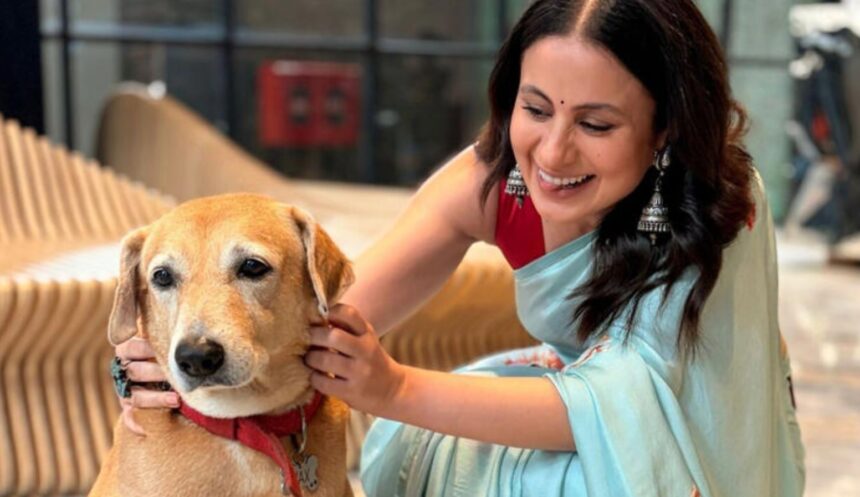
Rasika Dugal has built a reputation for choosing layered characters across films and streaming shows, but the actor says it took nearly a decade after graduating from the Film and Television Institute of India (FTII) for her work to gain wider recognition.
Rasika recently appeared on Neha Dhupia and Angad Bedi’s Double Date alongside her husband, actor Mukul Chadda. During the candid conversation, the couple spoke about their careers, struggles, college years, marriage and personal experiences.
At one point, Neha praised Rasika’s distinctive filmography, telling her, “Rasika, you have become a genre and it is amazing.”
The comment led into a conversation about when Rasika herself felt that she had finally established a place in the industry.
See more of our coverage in your search results.
Add Hunterfly on GoogleRasika Dugal Says Her Career Became More Consistent After 2016
Asked when she felt she had reached the point where she could say, “This is it, I have come for this and maine apni jagah bana li hai,” Rasika pointed to the period between 2016 and 2017.
“From the time work became more continuous, it was between 2016-17. I moved from FTII in 2006, so it was a good 10 years later,” she recalled.
The actor acknowledged that she had continued to work during the years before her career became more visible. However, she said those earlier projects did not receive the same level of recognition as the work that followed.
“There was always stuff in between to encourage me and keep me alive, but that was not so known as the work I did after 2016,” Rasika explained.
Qissa and Kshay Were Among Her Earlier Projects
Before her breakthrough period, Rasika had already worked on critically regarded projects, including Kshay and Qissa. These films gave her opportunities to collaborate with established names and explore challenging material.
See more of our coverage in your search results.
Add Hunterfly on GoogleHowever, according to Rasika, the nature and frequency of the opportunities changed significantly after 2016.
“It was after 2016 that work like Manto, Mirzapur and Delhi Crime, and a couple of other works, started happening back to back,” she said.
She connected this change partly with the growth of streaming platforms, which opened up more opportunities for different kinds of stories and performers.
See more of our coverage in your search results.
Add Hunterfly on Google“And largely because streaming platforms started coming out. Then I felt something like that it was a movement,” she added.
How Streaming Changed Rasika’s Career
The rise of streaming coincided with a period in which Rasika became associated with projects featuring complex characters and socially relevant narratives.
Her performances in Manto, Mirzapur and Delhi Crime helped bring her work to a much wider audience. Rather than being associated with one particular type of character, she continued moving between films and series with distinctly different settings and themes.
This body of work is also what prompted Neha Dhupia to describe Rasika as having become a “genre” in herself.
Rasika’s comments, however, suggest that the journey to that recognition was gradual. From leaving FTII in 2006 to experiencing a more continuous run of work around 2016-17, she describes the intervening decade as a period that required persistence even when her projects were not widely known.
Rasika and Mukul Chadda Open Up About Their Personal Lives
The Double Date episode also moved beyond Rasika’s professional journey. She and Mukul Chadda spoke about their relationship, college experiences, career struggles and different phases of their life together.
The couple also shared a lighter moment during the episode when they adopted a pet, adding a personal dimension to their conversation.
For Rasika, the episode brought together two sides of her life: the professional journey that took years to find a consistent audience and the personal relationships and experiences that shaped her along the way.
Today, her filmography spans cinema and streaming, with roles that have helped establish her as one of the more recognisable performers in India’s contemporary screen space.