




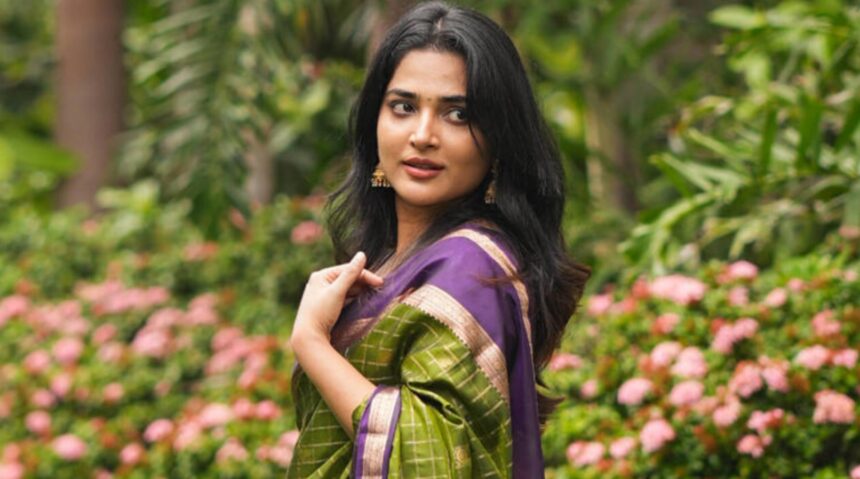
For actress Anagha, Onam is less about grand celebrations and more about coming together with family. This year, the actress plans to keep the festival simple, returning to the comfort of her home in Kozhikode to celebrate with her parents.
Her Onam plans revolve around some of the traditions that make the festival special for many Malayalis: a festive sadhya, homemade payasam, a small pookalam and, most importantly, time with loved ones.
Speaking about what the festival means to her, Anagha said Onam gives her a sense of togetherness and creates an opportunity to step away from everyday routines.
“Onam, for me, provides a sense of togetherness,” she said, explaining that festivals offer people a chance to reconnect with relatives and visit one another’s homes.
See more of our coverage in your search results.
Add Hunterfly on GoogleAnagha Plans a Quiet Onam at Home
Unlike celebrations that involve large public gatherings or elaborate events, Anagha is planning a more intimate festival this year.
The actress said she will be celebrating Onam at home in Kozhikode with her parents. Her plans include enjoying a traditional sadhya, having the payasam prepared by her mother and making a small pookalam.
For Anagha, these simple activities appear to capture the essence of the festival.
“I’ll be celebrating Onam at home (Kozhikode) this year with my parents. I look forward to eating sadhya, drinking the payasam made by amma and making a small pookalam,” she shared.
The mention of her mother’s payasam adds a particularly personal touch to her plans. While Onam sadhya is associated with an extensive spread of traditional dishes, family recipes and food prepared at home often carry their own emotional significance.
See more of our coverage in your search results.
Add Hunterfly on GoogleWhy Onam Feels Special to Anagha
For Anagha, the biggest attraction of Onam is not simply the food or decorations. It is the opportunity to reconnect with people.
She described the festival as a reason to meet relatives and visit their homes, something that can become less frequent as people get older and become occupied with work and other responsibilities.
Festivals temporarily interrupt that routine.
See more of our coverage in your search results.
Add Hunterfly on GoogleFor families spread across different places, occasions such as Onam can provide a reason to return home and spend time together. That sense of reconnection is what Anagha appears to value most about the celebration.
Her comments also reflect how festivals can change as people move from childhood into adulthood. The traditions may remain familiar, but the way people experience them can evolve.
Anagha Says Celebrations Back Home Have Become Quieter
Although Anagha remains fond of celebrating Onam in Kozhikode, she feels that festivities back home have become quieter compared with earlier years.
She believes one reason is that many people have moved elsewhere and are now occupied with their own lives.
“Compared to cities, I think the celebrations back home are fewer, especially compared to how they used to be. Because everyone is elsewhere and busy with their lives,” she said.
At the same time, she pointed out an interesting difference between smaller hometown celebrations and those in cities.
According to Anagha, cities often have communities that organise their own Onam programmes. These gatherings can recreate some of the collective spirit of the festival even for people who are living away from their hometowns.
It is a familiar change for many families, as work, education and migration have transformed the way festivals are celebrated.
Childhood Onam Memories Remain Special
Anagha’s memories of childhood Onam are filled with the kind of community spirit that she feels is less common today.
Looking back, she remembered how children and families would come together and how she and her friends would walk through the parambu collecting flowers.
Those flowers would then become part of the festive preparations.
“As a kid, Onam was so much fun. Everyone used to get together,” she recalled.
She also remembered looking forward to Thiruvonam, the most important day of the traditional Onam celebrations.
Her childhood memories included the arrival of Onathappan, another tradition associated with Onam celebrations in Kerala.
For Anagha, the difference between then and now is clear. Childhood Onam was marked by larger gatherings and a stronger neighbourhood and community presence, while celebrations today are more likely to be centred around the immediate family.
From Collecting Flowers to Making a Small Pookalam
One of the most recognisable Onam traditions is the pookalam, a floral arrangement created at the entrance of homes.
Anagha plans to continue that tradition this year, although on a smaller scale.
Her plan to make a small pookalam connects her present-day celebration with her childhood memories of collecting flowers with friends.
The tradition may look simple, but it remains one of the visual symbols of Onam. Families often gather flowers in different colours and arrange them in decorative patterns as part of the festive preparations.
For Anagha, creating a pookalam at home is another way of keeping that connection with the festival alive.
Anagha Prefers a Simple and Traditional Onam Look
When it comes to her Onam outfit, Anagha does not appear interested in making things overly elaborate.
She said she prefers to keep her festival look simple but traditional, suggesting that a settu mundu could be her choice.
The traditional Kerala attire fits naturally with the mood of the celebration she has described: a family gathering at home, a homemade sadhya, her mother’s payasam and a small pookalam.
Rather than treating Onam as a formal fashion occasion, Anagha’s approach appears to be centred on comfort and tradition.
Her Favourite Onam Dishes
Food is an essential part of Onam celebrations, and Anagha already knows which dishes she looks forward to most.
Among the many dishes served as part of a traditional sadhya, she singled out koottukari and ada pradhaman as favourites.
Koottukari is a traditional Kerala preparation made with vegetables and legumes, while ada pradhaman is a popular payasam made with ada and jaggery, often enriched with coconut milk.
Her choice of ada pradhaman also fits perfectly with her earlier mention of looking forward to her mother’s homemade payasam.
For Anagha, therefore, food is not simply another part of the festival. It is tied to taste, memory and family.
Onam Is About More Than the Sadhya
Although the Onam sadhya remains one of the most anticipated parts of the festival, Anagha’s comments suggest that the meal is only one element of a much larger experience.
The people sitting around the same table, the conversations with relatives, the preparation of the pookalam and the familiar food made at home all contribute to the feeling of celebration.
Her plans also demonstrate why Onam continues to have a strong emotional connection for Malayalis living both within Kerala and outside the state.
The festival creates a reason to pause, travel home, meet relatives and revive traditions that may otherwise become difficult to maintain during busy everyday life.
A Simple Celebration Rooted in Family
Anagha’s plans for Onam 2026 are deliberately uncomplicated.
There is no mention of an elaborate party or large-scale celebration. Instead, she is looking forward to being at home in Kozhikode with her parents, eating sadhya, enjoying her mother’s payasam and making a small pookalam.
That simplicity appears to be precisely what makes the celebration meaningful to her.
Her memories of childhood Onam also show how much the festival has changed with time. The gatherings may have become smaller, but the emotional connection remains.
The flowers may be fewer, the celebrations quieter and the guest list more intimate, but the traditions continue.
Anagha’s Onam Message Is About Togetherness
At the heart of Anagha’s reflections is a simple idea: Onam creates an opportunity for people to come together.
As families become geographically scattered and professional commitments become more demanding, festivals can provide an important reason to reconnect.
For Anagha, that is what makes Onam special.
This year, she will celebrate the festival close to home, surrounded by family and familiar traditions. A traditional settu mundu, a small pookalam, a plate of sadhya and a serving of amma’s payasam are enough to create the festive atmosphere she is looking forward to.
And among all the dishes on the table, koottukari and ada pradhaman remain her personal favourites.
Her plans may be modest, but they capture the enduring appeal of Onam: coming home, eating together, remembering childhood and making time for the people who matter.