







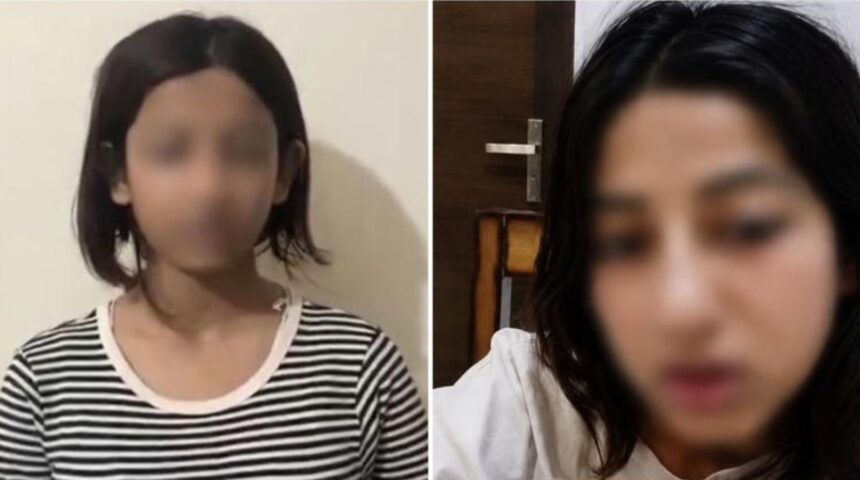
A new social media video allegedly featuring the teenager involved in the earlier Jantar Mantar controversy has triggered renewed political debate, while key details surrounding the recording remain unverified.
A fresh video circulating on social media has brought renewed attention to the controversy surrounding a teenager who was earlier linked to a viral clip involving alleged abusive remarks about Prime Minister Narendra Modi.
The latest recording, which began circulating widely online, features a young woman making serious allegations about the impact the earlier controversy had on her life. The video has since been amplified by opposition political parties, including the Aam Aadmi Party and the Congress, adding a new political dimension to a case that had previously attracted widespread public attention.
However, important questions surrounding the latest video remain unresolved. The date and location of the recording, as well as the circumstances in which it was made, have not been independently established based on the information provided.
The identity of the person in the latest video also requires careful handling, particularly because the individual has been described as a minor in previous reports. For that reason, this report does not independently identify or expose personal details beyond those already broadly reported, and treats disputed claims as allegations.
See more of our coverage in your search results.
Add Hunterfly on GoogleWhat the Latest Viral Video Appears to Show
In the newly circulated video, the young woman is heard addressing Prime Minister Modi and alleging that her life had become extremely difficult following the earlier controversy.
She says she has faced significant pressure and claims she has been forced to live with the consequences of the viral episode. She also states that she does not intend to “back down.”
The language used in the recording has once again placed the controversy at the centre of political and social media discussions.
However, the circumstances surrounding the video remain unclear.
According to the information in the original report, The Tribune could not independently establish when or where the video was recorded. It also could not independently verify all the circumstances surrounding its release.
See more of our coverage in your search results.
Add Hunterfly on GoogleThat distinction is important. A video circulating widely on social media does not, by itself, establish the accuracy of every claim made within it.
The young woman’s lawyer, Anil Singh, was quoted as saying that the video was not generated using artificial intelligence. At the same time, he reportedly did not confirm the identity of the person appearing in the clip.
Other reports cited unnamed sources who claimed that the recording had been posted from an Instagram account associated with the teenager. Those claims should also be treated with caution unless independently confirmed through verifiable records or an on-the-record statement.
See more of our coverage in your search results.
Add Hunterfly on GoogleOpposition Parties Amplify the Video
The circulation of the new video quickly developed into a political issue after the Aam Aadmi Party and the Congress shared it on their official social media platforms.
Both parties used the episode to raise questions about the treatment of the teenager following the earlier viral controversy.
The AAP alleged that the young woman had faced intimidation and pressure and had been forced to apologise. The Congress made similar allegations, describing the situation as an example of excessive pressure being applied to a teenager.
These are political allegations and have not been independently established on the basis of the material provided.
No conclusion should be drawn from political social media posts alone regarding whether the alleged events occurred in the manner described.
For readers, the distinction between a political party’s allegation and a verified fact is essential.
How the Original Jantar Mantar Controversy Began
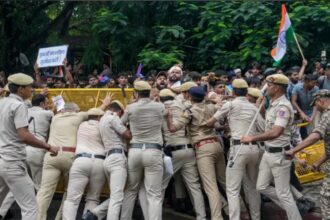
The teenager first became the subject of widespread public attention after a video from a protest at Delhi’s Jantar Mantar went viral.
The earlier clip allegedly showed the young woman making abusive and derogatory remarks concerning Prime Minister Narendra Modi and his late mother.
The video triggered strong reactions online and eventually led to a police complaint and legal proceedings.
According to the details provided in the earlier reporting, a Zero FIR was registered following a complaint. The matter involved provisions of the Bharatiya Nyaya Sanhita relating to allegations including intentional insult, statements allegedly conducive to public mischief and defamation.
The case was later transferred to Delhi for investigation, according to the report.
As with all ongoing or reported legal matters, the registration of an FIR does not establish guilt. Any allegations remain subject to the applicable investigative and judicial processes.
A Viral Apology and the Debate That Followed
After the original controversy gained national attention, another video reportedly surfaced showing the teenager apologising for the remarks that had triggered the public backlash.
In that recording, she was reportedly seen expressing regret and seeking forgiveness.
The apology appeared to reduce the immediate intensity of the controversy. However, public discussion around the episode continued, particularly on social media.
Prime Minister Modi was also reported to have commented on the matter, saying that young people involved in such controversies should be given an opportunity to move forward rather than being subjected to excessive punitive action.
That appeal for forgiveness became an important part of the wider public discussion surrounding the case.
The latest viral video has now brought the issue back into focus and reopened questions about what happened after the earlier controversy.
The Question of Age and Identity
The teenager’s lawyer had previously claimed that she was 15 years old and studying in Class 10 through open schooling.
He had also reportedly raised questions about the details contained in the FIR, including information relating to her identity and age.
Those claims underscore why reporting on this case requires particular caution.
When a person is described as a minor, journalists and publishers must carefully consider privacy, legal protections and the potential consequences of identification.
A viral controversy can have consequences that extend far beyond the original event.
Once a person’s name, photograph, family information or location is widely shared online, that information can be difficult to remove. For a young person, the long-term effects of public exposure may be especially significant.
Responsible reporting should therefore focus on the verified public-interest aspects of the case without unnecessarily repeating identifying information or amplifying personal details.
Family’s Earlier Claims of Public and Media Attention
The controversy reportedly intensified after the teenager’s family claimed they had experienced significant public and media attention following the viral video.
In an earlier report, her mother was quoted as alleging that police personnel, television reporters and other individuals repeatedly visited the family’s residence.
These claims, like the allegations made in the latest video, require attribution and independent verification.
The reports provided do not establish whether any alleged visits or public attention constituted harassment, nor do they establish responsibility for any alleged actions.
This distinction matters in a politically charged story.
Public anger, online criticism, media coverage, police action and political commentary can all occur around the same event, but they should not automatically be treated as evidence of a coordinated campaign or wrongdoing without independently verifiable evidence.
Why the Latest Video Has Become a Political Flashpoint
The new recording has reignited the controversy partly because it involves competing interpretations of what happened after the original video.
Supporters of the teenager argue that the episode raises concerns about the consequences of intense public scrutiny of a young person.
Critics, meanwhile, have questioned the circumstances surrounding the latest video and its sudden re-emergence.
Opposition parties have used the recording to criticise the government’s broader approach to dissent and political speech.
Supporters of the government may dispute those interpretations.
At present, several of the most serious claims surrounding the latest video remain unverified. The public debate, therefore, is moving faster than the available confirmed information.
That is increasingly common in the social media era.
A short video can be posted, copied across platforms, shared by influential accounts and transformed into a national political debate within hours. Verification often takes much longer.
What Is Confirmed and What Remains Unclear
Based on the information available in the report provided, the following broad points have been reported:
- A teenager became the focus of controversy after an earlier video from a Jantar Mantar protest circulated widely.
- A police complaint and FIR followed the controversy.
- A separate video reportedly showed her apologising for her earlier remarks.
- The young woman’s lawyer previously made claims about her age and other details connected to the case.
- A new video is now circulating online and has been shared by political parties.
- The date, location and full circumstances surrounding the latest recording have not been independently established in the report provided.
Several important questions remain unanswered.
Was the latest recording made recently? Where was it filmed? Under what circumstances was it recorded? Has its origin been independently verified? Have investigating authorities issued any updated statement? What is the present legal status of the case?
Until those questions are answered through reliable, on-the-record sources or official documentation, reporting should avoid presenting speculation as fact.
A Larger Lesson About Viral Controversies
Beyond the immediate political argument, the controversy raises broader questions about social media, public outrage and the treatment of young people at the centre of national controversies.
Viral content can turn an individual into a nationally recognised figure almost instantly.
That attention can be amplified by news organisations, political parties, influencers and ordinary social media users. The speed of the process often leaves little room for context or careful verification.
For a teenager, the consequences may be particularly serious.
There is also a separate question about accountability for offensive speech. Public criticism and legal processes can be legitimate parts of democratic society, but these issues must be handled within the boundaries of the law and with respect for due process.
At the same time, allegations of threats, coercion or harassment should be independently investigated rather than accepted or rejected solely because they are made by a political party or appear in a viral video.
The Importance of Verification
The latest video demonstrates why verification remains central to responsible journalism.
A viral clip can be authentic as a recording while still leaving major questions about its context unanswered.
Similarly, a person making a serious allegation in a video does not automatically prove that the allegation is true. The claim may be genuine, mistaken, disputed or require further investigation.
The strongest reporting approach is therefore to establish what can be independently confirmed and clearly label everything else.
Political statements should be attributed.
Legal allegations should be attributed to official records.
Claims from family members or lawyers should be attributed.
And viral social media content should not be presented as conclusive evidence without appropriate verification.
What Happens Next?
The latest video has returned the earlier Jantar Mantar controversy to the national conversation.
Whether the debate develops further may depend on additional information emerging from the teenager’s family, her legal representatives, investigating authorities or other verifiable sources.
The legal status of the earlier case and any official response to the latest allegations will also be important developments to watch.
For now, the renewed controversy illustrates how quickly an issue involving a young person, political speech and social media can develop into a larger national debate.
The central facts surrounding the earlier controversy are already part of the public record. But the latest video’s timing, circumstances and several serious allegations connected to it remain matters requiring further verification.
Until more independently confirmed information emerges, those claims should be reported with caution rather than certainty.