



Who Is the ‘Baseline Korean Girl’ Going Viral on Social Media?
The internet has a remarkable ability to turn the smallest moments into full-blown cultural phenomena. In August 2026, one such moment came from a Korean beauty creator whose skincare video unexpectedly transformed her pronunciation of a familiar brand name into a viral catchphrase.
The creator is Min Day Lee, who uses the Instagram handle @mindaylee_.
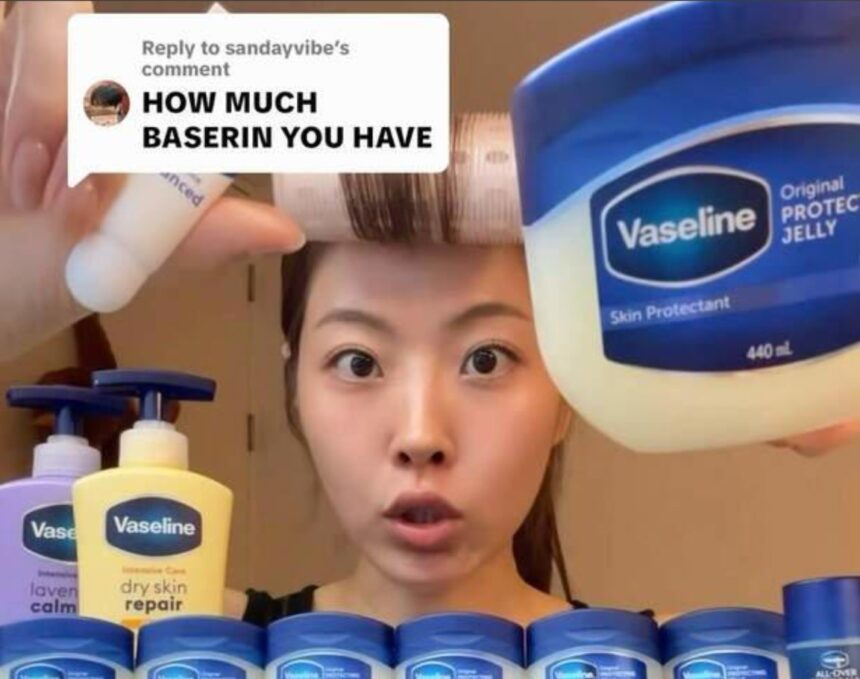
Lee became widely recognised online after a video featuring her collection of miniature Vaseline products began circulating across social media. While the video was originally centred on beauty and skincare, it was her enthusiastic pronunciation of “Vaseline” that caught viewers’ attention.
Some viewers heard the pronunciation as “Baseline”, while others interpreted it as variations such as “Baselin” or “BaSalein”. Whatever the spelling, the sound quickly became the defining feature of the clip.
See more of our coverage in your search results.
Add Hunterfly on GoogleSoon, Min Day Lee was being referred to online as the “Baseline girl” or “Vaseline girl”.
What started as an ordinary beauty video had suddenly become an internet meme.
Meet Min Day Lee, the Creator Behind the Viral Clip
Min Day Lee is a Korean content creator whose Instagram presence focuses on beauty and lifestyle-related content.
Her viral moment came from a video posted in August 2026 in which she showed viewers her collection of miniature Vaseline products.
On paper, it was a relatively straightforward skincare post. Beauty creators regularly showcase products, collections and personal routines on Instagram and TikTok.
See more of our coverage in your search results.
Add Hunterfly on GoogleBut Lee’s presentation gave the video something that viewers immediately remembered.
Her animated delivery and distinctive way of saying the brand name made the clip highly repeatable. Once users began sharing the audio independently of the original video, Lee’s identity became closely associated with the phrase.
The creator herself had not set out to create a meme. The internet effectively did that for her.
See more of our coverage in your search results.
Add Hunterfly on GoogleHow Did ‘Vaseline’ Become ‘Baseline’?
The pronunciation became the central mystery for many viewers who encountered the clip without knowing its original context.
The difference can partly be understood through the phonetic differences between Korean and English.
English contains a /v/ sound that does not function in exactly the same way in standard Korean phonology. When English words containing unfamiliar sounds are adapted into Korean speech, speakers may approximate those sounds using phonetic categories available in Korean.
That can affect how English brand names are pronounced.
In Lee’s case, the pronunciation of “Vaseline” sounded unusual to many English-speaking viewers, who interpreted the initial sound as closer to “B”, producing the meme-friendly version “Baseline”.
However, the pronunciation alone does not fully explain why the clip became so popular.
The real viral ingredient was Lee’s delivery.
Her Enthusiastic Delivery Made the Sound Memorable
Social media trends often depend less on what someone says than on how they say it.
Lee’s energetic repetition gave the word a distinctive rhythm. Viewers could easily recognise the audio after hearing it only once or twice.
That made it ideal for short-form video platforms.
Instead of requiring users to understand a complicated joke or recreate a lengthy scene, the trend could be reproduced simply by incorporating the audio.
The phrase effectively became a piece of reusable internet vocabulary.
Once that happened, the original meaning of the word became almost irrelevant.
“Baseline” was no longer simply a pronunciation of “Vaseline”. It had become the punchline.
Why the ‘Baseline Girl’ Meme Spread So Quickly
Several factors helped the trend move beyond Lee’s original beauty audience.
First, the audio was short and recognisable.
Second, the pronunciation was easy to imitate.
Third, the joke did not require extensive context.
And finally, users could adapt the audio to almost any humorous situation.
These characteristics are particularly valuable in short-form social media culture, where trends often succeed when they can be reproduced quickly and creatively.
Users began incorporating the sound into parody videos, reaction content and jokes about their own obsessions.
The phrase “addicted to baseline” became one of the recurring jokes associated with the trend.
The original skincare context became secondary.
From Mini Vaseline Collection to Internet Catchphrase
The collection of miniature Vaseline products was what initially gave Lee’s video its visual hook.
Miniature beauty products already have an appeal on social media because of their novelty and compact appearance. A creator displaying a collection of small skincare products can naturally attract attention from beauty and lifestyle audiences.
But the visual element was quickly overshadowed by the audio.
Viewers began focusing on the way Lee said the brand name rather than the products she was showcasing.
That is a familiar pattern in viral internet culture: a creator may produce content around one subject, while audiences latch onto an entirely different element.
In this case, the unexpected star of the video was a single pronunciation.
The Audio Became Bigger Than the Original Video
One of the clearest signs that a social media moment has become a genuine meme is when the original footage is no longer necessary.
That happened with Lee’s “Baseline” moment.
Users could borrow the audio without recreating the miniature Vaseline collection or even discussing skincare.
The sound became a standalone format.
People used it to dramatise their own harmless obsessions, create deliberately exaggerated reactions and make jokes about internet culture.
This is one reason short-form video platforms are particularly effective at producing viral phenomena. Audio can travel independently from the original creator and acquire new meanings as different communities use it.
For Lee, that meant her voice became recognisable to people who might never have encountered her regular beauty content.
The ‘Baseline’ Joke Also Fits Internet ‘Brainrot’ Culture
The trend has also been embraced within the broader style of online humour sometimes described as “brainrot”—a deliberately absurd, repetitive or context-free form of internet comedy.
The appeal of such humour often lies in its lack of seriousness.
A word does not necessarily need to have a clever meaning. Sometimes its unusual sound, repetition or association with a particular creator is enough.
“Baseline” fits that formula particularly well.
The pronunciation is distinctive, the original clip is easy to recognise and the phrase can be repeated without needing an elaborate explanation.
That combination helped the trend move rapidly through meme culture.
Why Viewers Started Calling Her the ‘Baseline Girl’
Once the audio became popular, users needed a simple way to identify the person behind it.
“Baseline girl” quickly became a convenient label.
Others referred to her as the “Vaseline girl”, directly connecting her to the skincare product featured in the original video.
Neither nickname necessarily describes Lee’s wider identity as a creator. They simply reflect the particular viral moment that introduced her to a much larger audience.
This is common in the social media era, where creators can become associated with a single phrase, expression or video even when their regular content covers a much wider range of subjects.
For Min Day Lee, the Baseline meme is now likely to be the introduction many new viewers have to her content.
The Viral Moment Highlights the Power of Pronunciation
The trend also demonstrates how language can behave differently when it moves between cultures and online communities.
A pronunciation that may sound perfectly understandable within one linguistic context can sound unexpected to audiences accustomed to another language.
Instead of treating that difference simply as an error, social media transformed it into entertainment.
The important distinction is that Lee’s viral popularity did not come merely from people laughing at a pronunciation difference. Her personality, enthusiasm and expressive delivery were crucial to making the moment entertaining.
The internet took something distinctive about the original clip and turned it into a shared format.
Min Day Lee’s Viral Moment Shows How Fast Internet Fame Can Happen
For creators, viral success can arrive without warning.
A carefully planned campaign can take weeks to produce, while an accidental moment can spread around the world within hours.
Min Day Lee’s experience illustrates that unpredictability.
Her original intention was to share a beauty-related video featuring her miniature Vaseline collection. Instead, she became the face of a meme that moved far beyond skincare.
The situation also demonstrates why creator identity matters in viral culture. People did not simply repeat the word “Baseline”; they searched for the person who had made the pronunciation memorable.
That led audiences to Min Day Lee’s Instagram profile and introduced her to viewers outside her existing follower base.
What Makes the Baseline Meme Different From a Typical Beauty Trend?
Traditional beauty trends usually revolve around a product, technique or recommendation.
The Baseline trend works differently.
The product is almost incidental.
The meme is built around sound, personality and repetition.
That makes it much easier to adapt across different types of content. A makeup tutorial, a reaction video or a completely unrelated comedy clip can all potentially use the same audio.
The trend therefore sits at the intersection of beauty content and general internet culture.
Lee’s skincare video provided the starting point, but the meme’s second life belongs to social media users who repurposed the sound.
Who Is Min Day Lee? Key Facts
Here is a quick look at the creator behind the viral moment:
- Name: Min Day Lee
- Instagram: @mindaylee_
- Nationality/background: Korean
- Content: Beauty, skincare and lifestyle-related content
- Viral moment: A 2026 video featuring miniature Vaseline products
- Meme: “Baseline”
- Popular nickname: “Baseline girl” or “Vaseline girl”
- Why she went viral: Her distinctive pronunciation and enthusiastic delivery of “Vaseline”
- Platforms where the trend spread: Instagram Reels and TikTok
The Internet Has Given ‘Baseline’ a Life of Its Own
The most amusing part of Min Day Lee’s viral moment is how far the joke has travelled from its original context.
She was talking about Vaseline.
The internet heard “Baseline”.
Then users repeated it until it became a meme.
Now, the phrase exists independently of the original skincare video, with people using it to represent everything from fictional addictions to exaggerated enthusiasm.
That is precisely how internet culture works at its most unpredictable.
A creator can post something completely ordinary, only for one small detail to become the part that millions of people remember.
Min Day Lee’s Viral Vaseline Moment Explained
The “Baseline” trend may eventually disappear as quickly as it arrived, as most social media memes do.
But for now, Min Day Lee has become one of the latest creators to experience the strange phenomenon of accidental internet fame.
Her miniature Vaseline collection started the conversation, but her memorable pronunciation gave it momentum.
The combination of Korean and English phonetics, her energetic presentation and the highly adaptable nature of short-form audio turned a simple skincare clip into a global social media joke.
For viewers wondering who the “Baseline Korean girl” is, the answer is Min Day Lee, the Korean beauty creator behind the original viral moment.
And while the internet may have turned “Vaseline” into “Baseline”, it was Lee’s personality that made people want to repeat it.