






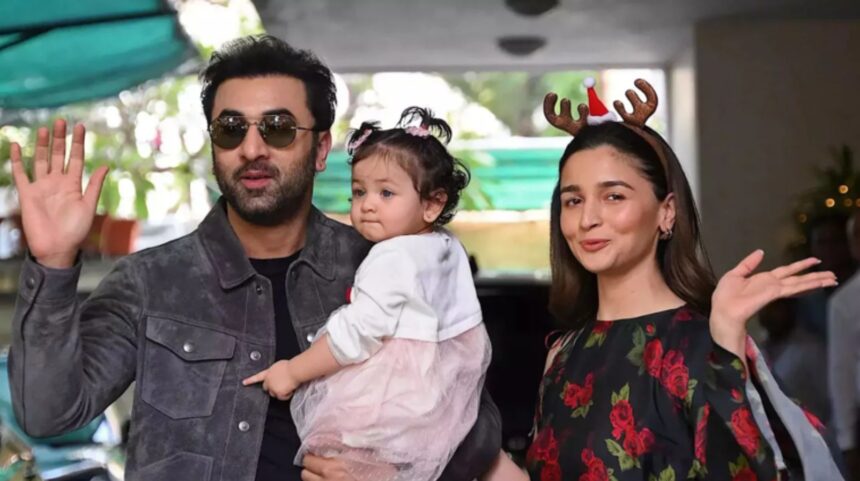
Alia Bhatt has created a digital time capsule for daughter Raha, documenting her childhood through monthly emails filled with photographs, videos, memories and personal thoughts.
Alia Bhatt has found an unconventional way to preserve the precious early memories of her daughter Raha Kapoor. Instead of maintaining a traditional baby journal, the actor has been sending Raha an email every month since her birth, gradually building what she describes as a kind of digital memory book.
Speaking with author and podcaster Jay Shetty, Alia opened up about the personal project and explained why the digital format works better for her than a physical scrapbook.
Alia Bhatt’s Monthly Emails to Raha
Alia revealed that she began emailing Raha shortly after her birth and has maintained the practice every month.
See more of our coverage in your search results.
Add Hunterfly on Google“I’m doing this thing where I send Raha emails. I’ve been doing it every month since she’s born. Just like an amalgamation of photos and videos and what happened and just thoughts and feelings,” Alia said during the conversation.
The idea was suggested to her by someone else, but Alia quickly realised that email would suit her lifestyle better than a conventional memory book.
She admitted that she does not have the time or discipline to regularly maintain a physical journal. Email, on the other hand, gives her an easy way to collect memories as they happen and search through them later.
What Does Alia Put in the Emails?
The collection is not designed to be a perfectly organised account of Raha’s childhood. Instead, Alia uses it to preserve spontaneous family moments.
She said the emails include photographs, videos, thoughts and little notes about things that happened on particular days. Some memories feature Raha with her parents, while others capture moments with her grandparents, aunt or uncle.
See more of our coverage in your search results.
Add Hunterfly on Google“Just random moments,” Alia explained, adding that she sometimes writes a brief note about a trip, something Raha did that day or an experience that felt worth remembering.
That spontaneous approach makes the emails less like a formal diary and more like an evolving archive of everyday family life.
Alia Plans to Give the Collection to Raha
Alia already has an idea of when she might hand the digital archive over to her daughter.
See more of our coverage in your search results.
Add Hunterfly on GoogleShe said she could give the collection to Raha when she is around 15, allowing her to look back at the years she was too young to remember herself.
The idea is essentially to give Raha a personal record of her childhood—one containing not just major milestones, but also the small, ordinary moments that parents often realise are the most meaningful years later.
Motherhood Has Changed How Alia Sees Family Memories
The conversation also gave Alia an opportunity to reflect on how becoming a mother has changed her understanding of her own parents.
She recalled a conversation with her mother in New York, during which they discussed a photograph of a baby walking down a street carrying several bags. The seemingly ordinary image prompted a deeper observation about how parents continue to see their children as babies regardless of age.
Alia said she and her mother agreed that, in the eyes of their parents, people remain “giant babies” throughout their lives.
“We’re Still Babies” for Our Parents
Alia connected the idea to her own childhood and the way her mother continues to worry about her.
She recalled being told to be careful while travelling and even being reminded to take care of her arms and legs before crossing the road. As a younger person, such advice could seem excessive or amusing, but motherhood has given Alia a different perspective on it.
Now that she has Raha, she understands why parents continue to worry about their children even when they are fully grown.
That realisation appears to be one of the reasons Alia is so invested in preserving Raha’s childhood. The monthly emails are not simply a collection of pictures—they are a record of how her family experienced those years together.