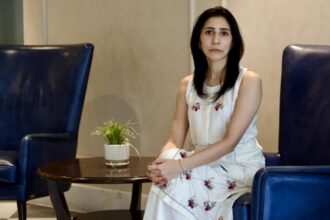







For Rupali Ganguly, the success of Anupamaa represents far more than becoming one of Hindi television’s most recognisable faces. After years of working in an industry where she often felt overlooked, the actor found herself at the centre of a show that transformed both her career and the way audiences connected with her.
As Anupamaa, she has portrayed a woman whose journey moves from self-sacrifice and social expectations towards self-respect and independence. The character’s evolution has also mirrored aspects of Ganguly’s own life, particularly her long struggle with confidence and her determination to eventually become the leading actor she always wanted to be.
In an interview with t2, Ganguly reflected on Anupamaa, her years as Monisha in Sarabhai vs Sarabhai, growing up in a film family, her Bengali and Maharashtrian roots, and the personal setbacks that shaped her career.
Six Years of Anupamaa
Ganguly remembers the beginning of Anupamaa with unusual precision.
See more of our coverage in your search results.
Add Hunterfly on GoogleShe recalled that filming began on February 25, 2020, with her first scene involving Arvind Vaidya’s Bapuji and Paras Kalnawat’s Samar. The original launch plan was disrupted by the COVID-19 pandemic, with the show’s premiere eventually taking place on July 13, 2020.
The production resumed shortly before the premiere, under the restrictions imposed during the pandemic. Ganguly recalled long working days, early call times and the practical difficulties of shooting when the industry was operating under unprecedented conditions.
At that stage, however, she had no idea the show would eventually become such a major television phenomenon.
The unusual circumstances of the pandemic also made it difficult for the cast to measure the show’s popularity in conventional ways. There were no large public events or premieres through which actors could immediately sense audience response.
One moment eventually made the scale of Anupamaa clear to Ganguly: seeing her building’s liftman watching the show on his phone.
See more of our coverage in your search results.
Add Hunterfly on GoogleShe began noticing something else as well. Anupamaa was attracting men and younger viewers in addition to its traditional television audience. Families were watching together, and the character’s journey was becoming a subject of conversation beyond the show’s expected demographic.
A later visit to Vaishno Devi provided an even more dramatic indication of the show’s popularity, when Ganguly found herself surrounded by a large crowd and required police assistance to leave.
What Anupamaa Taught Rupali Ganguly
Ganguly says she identifies deeply with Anupamaa, which has helped her understand the character’s decisions even when viewers might question them.
See more of our coverage in your search results.
Add Hunterfly on GoogleAt the beginning of the story, Anupamaa is a woman who gives almost everything to her family without recognising how much of herself she is sacrificing. Her turning point comes when she begins confronting betrayal and understanding that self-love and self-respect cannot remain secondary to everyone else’s needs.
That transformation resonated with Ganguly personally.
She recalled being conscious about her weight when the show began and said that playing Anupamaa helped her look at herself differently. The character’s journey towards self-acceptance contributed to Ganguly’s own understanding of self-worth.
The connection became even more tangible when Anupamaa’s story involved the character purchasing a home for herself. Ganguly said owning a house had been one of her own long-standing ambitions and that she was finally able to achieve it after Anupamaa changed the trajectory of her career.
For her, the show’s significance therefore extends beyond ratings or professional recognition.
She sees Anupamaa as a deeply personal blessing and has connected its success with the memory of her late father, filmmaker Anil Ganguly.
From Monisha to Anupamaa
Long before she became synonymous with Anupamaa, Ganguly was known to an entirely different generation of viewers as Monisha from Sarabhai vs Sarabhai.
The sitcom arrived during a difficult period in her life. Ganguly has recalled that she had significant responsibilities at the time, making the opportunity particularly important.
She also entered the show without the same experience in comedy as several of her co-stars, including Ratna Pathak Shah, Rajesh Kumar, Sumeet Raghavan and the late Satish Shah.
For Ganguly, working alongside them became an education.
She has described Sarabhai vs Sarabhai as a kind of acting university, crediting the ensemble with teaching her about comic timing and performance. The show subsequently became one of the defining credits of her career.
Her professional association with Rajan Shahi also goes back much further. Ganguly’s first television show, Dil Hai Ki Manta Nahin, came in 1999 and was directed by Shahi.
Years later, their collaboration on Anupamaa would give Ganguly the opportunity she had been waiting for: a leading role built around her character.
The Years When Rupali Ganguly Lost Confidence
The road to Anupamaa was not an uninterrupted success story.
Ganguly has spoken candidly about a prolonged period when her self-confidence was extremely low. According to the actor, she was repeatedly told that she was too old to receive substantial opportunities and was sometimes made to feel inadequate because of changes in her weight.
One particular audition stayed with her. She recalled being mocked over her appearance and being told that the production was looking for a “proper, good-looking heroine.”
Rather than accepting that judgment, Ganguly says she decided she wanted her own show.
When she later received a smaller cameo opportunity from the same person, she maintained that she was looking for a lead role instead. She was laughed at for making that demand, but she continued to hold on to the ambition.
Anupamaa eventually gave her exactly that opportunity.
Ganguly has credited her husband, Ashwin K. Verma, with encouraging her to accept the role immediately. She recalled that he believed she had not received the recognition she deserved and saw the show as her opportunity to change that.
Success Changed How the Industry Saw Her
The success of Anupamaa also changed the industry’s perception of Ganguly.
She acknowledges that people’s attitudes towards her became noticeably different after the show became successful. Yet she says she does not hold her earlier experiences against those who may have overlooked her.
Her own behaviour, she insists, has not changed.
Ganguly says she remains comfortable greeting people first, sitting away from the spotlight and allowing others to occupy the most prominent seats at industry events.
Her attitude is rooted in an unusual relationship with success: she once desperately wanted the recognition that seemed out of reach, and now that she has achieved it, she feels no need to constantly prove that she belongs there.
Her greatest professional satisfaction remains acting itself.
For Ganguly, being in front of the camera and delivering a good performance is the real reward. And after years of playing supporting or secondary roles, Anupamaa finally allowed her to become the central heroine of her own show.
Growing Up Around Bollywood Legends
Ganguly’s connection with cinema began long before her professional career.
Her father, Anil Ganguly, was a filmmaker associated with films including Kora Kagaz and Tapasya. As a child, she grew up around actors, filmmakers and musicians who were familiar figures in her home.
She says that, as a child, she did not necessarily view them through the lens of celebrity. Many were simply family friends or people she knew as “uncles” and “aunties.”
There were, however, exceptions.
Ganguly has spoken about her fascination with Amitabh Bachchan and recalled a childhood encounter with the actor at a wedding. She also developed an admiration for Sridevi.
Her memories include visits to the homes of musical legends such as R.D. Burman and Bappi Lahiri, giving her a childhood immersed in the creative world without necessarily feeling like she was living inside the film industry.
A Camera Was Never Intimidating
Ganguly faced the camera at just seven years old.
Yet she says her upbringing was surprisingly ordinary. Her father would take Sundays off, spend time with the family and even go shopping for fish before cooking at home.
The family did not build its life around celebrity privilege. Holidays were often spent in Kolkata with her grandmother, while occasional trips to Goa or Khandala happened in connection with her father’s professional work.
That normality may explain why the camera never intimidated her.
Acting gradually became an extension of something she already enjoyed: observing and imitating people, experimenting with accents and playing with different personalities.
Becoming a Heroine at 13
Ganguly’s transition from child performer to leading lady happened unexpectedly.
At around 13, while still in school, she was cast as the heroine of her father’s Bengali film Bolidan, opposite Tapas Paul. The project also featured Rakhee and Abhishek Chatterjee, according to Ganguly’s recollection.
The casting came about after the actress originally selected for the role became unavailable following the success of a Hindi film.
Ganguly was delighted by the opportunity. Her father, however, had imagined a different future for his daughter and wanted her to become a singer rather than an actor.
Ganguly remembers being fascinated by the attention actresses received on film sets and jokingly concluded that becoming a heroine looked easier than becoming a singer.
Her mother supported the acting ambition, and the teenager found herself suddenly working opposite an established Bengali star.
Tapas Paul, she recalled, was considerably older and effectively took on a protective, almost familial role towards her during the production.
Learning Bengali From Her Father’s Wish
Although Ganguly has Bengali roots through her father, Marathi was her first language because she grew up in Mumbai with her Maharashtrian mother.
Her Bengali was initially limited. She remembers that even when visiting relatives in Kolkata, her cousins often spoke Hindi with her rather than helping her develop fluency in Bengali.
That changed when her father expressed his wish that his children should be able to speak Bengali properly.
Ganguly took the sentiment seriously and began learning the language. She has recalled receiving help from members of Bappi Lahiri’s family and later from Tapas Paul and his wife.
There is an ironic full-circle element to her linguistic journey. She did not provide her own Bengali dubbing in Bolidan, but decades later she became the lead of Anupamaa, a Hindi series based on the Bengali television drama Sreemoyee.
Ganguly now says she is comfortable enough in Bengali to work in the language again.
Hoping to Return to Bengali Cinema
Despite her early Bengali film debut, Ganguly says she has not had another major opportunity in Bengali cinema in the decades since Bolidan.
She has expressed a desire to return to the Bengali industry and has mentioned her longstanding personal connections with figures including Prosenjit Chatterjee.
For an actor whose professional beginnings were in Bengali cinema, another substantial Bengali role would represent another kind of full-circle moment.
Ganguly on Her Political Life and Social Causes
Ganguly has also spoken publicly about her association with the Bharatiya Janata Party and her political interests.
In the interview, she discussed attending the swearing-in ceremony of Suvendu Adhikari as West Bengal chief minister and said she is passionate about certain social causes.
Her strongest emphasis, however, was on animal welfare.
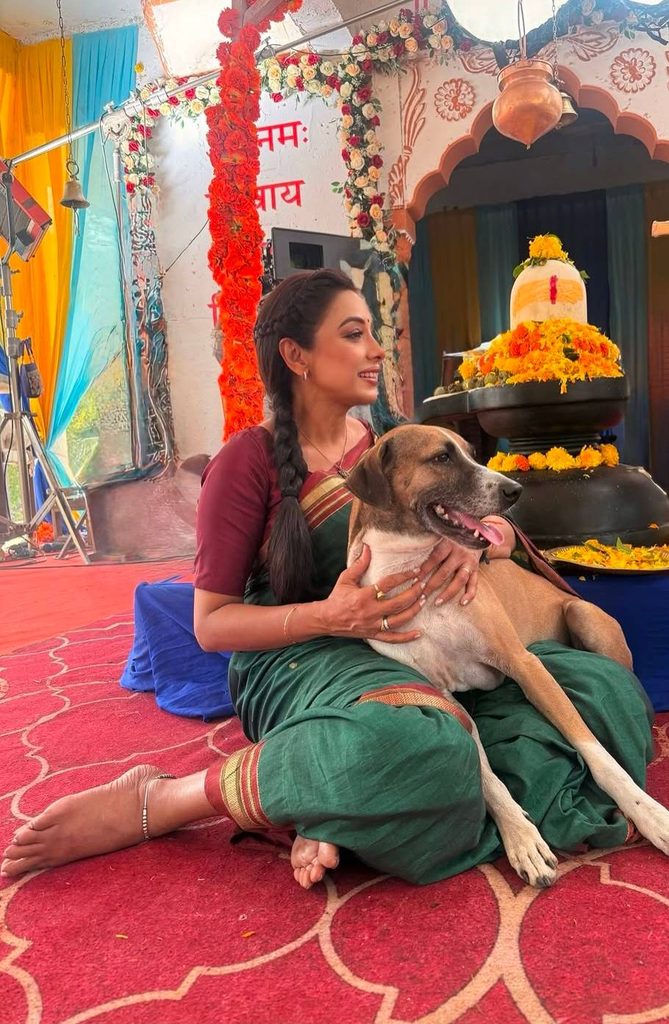
Ganguly has spoken about caring for community animals around Film City and about wanting to use the visibility she gained through Anupamaa to speak for those who cannot speak for themselves.
She argues that such work requires resources and sees her increased public profile as an opportunity to contribute.
A Career Built on Persistence
Rupali Ganguly’s journey is ultimately less about overnight fame than delayed recognition.
From appearing before cameras as a child and becoming a Bengali film heroine at 13, to establishing herself as Monisha in Sarabhai vs Sarabhai, she spent decades working without receiving the scale of recognition she believed her talent deserved.
Anupamaa changed that equation.
The show gave her a character she deeply identifies with, a national audience and the professional position she had long wanted. But her account of the journey also makes clear that the success did not erase the difficult years that came before it.
If anything, those years seem to have shaped the humility with which Ganguly now approaches her position at the top of television.
For an actor who once struggled to believe that she could become the heroine, Anupamaa gave Rupali Ganguly the chance to finally occupy the centre of her own story.