




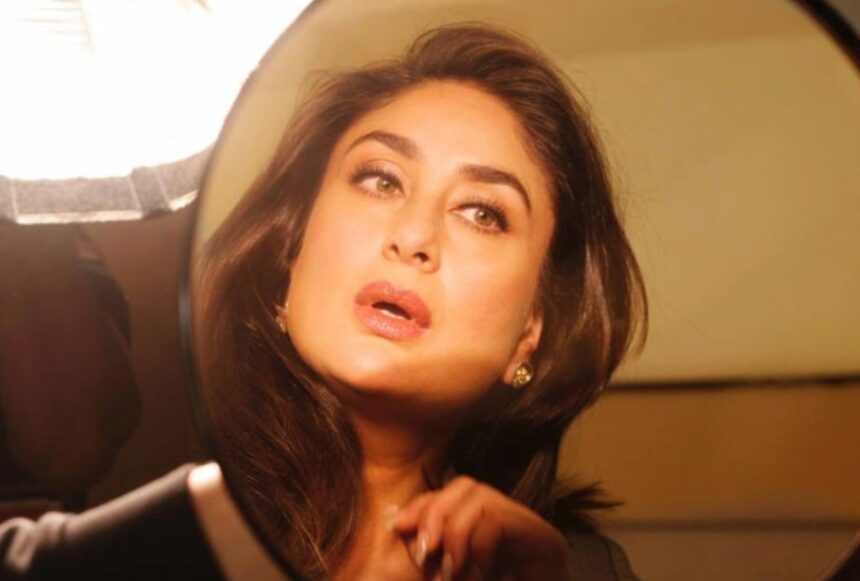
Kareena Kapoor Khan has opened up about the personal impact of motherhood on her acting, her experience of working with director Meghna Gulzar and the emotionally demanding role she plays in Daayra. The actor said becoming a mother has changed the way she approaches characters and has, in her view, made her a better performer.
In an interview discussing the upcoming film, Kareena also spoke about playing a police officer, the sensitive themes explored in Daayra and the values she hopes to pass on to her two sons, Taimur and Jeh.
Kareena Kapoor wanted to work with Meghna Gulzar
For Kareena, the opportunity to collaborate with Meghna Gulzar was one of the major reasons she chose Daayra.
The actor has previously described herself as a “director’s actor” and said she has always been interested in filmmakers with a distinctive creative voice. According to Kareena, working with Gulzar was a combination she had been hoping for.
See more of our coverage in your search results.
Add Hunterfly on GoogleShe said the director’s originality was a major attraction and that she felt fortunate to have worked with several filmmakers she admires.
The film brings together Kareena with Prithviraj Sukumaran, with Gulzar directing the project.
Kareena says Ajuni is very different from Talaash character
Kareena also addressed comparisons between her character Ajuni in Daayra and Rosy, the character she played in the 2012 thriller Talaash.
She stressed that the two roles belong to very different cinematic worlds.
Ajuni is portrayed as a sensitive but determined police officer dealing with a difficult situation. Kareena explained that the character knows her responsibilities and remains firm about the situation she is handling.
See more of our coverage in your search results.
Add Hunterfly on GoogleUnlike Rosy, whose character had a more seductive quality in Talaash, Ajuni represents a different kind of woman and occupies a different emotional space.
‘If you’re a cop, you don’t have to be a particular way’
One aspect of Ajuni that Kareena found important was retaining her femininity while portraying a police officer.
The actor said being a cop should not require a woman to adopt one stereotypical personality or appearance.
See more of our coverage in your search results.
Add Hunterfly on GoogleAccording to Kareena, the character has been deliberately kept feminine because women should be comfortable owning their identity rather than feeling compelled to conform to a particular image of authority.
The approach gives Ajuni a more layered personality instead of relying solely on the familiar tough-cop template.
Kareena Kapoor says motherhood changed her acting
Kareena’s most personal comments came while discussing the effect motherhood has had on her craft.
The actor, who is a mother of two sons, said Daayra has remained with her both as an actor and as a parent. She believes her experiences since becoming a mother have influenced the emotional depth she brings to her performances.
“I feel ever since I’ve become a mother, I’ve also become a better actor. I don’t know why,” she said.
For Kareena, the connection appears particularly relevant to Daayra, a film that deals with emotionally difficult subject matter and forces its characters to confront questions of responsibility, vulnerability and justice.
‘Men should be more kind’: Kareena on raising her sons
The themes of Daayra also prompted Kareena to reflect on parenthood and the lessons she wants her children to carry into hood.
She said that, as a mother, she naturally worries about protecting her sons while also teaching them to understand responsibility.
For Kareena, kindness is among the most important qualities she wants them to develop.
She also challenged the idea that emotional sensitivity is primarily associated with women. The actor said boys and men should feel comfortable expressing their emotions, including crying, rather than seeing vulnerability as something to hide.
Her message to her sons is therefore not simply about being strong, but about becoming compassionate and emotionally open individuals.
Kareena recalls an emotionally difficult scene
Among the scenes in Daayra, Kareena identified one involving the way women can be portrayed as responsible or guilty in certain situations as particularly memorable.
She said the writing and Meghna Gulzar’s treatment of the scene were powerful enough that she did not need any artificial aid to produce the emotion required.
Instead, she recalled being naturally disturbed and emotionally overwhelmed while delivering the sequence.
For an actor, she said, the scene remains one of her favourites precisely because the emotional response came from the material itself.
Kareena reacts to box-office clash with Kunal Kemmu’s film
The release of Daayra also comes amid a box-office clash involving a film directed by Kareena’s brother-in-law Kunal Kemmu.
Rather than viewing the competing releases negatively, Kareena expressed confidence that audiences can make room for two strong films.
She praised Kemmu as an outstanding actor, particularly highlighting his comic timing, and said she believes both projects can succeed.
Her comments reflect a broader reality of the theatrical market: films sharing a release window do not necessarily have to work against each other if audiences find reasons to watch both.
Why Daayra is an important role for Kareena
Daayra appears to offer Kareena an opportunity to move into a more restrained and emotionally complex space. Instead of relying on spectacle or conventional heroics, the film places its characters in situations where personal beliefs, professional responsibility and difficult moral questions collide.
Her portrayal of Ajuni is therefore significant not only because she plays a police officer, but because the character is being presented as a woman whose strength does not require her femininity to disappear.
Kareena’s reflections on motherhood add another dimension to the role. Her own experiences as a parent appear to have informed the way she understands characters dealing with fear, responsibility and the instinct to protect others.